

If You See This Rare Colorful Snake In The Wild, You Need To Alert The Authorities
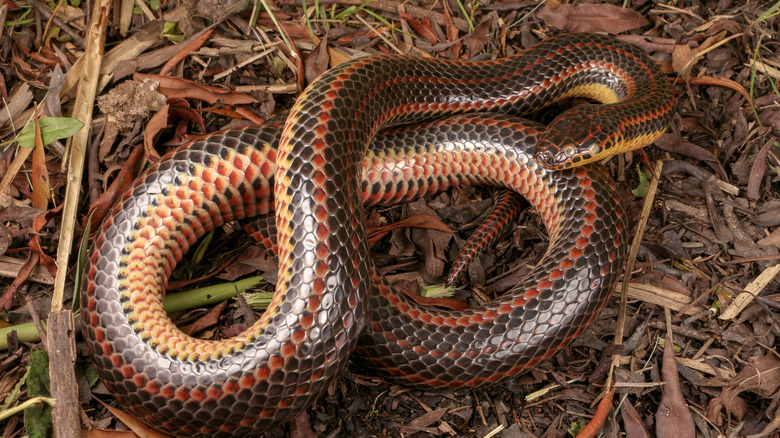
It's always a good idea to be on the lookout for snakes while hiking, camping, or exploring the waterways, as they could be lurking under the cover of logs and plants. However, there's one secretive snake that probably won't show up at your camp, although it's still worth looking for. The rainbow snake (Farancia erytrogramma) is known to be intentionally elusive and quite rare in Florida, and state officials are seeking help to find it.
This legless reptile is nocturnal, which could make it a bit more difficult to find. The good news is that it isn't dangerous to people or pets, though it may emit a nasty odor if it feels threatened. The rainbow snake isn't lurking in the common places that most snakes hide in a yard; it's primarily aquatic and enjoys American eels as its favorite food. This snake may be found in clear springs and rivers in parts of Florida, as well as bodies of water like creeks and cypress swamps. Water is one of the things that attracts snakes to your yard, but it's unlikely you'll find one of these guys on your property unless you live in the rainbow snake's preferred habitat.
The rare rainbow snake is actually quite beautiful, appearing iridescent black or blue. It has three red stripes that travel the length of its back, with a little yellow along the chin and throat. The rainbow snake will often have yellow or reddish markings on its underside, and this serpent is typically around 2 to 4 feet long. This snake is found from southern Maryland down through coastal states to Florida, as well as Georgia, Louisiana, and Alabama. Sadly, it's considered rare in Florida because its numbers have been in steady decline due to declining eel populations and habitat loss, and in Maryland, it's considered endangered.
Why you should report a rainbow snake sighting
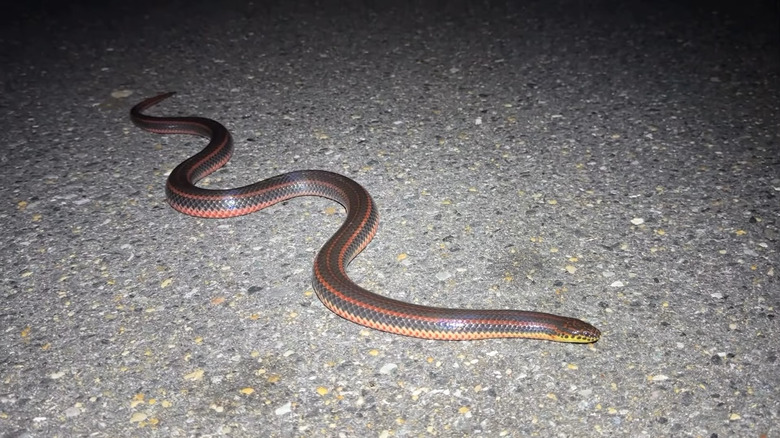
Florida officials are on the lookout for rainbow snakes because they're concerned about their numbers dwindling even more. A snake fungal disease has affected rainbow snakes in other states, which makes officials even more troubled about the long-term survival of the species, particularly in Florida.
"Every sighting report gives us valuable data about their current distribution and helps us assess the health of the species in Florida," said Kevin Enge, research scientist with Florida Fish and Wildlife Conservation Commission (FWC)'s Fish and Wildlife Research Institute, in a statement about the species. Asking volunteers for input — essentially crowd-sourcing reports of the snake – helps the FWC better understand the species' current locations, habitat, and population. The commission requests that anyone who's seen the snake in Florida report it on this online form. The form has input areas for when the snake was seen (even if it was years back), the latitude and longitude of the sighting, your contact information, and if you're a biologist or natural resources professional. It also allows image uploads. If you're hoping to help, be sure to keep an eye out for rainbow snakes crossing the road at night, especially when the roads are wet.
Another fun fact: One subspecies called the South Florida rainbow snake (Farancia erytrogramma seminola) is among the rarest snakes in the country and may be extinct. It was last officially documented in the 1950s, according to the Florida Museum of Natural History. The South Florida rainbow snake is darker than the common rainbow snake, and its red markings are dotted lines rather than solid lines. Though it was declared extinct by the federal government, the Center for Biological Diversity is still on the lookout for this snake after hearing reports of a sighting in 2012. So far, they haven't found evidence of its whereabouts, but you should definitely keep your eyes peeled.