

What It Means If You Spot Mushrooms Growing In Your Flower Garden
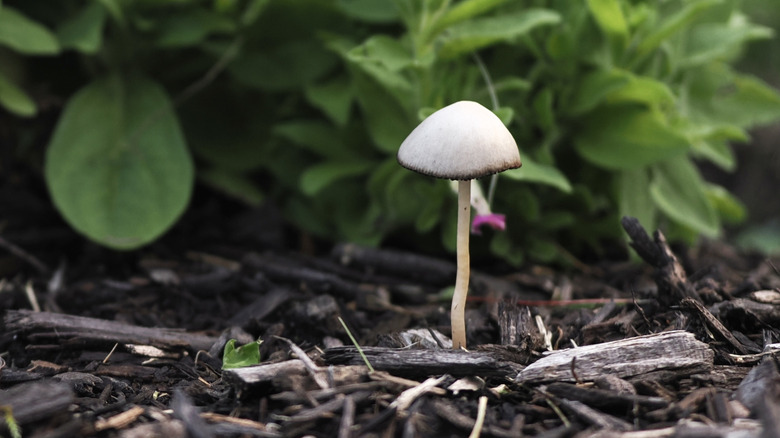
Whether you find inky caps popping out of your petunia patch or a giant puffball chilling near your rose bushes, discovering mushrooms in your flower beds can be a bit startling. Usually it's not cause for concern — if anything, it may signal that your garden is making nutrient-rich compost for your flowers. Mushrooms help expired blossoms and other organic matter break down, enriching the soil with nutrients in the process. They can also improve the soil's air circulation and moisture-holding abilities while assisting plants with vitamin and mineral absorption. Some types of fungus — oyster mushrooms, for instance — debilitate disease-causing pathogens that live in the ground. If you're confident your garden's mushrooms aren't a sign of over-hydration or another problem, you may want to let them be. You could even embrace their presence by adding some whimsical DIY mushroom stools to their environment.
If any of your gardens are built near chopped-down trees, mushrooms may find them especially attractive. That's because they like to feed on decaying stumps and roots. If you're lucky, you might discover edible mushrooms such as morels among your flowers. Though these are delicious — as are oysters, chanterelles, and black trumpets — never taste mushrooms unless you're absolutely certain they're safe to consume. If you decide to get rid of the mushrooms you find in your flower garden, throw them away rather than adding them to your compost since their spores are likely to make more fungi.
When mushrooms might indicate a problem for your garden
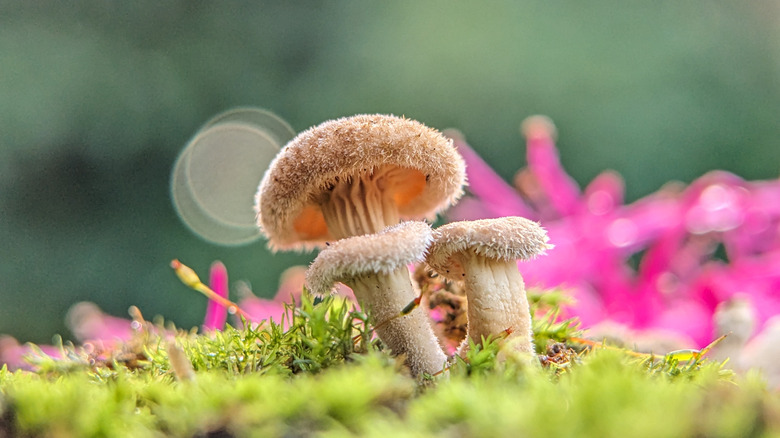
There are a few situations where toadstools in your flower beds might be red flags. Mushrooms growing in your yard's lawn can mean that your soil has been soggy recently. The same is true for gardens. If a rainstorm visited in the last few days and you expect that the puddles will clear out soon, you don't need to worry. If this isn't the case, search for signs of less-than-ideal drainage. When excess water isn't escaping your garden fast enough, your flowers' roots may be susceptible to rot. Mushrooms can be a sign that conditions are ideal for fungi, including the species that attack over-hydrated plant roots, crowns, and stems. Working compost into your garden soil can correct drainage issues caused by a common culprit: clay soil. You may also want to check that you're not overwatering your flowers.
Mushrooms may also be trying to tell you that your flower bed is shady. This isn't necessarily bad news. If you've planted shade-tolerant species and air is circulating well enough to ward off problem-causing fungi such as powdery mildew, just extract any bothersome mushrooms and proceed with your day. If you need to remove toxic specimens — say, death cap mushrooms, which are poisonous to people and pets – dig them out of the ground and carefully dispose of them in trash bags. Treating their growing area with dish soap can discourage them from returning. You could also prune nearby shrubs and tree canopies to increase sunlight exposure and help air move freely. Both of these measures make mushroom growth more difficult.