

The Container-Friendly Flower That'll Fill Your Garden With Hummingbirds

If hummingbirds could design their own perfect flower, it would probably look a lot like crocosmia. This eye-catching perennial produces tube or trumpet-shaped flowers, two shapes that hummingbirds like because they make nectar easy to access. Many varieties of crocosmia produce flowers that are red, hummingbirds' favorite color, signaling the presence of abundant nectar. Other varieties are orange and yellow, two other hues these birds find appealing. These flowers are especially valuable to hummingbirds because they bloom from mid-summer through fall, offering food when many other blossoms are winding down. Crocosmia is a popular choice for pollinator gardens because it also appeals to butterflies and bees. Since it will grow in pots, it's an especially fine choice for a hummingbird-friendly container garden.
Sometimes called coppertip or falling stars, crocosmia plants sprout from bulb-like structures known as corms. They do best when planted in the spring, when the soil has started to warm up. In USDA hardiness zones 6 through 9, the corms can stay in the ground all winter. In cooler climates, they must be dug up in the fall to avoid exposure to temperatures lower than 28 degrees Fahrenheit.
Growing crocosmia cultivars with red flowers should bring the most hummingbirds to your garden. "Emberglow" and "Jenny Bloom" both produce deep red flowers and grow to a height of three feet. "Limpopo" sports beautiful coral-colored blossoms, while "Lucifer" is prized for its fiery red blooms. "Lucifer" makes a statement in cut flower arrangements and as a tall, elegant specimen in the center of a multi-species container planting.
Growing crocosmia in containers
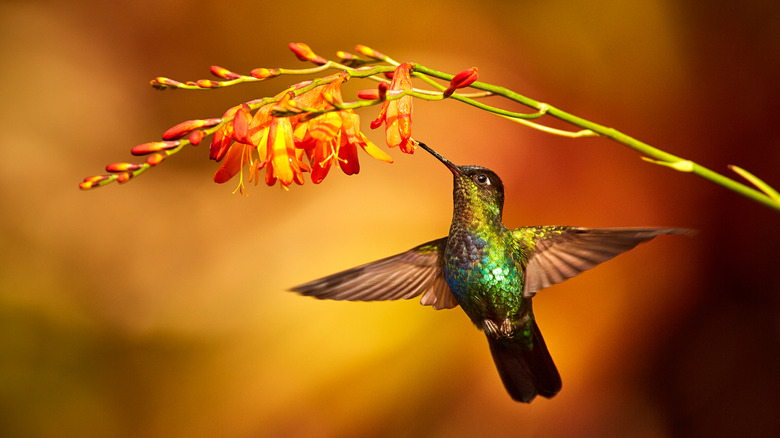
Crocosmia is generally a low-fuss plant suitable for gardening beginners and experts alike. A handful of its 400 or so cultivars display aggressive growing tendencies, but most play nicely with other flowers and shrubs. If you live near the coast of California, don't plant the hybrid known as garden montbretia (Crocosmia x crocosmiifora), which the state's Invasive Plant Council has dubbed invasive. To prevent any unruly behavior, growing crocosmia in containers is a smart choice. That's because the plant's rhizomes can be hard to remove, and the walls of pots or raised garden beds keep them from spreading to areas they're not supposed to be.
When planting crocosmia in pots or other containers, make sure to keep the soil damp. These plants become unhappy when their soil is dry and aren't afraid to show it. Keep in mind that container-grown plants tend to need more frequent watering than their in-ground counterparts. Also, keep your pots of crocosmia in a sunny part of your yard to promote optimal flowering. The more blossoms, the more hummingbirds they're likely to attract. Make sure that their soil and pots drain water well, which helps prevent problems such as root rot. If possible, grow them in a potting mix with a neutral pH level and plenty of nutrient-rich organic material.
Once your crocosmia plants have finished blooming in the fall, shorten the stems but let the leaves wither at their own pace. The foliage sends energy to the corms, which they store for the next growing season, before dying back. Once the leaves have expired completely, it's safe to cut them down to the ground.