

The Popular Type Of Mulch You Should Avoid Using In Your Rose Garden
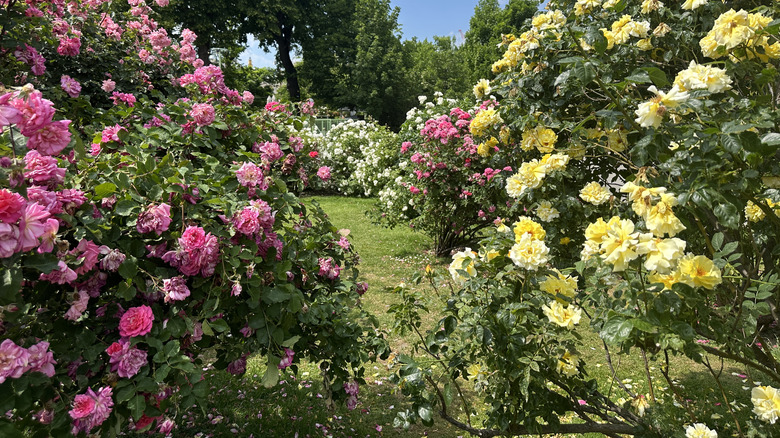
Roses are a great way to brighten up a lawn, and they are relatively easy to care for, so they make a great addition to landscaping projects. Roses are also an excellent choice if you're looking to make your lawn more pollinator-friendly. When it comes to caring for your roses and the aesthetics of your yard, you may want to reconsider a type of mulch popular around flower gardens. Gravel mulch looks tidy and adds visual contrast to flower gardens, but it isn't going to give your roses what they need in a mulch.
While the right amount of sunlight (at least six hours) and proper soil are the most important things to consider when planting roses, your choice in mulches can either make or break your plants. Unlike organic mulches, gravel doesn't break down, but that means it's also not contributing any nutrients to the soil. It can also get very hot in warm climates, and doesn't trap any moisture the way bark might. While aesthetics may be important in your yard and garden design, you also want to consider the health of your plants. Surrounding them in the wrong type of mulch could cause plant diseases and might even lead to the early demise of your plants — which wouldn't be pleasing to the eye either, and would leave you with even more work planting new roses.
The disadvantages of using gravel mulch with roses
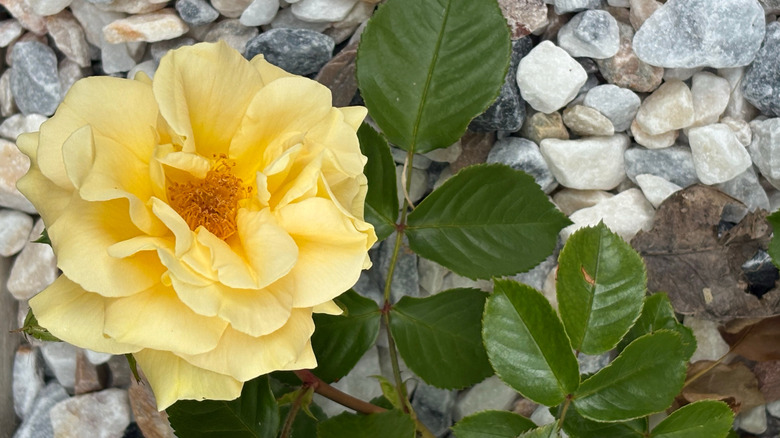
Gravel mulch is pretty and has its benefits, but for roses, it's not the right choice. Part of that is because this harder-to-move mulch will make it more challenging to get to the soil of your roses to check moisture levels. Roses need water at the roots, not higher up, as this can cause diseases to take hold. When it comes to watering roses properly, the soil type also factors in:roses in sandy soils need more irrigation than clay, for example, especially in hot weather. Scuttling around in gravel is a lot harder than through cedar bark. It's essential to know the best methods for watering your roses. Gravel also doesn't release any organic matter like other natural mulches, which helps in the fertilization and benefits healthy soil. You can still fertilize and feed your roses with gravel mulch, but it adds an extra step: moving the rocks around to distribute the food under the mulch.
Another issue with gravel mulch is that it can get extremely hot under direct sunlight and dry out the ground below. Roses need that sunlight, but they prefer moist soil, which they get with bark mulch and other organic mulches that help hold moisture in the soil below. Planting and caring for your roses in the summer is much different than caring for roses in the fall as temperatures cool. Some gravels can also affect a soil's pH, making the soil more alkaline. The problem here is roses prefer neutral to slightly acidic soil, so you'll need to keep an eye on this as well.