

The Common Weed You May Want To Consider Leaving In Your Yard
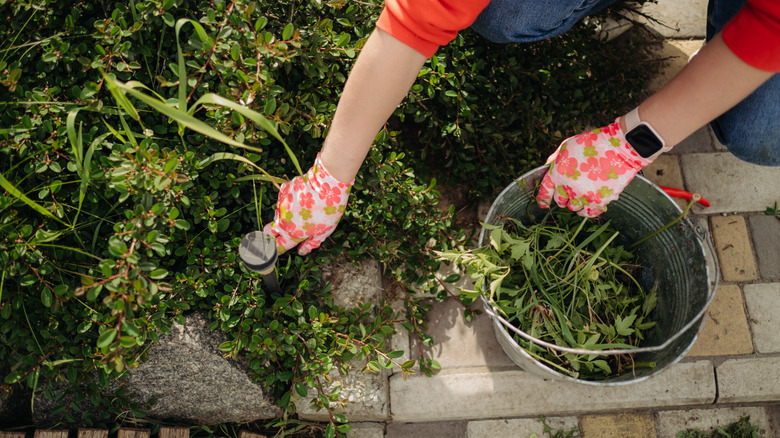
For anyone looking for a pristine and perfect lawn, weeds can be a never-ending battle. The thing is, there are some beneficial weeds out there that you shouldn't pull from your lawn or garden – ones that may be edible, useful for medicinal purposes, or even helpful for your lawn's health. Dandelions are one of the most common weeds you should be eating that get a bad rap. Another edible and useful weed you may want to let do its thing in your yard is the American plantain (Plantago rugelii). Plus, like dandelions, the American plantain (or Rugel's plantain) are perfect for attracting pollinators, like bees, to your yard.
Before we get into the benefits you and your lawn enjoy by not weeding this visitor, also commonly called the blackseed plantain, you'll want to know how to identify it. The plant features broad, simple smooth or crenulated leaves that narrow toward the petiole, which is purplish. They flower close to fall, and usually have white or greenish buds. The flowers grow on a long stalk. The plants can grow up to 12 inches. It's a perennial, so you can expect it to come back each year — plus they spread by seed.
Why American plantain is beneficial for your yard
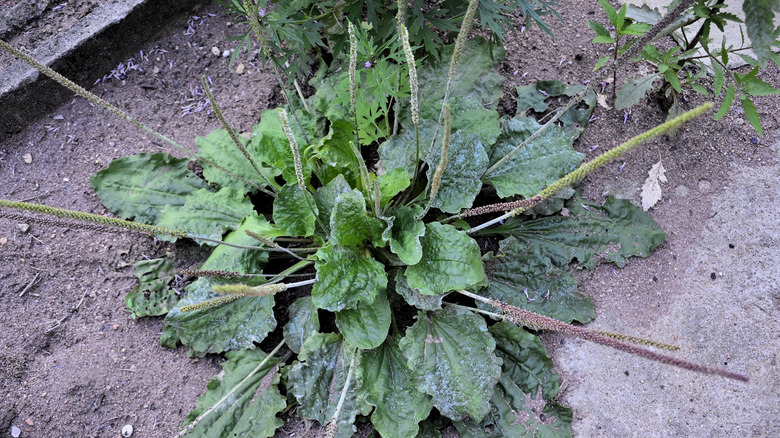
While there are all sorts of benefits when it comes to blackseed plantain, we'll start with (and mainly focus on) the reason why you should keep it growing in your yard instead of eradicating it. One of the most significant benefits of keeping American plantain right where it's growing is that, like garlic, it improves your soil's quality. If the soil in your yard is compacted, plantain helps loosen it up. As the plantain dies at the end of its growing season, it releases nutrients like calcium, iron, and magnesium back into your soil. While its roots don't go deep, they do have multiple fibrous roots that stretch out from the taproot, which help keep other weeds from taking root.
If the benefit of healthier soil isn't enough to convince you to let American plantain keep growing in your lawn, perhaps adding it to your meals will give you a different outlook on this weed. Like its cousin the broadleaf plantain (Plantago major), the leaves are the part of the plant you'll want to eat: When young, they can be added to salads, cooked in dishes, or even dried and used that way. These broad leaves are rich in anti-inflammatory compounds and may also help with digestive health (the seeds are suitable for this as well), and may even act as a mild antiseptic. It's not just humans who benefit — the leaves are also said to help prevent worms in livestock, acting as a natural antibiotic.