

An Eco-Friendly Mulch Type That'll Help Deter Ticks From Your Yard
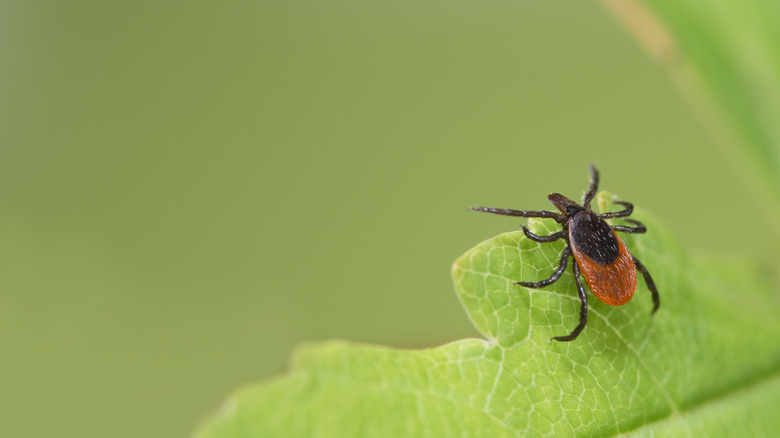
Warm weather always brings out the bugs, including itchy little ones like ticks. Among other reasons, different ticks carry dangerous diseases you need to be aware of. These diseases alone, including Lyme disease, are reason enough to want to do anything you can to keep ticks out of your yard. While there are things you can do to avoid tick bites, why not do what you can to avoid having them visit your outdoor spaces in the first place? One way to do this is by picking just the right mulch. Whether you're mulching around trees, flower beds, or your house and shed, bark mulches are the best for repelling deer ticks — particularly cedar mulch.
There's a special thing in cedar mulch that bugs don't like, but we'll talk about that more in a moment. First, let's look at some other reasons to mulch your flower beds and around trees. Even mulching around your house, with no flowers to speak of, can help keep soil from eroding — making everything look nice and neat. For plants, it also works like insulation for temperature control. Plus, it suppresses weeds, which may otherwise take over your garden.
How bark mulch deters ticks
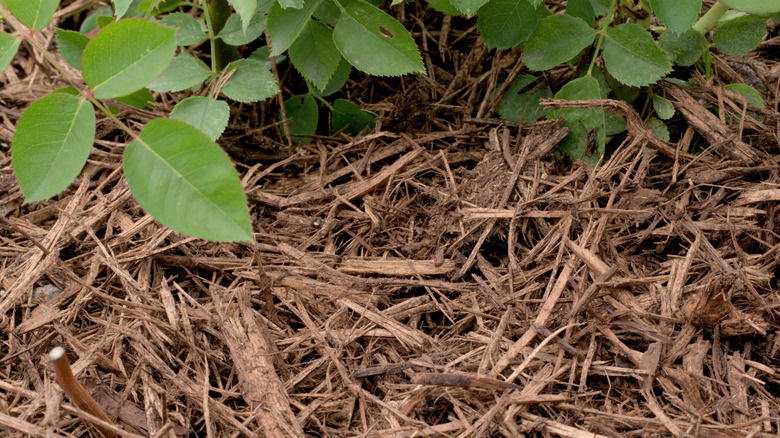
Cedar mulch has sundry uses in landscaping. Cedar works as an anti-fungal, so it keeps your plants healthy and dry. Because it keeps the topsoil dry, it also helps prevent the growth of mold around your trees and home meaning gnats and beetles are less likely to set up homes. Cedar wood also has natural insectidal oils, including thujone (also found in wormwood) which is toxic to ants, cockroaches, and other pests. It also looks nice. If you can't find cedar mulch, cypress and melaleuca (also known as tea tree) are great substitutes for keeping bugs at bay.
When placing mulch around your yard, put down 2 to 3 inches of cedar mulch. For trees, leave a small clear space right at the base so the mulch doesn't directly touch it, which helps prevent rot. You'll want to replace your mulch every year or every other year, depending on a few things. Watch for bare spots, a sign it's time to update. Faded mulch should also be replaced. Mulch naturally breaks down over time (adding nutrients to the soil), which is why you'll want to give it a fresh layer every couple of years.
Of course, mulching works best as a tick deterrent by using it in concert with other landscaping tricks to help keep ticks out of your yard, like laying down gravel barriers and keeping your lawn well maintained. Mulch or not, you should still check for ticks on yourself, your children, and your pets during seasons in which deer ticks are plentiful, and make sure you know how to how to remove ticks properly.