

Common Mistakes You Won't Want To Make When Growing Crabapple Trees
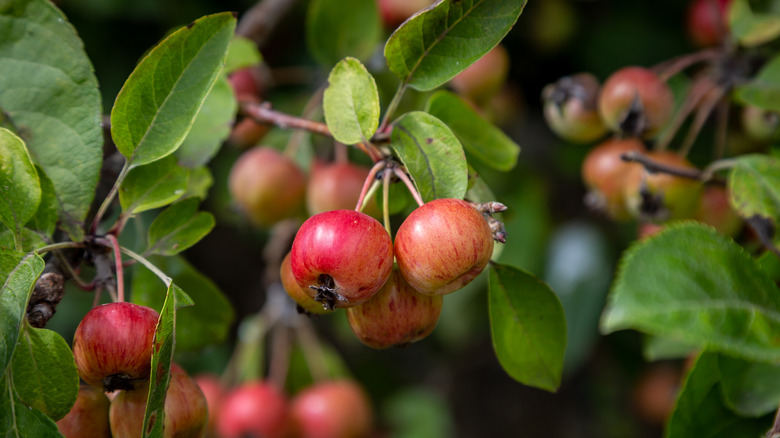
Crabapple trees add an ornamental flare to property each spring with their pink-and-white flowers, which exude a sweet fragrance and attract cardinals to your yard. They also yield tart fruit you can usually eat straight off the branch, collect to make cider, or bake into bread. These trees grow well in U.S. Department of Agriculture plant hardiness zones four through eight, meaning they prefer temperate summers and cold winters. While crabapple trees aren't challenging to grow, there are a few ways to mess up the process.
For these trees to thrive, keep them in full sunlight, keep the soil well-watered, and maintain a slightly acidic lawn. You may need to introduce additional sustenance, especially when the trees are young. In good conditions, crabapple trees can grow up to 1 or 2 feet each year, but you can control the growth of your tree through pruning. These trees are also threatened by blight and pests. Dead branches make trees particularly vulnerable to infection. You can also use pruning to reduce this issue. Once you have a good sense of how to care for your crabapple tree, you can maintain it with little time and effort. For proper maintenance, you need a few tools: You need pruning shears most often, fertilizer is great for keeping your tree nourished, and you also want a pair of gardening gloves to protect your hands while you work. You might also need some chicken wire to protect your trees from pests (deer might chew the bark).
Not properly pruning your tree or protecting it from deer
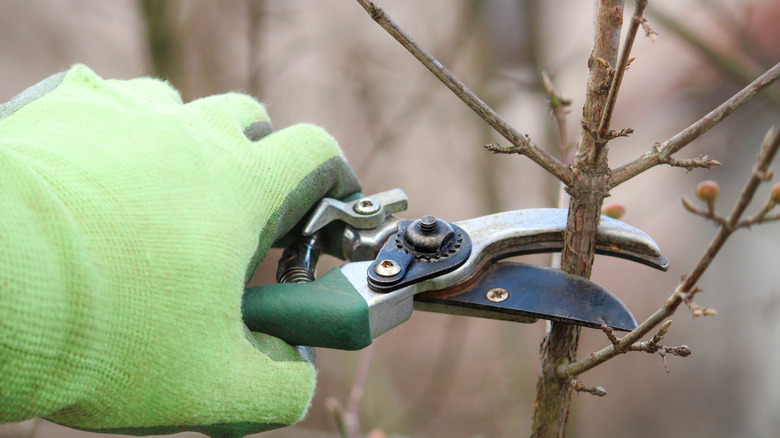
Pruning is an important step for maintaining healthy trees, but there are a few things you need to know before you start hacking away. You should prune crabapple trees just before spring to best facilitate new growth, and it's important to get rid of dead limbs because they attract pests. You should also thin out the canopy so it's easier for light and air to reach the leaves. Never prune any more than 25% of the canopy in a single year. If the tree is fully grown and you've never pruned it before, it's best to prune its canopy to the desired level over the course of several years (crabapple trees need to be pruned throughout their lifespans). It's also a good idea to cut "water sprouts," thin branches that grow straight up from the trunk into the center of the crown. Small branches called "suckers" grow from the base and can drain nutrients, so cut them as well. Addtionally, branches can cross and rub against each other; this can cause wounds to form, so remove them. This is a yearly process.
If you've recently planted your tree, deer can be an issue because they nibble the bark, exposing the tree to infection. That's why you may need to build a guard for the tree out of chicken wire. Use snippers to cut a wire segment to fold into a hoop that you can place around the tree. Make sure this hoop doesn't prevent the branches from growing outward. If you continue to experience issues with deer, plant deer-resistant plants such as lavender and thyme.
Forgetting to test the pH
If you've tried to grow crabapple trees several times with little success, pH may be the issue. Crabapple trees thrive within a pH range of 5.5 to 6.5, but they can tolerate a bit outside this range. If the pH levels are outside this range, your tree might experience stunted growth and its leaves could wither. It may also struggle to produce fruit. Soil acidity can be altered by decomposing matter or even rain. If your tree is struggling, check the pH of the soil to determine if it should be more or less acidic.
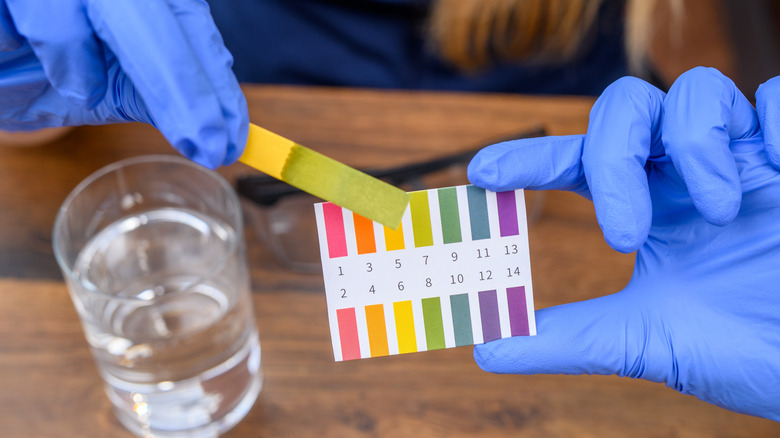
You can purchase a pH testing kit, which you simply stab into the soil and read the meter, or you can use testing strips sold at most hardware stores. Once you have the testing strips, fill a clean container with distilled water, mix in some of the soil, and stir it up. Let the mixture sit for about half an hour, then dip a testing strip into the mixture for about 30 seconds. Once you remove the strip, compare its color change to the shades on the color chart to gauge the pH.
You can lower the pH levels of your soil using fertilizer spread around the base of your trees. Generally, give crabapple trees about a year to grow before you fertilize them. To make your soil more acidic, look for fertilizers such as urea, ammonium sulfate, and ammonium nitrate. To raise pH levels in your soil, spread lime around your trees. Once you've adjusted your soil pH to the correct range, your trees should grow fuller, brighter leaves.