

We Tried TikTok's Viral Tip For Regrowing Lettuce. Will It Help Us Turn Over A New Leaf?

We may receive a commission on purchases made from links.
Lettuce is one of my favorite crops to grow in my vegetable garden. Bags of organic salad mix can be pricey at the local supermarket, and freshly harvested greens tend to have more flavor, vitamins, and crunch. My main complaint? The size of my lettuce harvest. One seed typically produces just a few delicious leaves. Therefore, I need to plant many seeds in the spring for early-summer lettuce, then sow more each week for a steady harvest throughout the growing season. TikTok must have overheard my lament, because it served me a video about boosting lettuce yields by user @themodernnonna. The creator claimed that lettuce plants regrow when you cut off all of their leaves and keep their roots in the ground. New leaves should emerge a week or two after a trimming session if the plants receive plenty of water and sunshine. Needless to say, I was intrigued.
When I looked into this method a bit more, I discovered that cutting lettuce plants down to an inch from the ground is recommended to promote regrowth. I also noticed that certain lettuce seed packets — those for 'Black Seeded Simpson' in particular — are labeled "cut and come again." This means that the lettuce is ideal for harvesting the way the video describes or by picking leaves as needed. In theory, any loose-leaf lettuce can be regrown in these ways. Some types of head lettuce — namely romaine and butterhead — can grow back after being cut, too. I wondered if the video's method would make a loose-leaf lettuce without a "cut and come again" label regenerate, so I decided to find out.
Growing and harvesting the lettuce
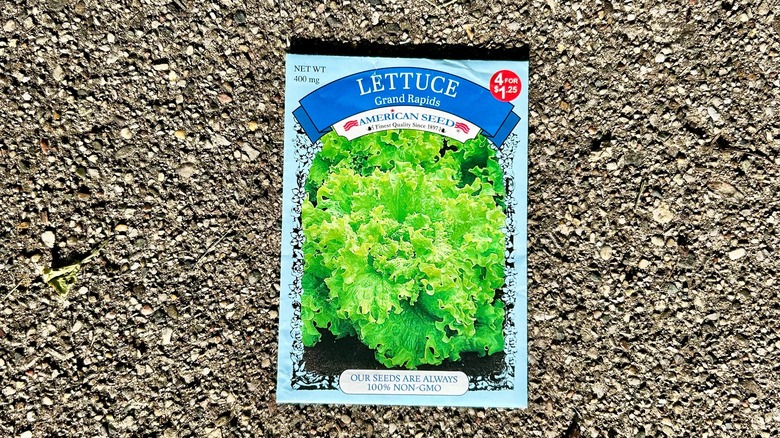
I selected American Seed Company's 'Grand Rapids' heirloom lettuce, which costs $1.25 per packet at Dollar Tree, since it was developed in the USDA hardiness zone I call home. 'Grand Rapids' is a fast-growing, loose-leaf variety that loves cool weather but resists bolting when temperatures soar. I planted a packet of seeds in the spring while dreaming up salad recipes for the summer.
I grew my lettuce in a raised bed rather than an in-ground garden to discourage rabbits from nibbling them. A Land Guard galvanized metal raised garden bed that's 4 feet long, 2 feet wide, and 1 foot tall met my lettuce's needs, but you may want a taller bed if your neighborhood's rabbits are especially crafty. Choosing a raised bed also helped me standardize their growing conditions. Each specimen received roughly the same amount of water and sunlight. All were planted in the same batch of homemade compost mixed with two 50-quart bags of Miracle-Gro Organic Choice raised bed soil, which retail for $9.99 each at Costco. I checked how deep to plant my seeds before sowing them and thinned out the seedlings so crowding wouldn't hamper their development.
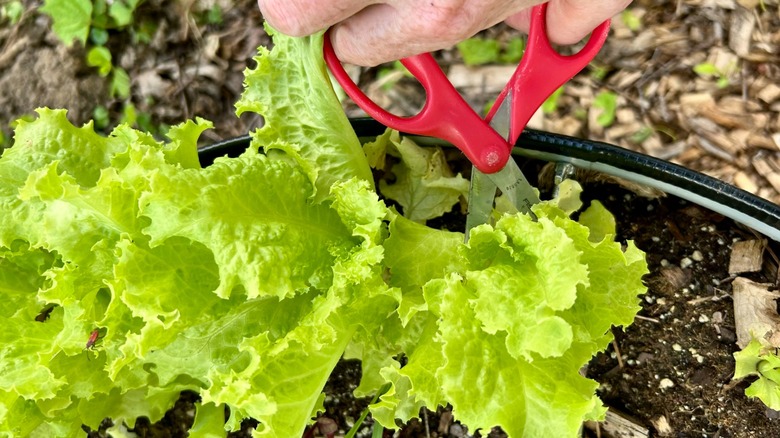
Some of the commenters on the TikTok video noted that picking the leaves is less stressful for the plants than cutting them. To test this theory, I pulled the leaves off half of my plants and used small scissors to snip the leaves from the rest. I think that picking the leaves is easiest, but the scissors made me feel like a lettuce barber on a weird and wonderful makeover show.
Navigating minor barriers
My lettuce garden has good drainage, rich soil, and unfettered access to morning sunlight, but it did not have cooperative weather in the spring. The weather was so cold that growth was slow, and torrential rainfall washed away some of the seeds. Nevertheless, I ended up with many healthy seedlings. If anything, too many sprouted in a relatively small space. Next time I grow 'Grand Rapids' lettuce, I'll thin out more of the seedlings, leaving lots of room around the strongest specimens.
After the cold snap came a heat wave. I kept my lettuce plants nice and hydrated as temperatures hovered around 100 degrees Fahrenheit. Instead of wilting in the heat, many of the leaves doubled in size. I reduced the plants' foliage as directed, leaving the roots and about an inch of stem. Though some gardeners using this regrowth method don't trim the stems this short, I suspect that they end up with leggier plants — and possibly inferior flavor. Speaking of flavor, I wish I'd harvested the leaves a couple of days sooner since hot weather can make 'Grand Rapids' slightly bitter. That said, the leaves were crispy, green, and incredibly fresh, which was good enough for a harvest-day lunch.
From doubt to salad bowl

Overall, this lettuce experiment was a success. The biggest surprise was that my plants didn't seem to prefer plucking over cutting when I harvested their leaves. That said, I was very gentle with the scissors. Sawing or slashing the leaves with a knife might have caused more signs of stress. The creator of the TikTok video that inspired this experiment used a knife and a slashing motion and didn't report any issues.
Once my 'Grand Rapids' lettuce finally started growing, it regenerated easily after I removed its first set of leaves. I wasn't sure this would happen right away. The stems looked slightly sad in their underdressed state, and I noticed a bit of yellowing. To perk them up, I fed them a DIY fertilizer tea made of potassium-rich dandelions and nitrogen-packed grass clippings. The next morning, little had changed. Truth be told, I doubted whether they'd grow more leaves. I avoided the lettuce stubs for several days, worried that they were trying to pull a fast one. When I returned later in the week, I couldn't believe my eyes: Every plant had fresh leaves ready to harvest. Eight days after severe pruning, they went into a Greek salad, and surprisingly, they were tastier than the first crop. A third crop helped me prepare a classic Cobb salad. Now I'm trying to coax a fourth crop out of these prolific little plants.