

The Bathroom Staple That'll Make Repotting Plants Even Easier
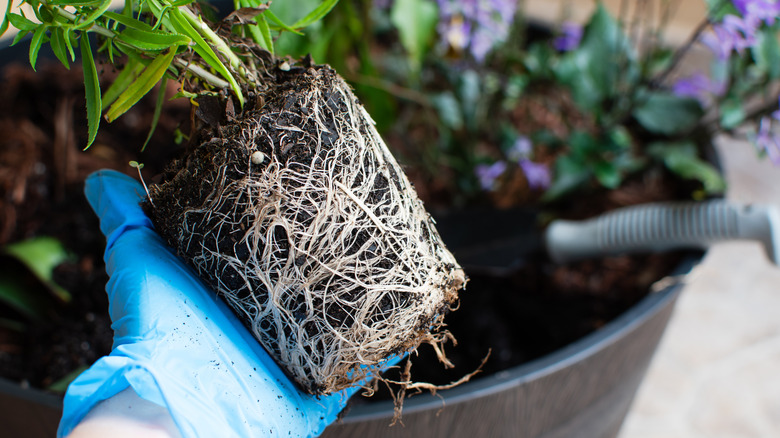
After a trip to the dentist, you might come back with extra toothbrushes. While these can be handy in emergencies, you probably have a few stocked up. If you're unsure what to do with them, know that they can be real lifesavers when it comes to repotting plants. Transferring usually involves getting a bigger pot, adding in more dirt, uprooting your old plant, massaging the root ball to loosen it all up, and putting it in its new home. Repotting is a regular part of caring for container plants, and can help your outdoor mums thrive.
However, sometimes repotting requires a little more work — like when those plants have root rot. This disease comes from harmful fungi growing in soil due to too much moisture, which is why overwatering is a major mistake you need to avoid. To keep fungi from transferring during the repotting process, you have to clean off the old soil and separate any tangled roots. While you can rinse your plant's roots off, sometimes it doesn't get all the dirt off. In these cases, a toothbrush can be useful. (This is also handy to remove most of the soil for semi-hydroponic plants, where a majority of the dirt needs to be removed.)
To use the toothbrush, use gentle strokes to wipe away soil and brush the roots down with the bristles. This will allow you to get into tight spaces and make more finessed movements than you could with your fingers or a towel. The bristles work to clean tight spaces without causing a lot of damage, and the back end can untangle roots.
Considerations for using a toothbrush in the garden
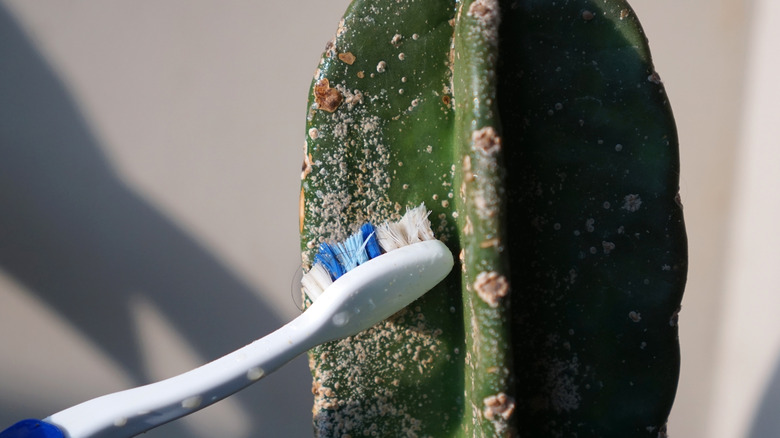
When picking out a toothbrush for cleaning your plant's roots, you want to make sure you pick a softer tool. If you have a firm-bristled brush and you scrub too hard, you risk damaging the roots. Save those toothbrushes for scrubbing dirt off potatoes and carrots, and instead use the soft-bristled ones for cleaning off roots. Softer toothbrushes allow you to use the bristles to brush away all that dirt in the way, without damaging the plant itself. However, you should still be careful and use a soft touch to avoid any damage, while getting off as much dirt as you can with the brush. When your plant is already fighting against root rot, it doesn't need any extra shock or damage.
While this is a huge perk of using a toothbrush, it isn't the only way they can help you in the garden. They are incredibly handy to use with plants in several ways. Not only can you clean off roots when repotting, but they are also good at brushing dirt and dust off of leaves or scrubbing scale off plants. The pointy end of a toothbrush doubles as a dibber tool to make small holes in the soil so that you can plant seeds at the right depth for successful growth. It's useful for untangling root balls as well — which can help you better remove the diseased soil in the first place. As you start to use a toothbrush more and more in your garden, you may find additional uses for it as well!