

The Deadly Mushroom You Don't Want To See In Your Backyard
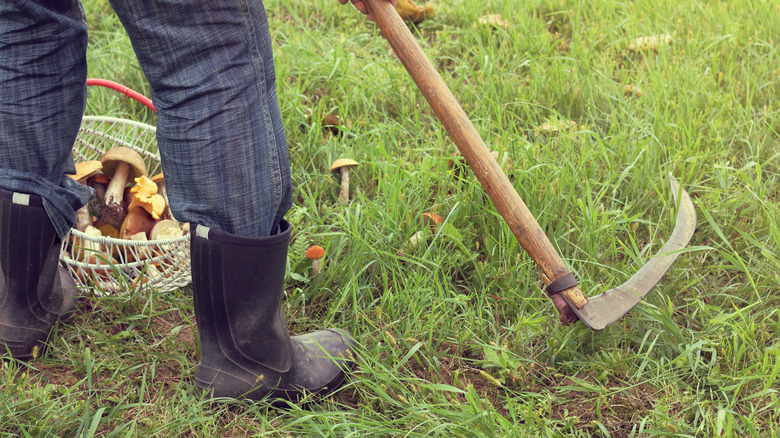
For some, foraging for wild mushrooms is a fun pastime — and a way to save a little money on groceries. There are good reasons to not eat mushrooms off the trail or even your own yard. If you're not highly experienced, you could find yourself in a world of hurt, or worse. One mushroom that is a culprit for some human deaths is the death cap (Amanita phalloides). According to an article published in the BC Medical Journal, death cap is at fault for 90% of the mushroom-caused deaths in the world. While native to Europe, it has made its way across North America and is increasingly found in urban and suburban areas, not just the deep woods. So it's one fungus you really don't want to see showing up in your yard.
They're not only harmful to humans, they are also bad for pets, the fungus' toxins placing them at extreme risk of liver and kidney damage. Since just one mushroom is enough to take out an adult human, even a bite or two could be fatal to dogs and other outdoor pets. If you have mushrooms popping up in your yard during the warm months, you'll want to identify them before sending pets or kids outside to play. In humans, there is an initial wave of vomiting and abdominal pain, followed by a false recovery for a few days. Unfortunately, people who haven't received early treatment then quickly succumb to kidney and liver failure. But don't worry: we're about to tell you how to spot these deadly fungi.
Identifying death cap mushrooms
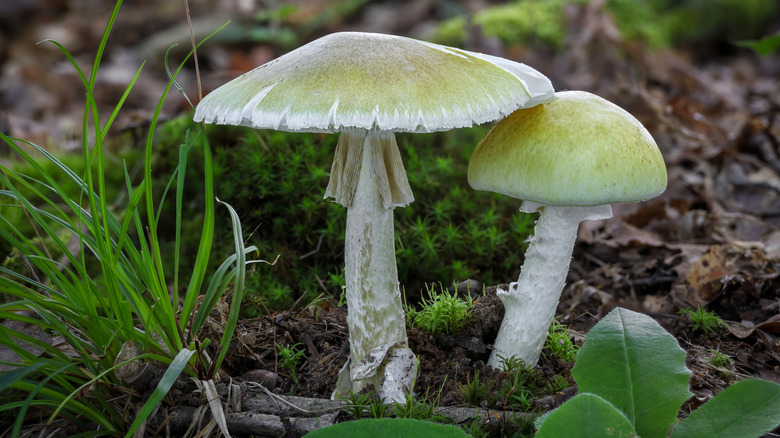
Many different types of mushrooms can pop up in your yard following a good rain, and depending on where you live, the death cap is likely one of them. There are some distinctive attributes the death cap mushroom has that will let you know you've found one. A mature specimen may have a yellowish, brownish, or greenish coloring on the top of the cap, a cloth-like ring draping around the top of the stalk, and gills under the cap — which are the big giveaway. Immature mushrooms lack the ring-cape and have less noticeable gills. When they are just beginning to sprout, they can be mistaken for edible puffball mushrooms. In fact the deadly variant can be easily mistaken for several edible varieties. It's one reason there are dangerous shortcomings in plant identification apps. Look for them as spring begins to bring things back to life, continuing into summer and fall. They often sprout up when it's warm and rainy.
If you find death cap mushrooms in your yard, there are some things you can do to get rid of them and prevent them from spreading. Don't mow them down (or put them in wood chippers), as this may spread their spores. You can pull them by hand, bagging and disposing of them in the garbage, and definitely don't put them in your compost bin. There is no herbicide that kills them. So hand removal, preferably wearing gloves, is going to be your best bet (there's no evidence that handling them with your bare hands is dangerous, but it doesn't hurt to be safe). You will also want to disinfect any garden tools you opt to use in the removal of these mushrooms so as not to spread spores or toxins.