

Why You Should Think Twice Before Planting Mint In The Ground
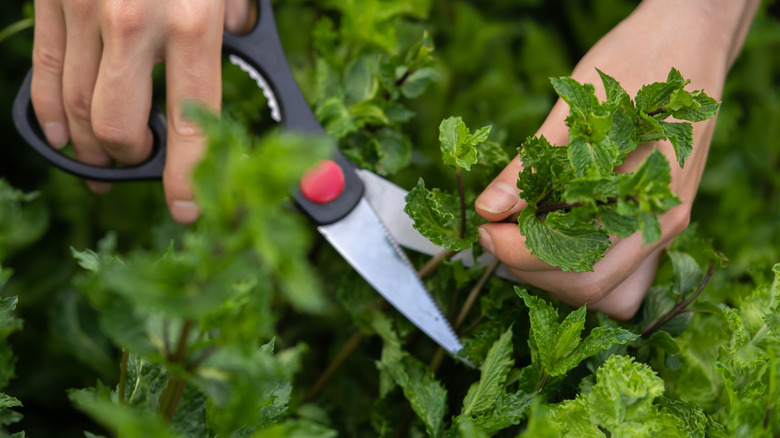
Mint is a popular herb used in a variety of culinary ways, from adding zing to your tea or lemonade to providing delicious flavor to meals or desserts. It's a wonderful addition to Christmas dishes and drinks, and can be kept thriving all winter long. It can even be used to deter squirrels and keep them away from your garden with its strong scent.
Although it looks harmless enough to cultivate, with its deep green leaves and blue, violet, or off-white flowers, mint is an herb that you shouldn't put directly into the soil. When grown properly, it is a fuss-free plant that is great for gardening beginners, but "grown properly" is the operative phrase to note. Mint is very invasive, growing and spreading quickly by sending out runners all over the place. If planted in the ground, it can easily overrun the rest of your garden and is almost impossible to control once it establishes itself.
You can easily keep mint under control and still reap its benefits by planting it in planter boxes or containers where it can't spread randomly. There are a few things you can do to make sure the roots don't spread through your container's drainage holes or spill over the side of the planter box. Pruning it regularly by clipping the tall stems and remembering not to toss clippings into the compost will help you keep it under control so you can enjoy everything this fragrant herb has to offer.
How to plant and care for mint so it stays under control
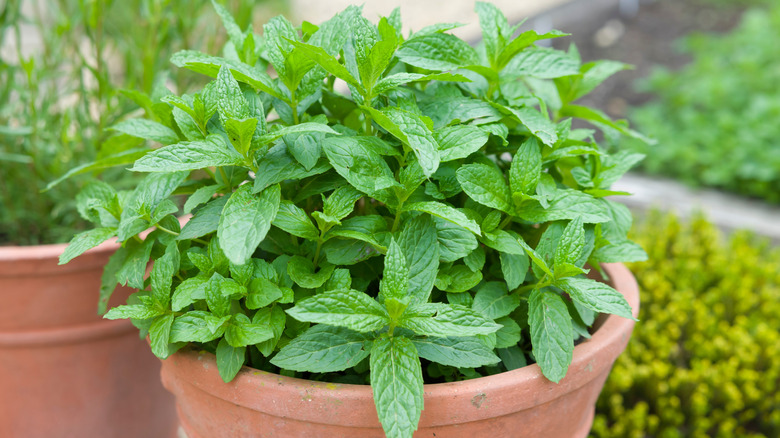
Successfully growing mint so it doesn't overrun the garden is easily accomplished by planting it properly. The best way to keep this fast-spreading herb contained is to plant it in a pot and then put that container in a larger pot or planter that has soil in it. It is recommended to rotate the pot with the mint every few weeks inside the soil to prevent the runners from getting out of the drainage holes.
If you are planting several plants in a planter box or raised garden bed, space the plants about 18 to 24 inches from each other so there is no overcrowding and they have plenty of room to grow. If they are planted in raised beds outside, they will die back in colder climates and come back in the spring. In southern climates, you can harvest mint all year long. Mint thrives best in light or partial shade. Many gardeners plant it in small pots and keep it on the kitchen windowsill to clip from during food preparation. Mint loves well-draining soil that retains moisture without becoming soggy. Regular watering to keep the soil moist and using a great fertilizer rounds out the care this easy-to-grow plant needs to do its best. You should also replant your herbs about every 3 or 4 years to ensure a great flavor and strong mint scent.