

Downsides Of Using Mesh Netting To Protect Your Garden
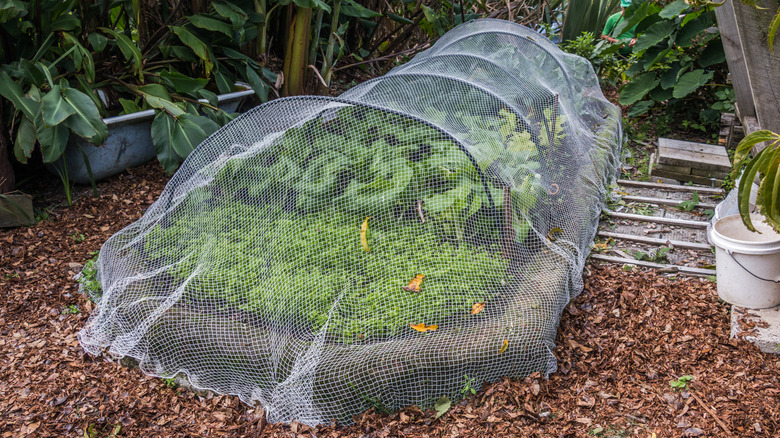
Many gardeners swear by the benefits of covering their crops with garden netting or garden mesh, which has multiple benefits for growing veggies and flowers. A mesh cover can keep pests like beetles and moths from decimating the garden you've worked hard to create. It can also deter deer, rabbits, and other garden-loving critters from chowing down on your bounty. It can provided needed shade on hot days, and conversely, fine mesh can provide a greenhouse-like effect by trapping heat and moisture, protecting new gardens from frost. But these benefits might be outweighed by the many downsides of garden mesh, including heating up your garden too much, harming wildlife, and contributing to the waste stream.
If you aren't monitoring your garden temperatures, all that mesh draped over your veggies may be trapping too much moisture and restricting airflow. This can create an environment that's too hot and humid, contributing to low yields and potentially increasing the chance of plant disease. Mesh also keeps out beneficial insects like ladybugs — which gobble up aphids — and bees and other pollinators that garden plants need to thrive. Further, most of the garden mesh on the market is made of non-biodegradable plastics and isn't recyclable. As it weathers and breaks down in the outside elements, garden mesh releases microplastics into the environment on its eventual journey to the landfill.
Mesh netting can be dangerous for wildlife
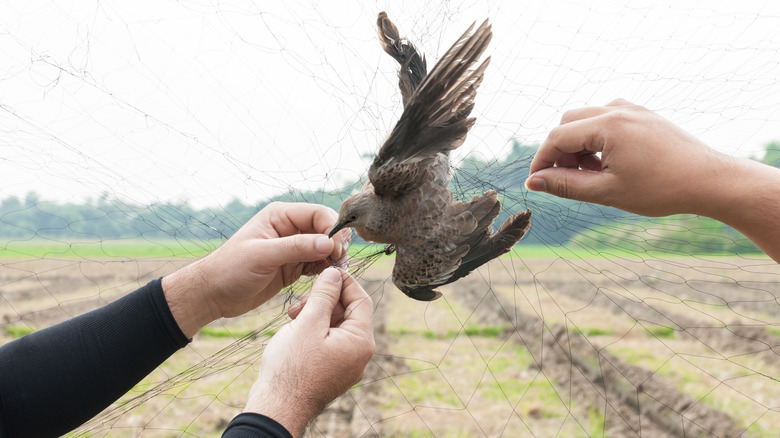
When it comes to the downsides of garden mesh, the impact on wildlife is perhaps the most upsetting. It can be a hazard if it's strung too loosely or has a weave size that can entangle animals. And the last thing anyone wants to see when walking out to their garden is a trapped bird struggling to break free. Fortunately, there are ways to prevent this nightmare from occurring.
There are many varieties of garden mesh on the market, and you can check if your netting is safe for birds and other wildlife by testing the weave with your finger. If your finger fits through the weave, it's too big. Mesh and netting with fine weaves are much safer for wildlife, although they'll still keep out the pollinators and beneficial insects you may want visiting your plants.
How you install garden mesh also makes a difference. Keeping the mesh taut over a frame and securing it tightly to the ground will ensure loose netting doesn't create an entanglement hazard for wildlife. If larger pests are your focus, chicken wire or tomato cages are better alternatives to netting, as they won't entangle snakes, frogs, and birds. If insects are your main concern, an alternative to garden mesh is to consider plants that will repel pests from your garden naturally like marigolds, lavender, and rosemary. Ultimately, responsible use of garden mesh — or considering its alternatives — will result in a sustainable garden safe for wildlife and the environment.