

How To Identify And Get Rid Of Fungus Gnats In Your Yard
We may receive a commission on purchases made from links.
Your yard is your sanctuary, where you go to enjoy peaceful time outdoors. However, whether you're taking advantage of the health benefits of gardening or simply soaking up sunshine, few things can put a damper on your backyard experience like fungus gnats. As larvae, fungus gnats can infest your soil, whether in your backyard or different pots and planters throughout your garden. Because of this, you may also occasionally find them in your house if you practice your green thumb indoors. But how can you differentiate them from their buzzing cousins?
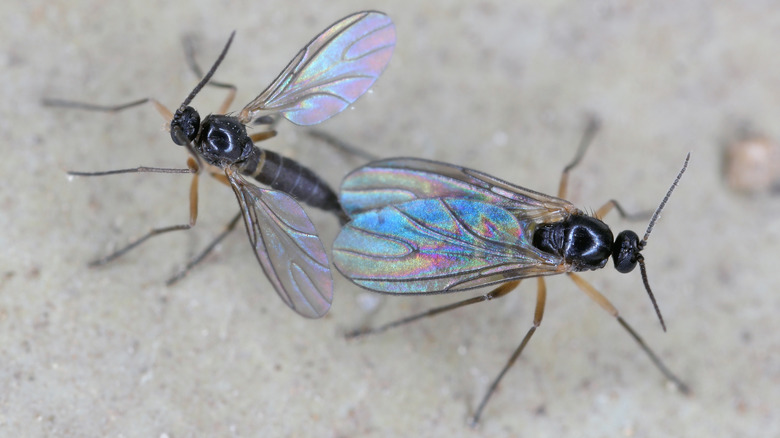
Well, once they reach adulthood, fungus gnats develop a distinct appearance, as well as less than favorable behaviors like flying around lights and spending time on your plants. They're typically around 1/8 of an inch long, with lengthy antennae that set them apart from many other types of flying insects. Fungus gnats of the Bradysia species also have a Y-shaped vein in their wing, which really helps when it comes to identifying them. They also aren't the strongest fliers, only going airborne in tiny spurts.
Although matured fungus gnats won't bite you or harm your plants, their presence can be frustrating. This is especially true given that their offspring can be destructive since they love to eat roots. As a result, once you've identified that fungus gnats are the bugs flittering around your yard, you can begin the process of getting rid of them, and that's largely all about prevention.
Getting rid of fungus gnats in your yard
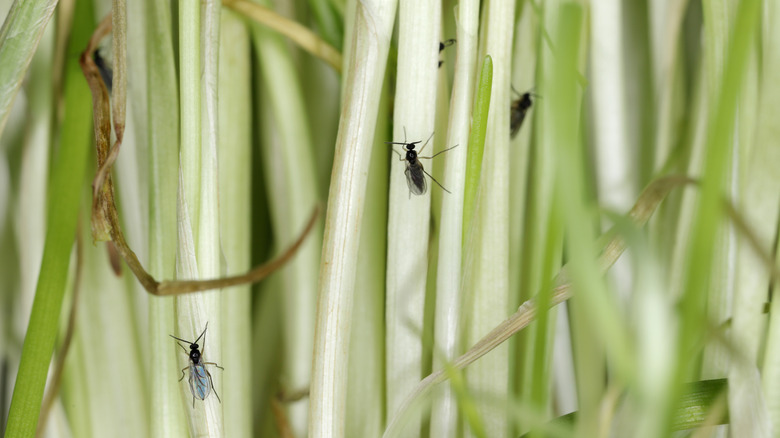
When it comes to fungus gnats, one of the best ways to reduce their numbers in your yard is to focus on prevention and larva management. Although this method won't tackle the adults buzzing around your face, it will help reduce the number of adults over time.
Fortunately, managing fungus gnat larvae in your yard can be as simple as practicing proper plant care, such as avoiding overwater or excessive fertilizing. Fungus gnats thrive in damp soil that's rich with organic matter, so preventing these conditions leaves less place for eggs to be laid and larvae to grow. There are also different biological insecticides you can use. These are bacteria that kill fungus gnats. While they occur naturally, you can also pick up bacteria such as Bacillus thuringiensis from many garden supply stores, or you can purchase something like Summit Mosquito Bits on Amazon. If you opt for this route, always research to make sure this is the right choice for your yard, and use any garden supplies as the labels direct. You can also check with local ordinances beforehand for more information.
You may be wondering if there's an option for managing the adult fungus gnats in your yard. While you can choose to put out sticky traps, these can pose a threat to all wildlife, not just annoying gnats. As a result, you may instead want a different approach. A great way to handle gnats is to invite more insect-eating birds to your yard. Birds and other natural gnat predators will prey on adult fungus gnats, helping reduce their presence. If this option sounds appealing, there are several ways to attract more birds to your lawn, from adding a variety of wildlife-friendly plants to installing a birdbath.