

How To Identify And Get Rid Of Grass Spiders In Your Yard
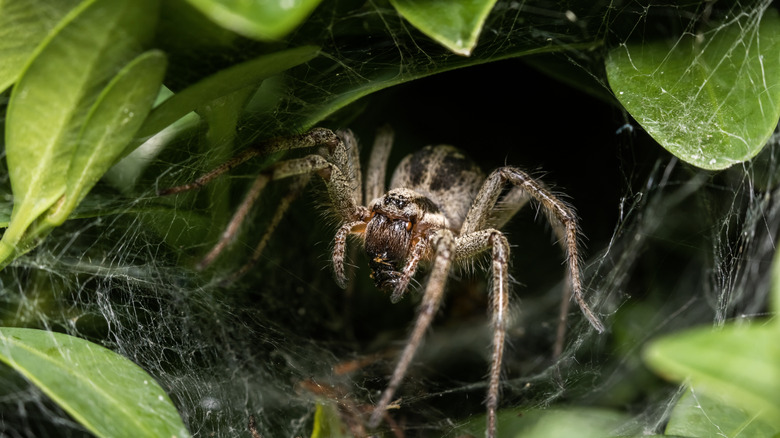
If you're not a fan of spiders, the thought of dealing with a grass spider infestation in your lawn might make you want to grab a blow torch and get rid of all the grass. While that might kill off the spiders, it can also destroy beneficial insects, and you may want to stop killing spiders in your garden anyway. Plus, a scorched earth yard doesn't make for a very inviting space for guests or fun with the family.
Before we dive into how to tell if they're taking over your lawn and how to get rid of grass spiders, let's learn a little bit about these eight-legged creatures. The grass spider (Agelenopsis spp) is a specific type of funnel weaver spider. Even though they look somewhat similar to the wolf spiders you may find running around inside your home from time to time. Grass spiders, from the family Agelenidae, are a little smaller than wolf spiders (Lycosidae) and have fewer eyes. And, while a grass spider could get into your home, you'll most often find them in your yard, hence the name. There, they love munching on aphids, crickets, moths, and similar outdoor bugs. In addition to the easily identifiable webs they make in your yard or garden, they're recognized by their elongated spinnerets and distinctive markings.
Looking for dewy webs in your lawn and what to do
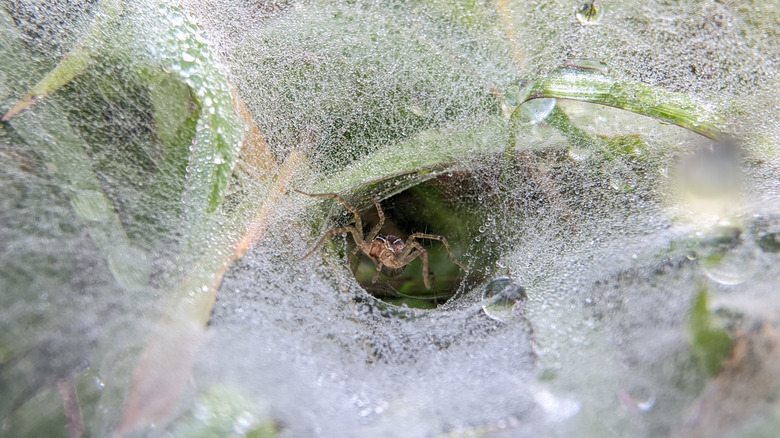
Not sure if you have grass spiders in your lawn? You'll know if you do because you'll spot their homes quite easily, especially on dewy mornings. They build dense web nests in the grass, featuring distinctive funnels in the center. They're easily visible — the bigger the nest, the quicker you'll spot it. If your yard has a lot of these nests, you may have a spider problem. While they help get rid of some other pests in your yard, they also enjoy dining on harvestmen (beneficial for getting rid of small bugs like mites) and pollinators like moths and small butterflies. They're not aggressive towards humans (and won't stare you down the way wolf spiders sometimes do), but they are venomous to their prey. They may bite if they feel cornered. If they do, they're not one of the spider bites that require immediate medical care: You are more likely to get a rash and have some mild discomfort. Pets that snack on grass spiders will also be fine.
Even if grass spiders are tolerable, you may not want them taking over your lawn. Keeping your yard manicured is the first step in controlling grass spiders as they thrive in tall grasses and dense thatch. Mowing your grass to the right length eliminates fresh nests and makes it difficult for them to build new ones. Trim bushes and other plants, and Keep leaf clutter cleaned up. If they're still appearing, you can try natural oils known to deter spiders and other bugs, such as citronella and peppermint, which are safer for pets and children who may play in the yard. Your last resort should be traditional pesticides or calling in an exterminator.