

If Your Yard Is Noisy, Get A Birdhouse With A Must-Have Feature
We may receive a commission on purchases made from links.
Noisy surroundings aren't just stressful for humans. If you're struggling to attract songbirds to your yard, loud or frequent noise may be the culprit. Certain sounds are so stressful that they may dissuade birds from moving into the nesting boxes you've set up. Even if the noise doesn't scare them away, it can endanger their health by making predators and mating calls hard to hear. Researchers at the University of Colorado Boulder have even found that noise pollution leads to weaker chicks and smaller broods for some bird species. Sound-dampening birdhouses are worth considering if you live near a highway, an airport, or even a dog that loves the sound of its own bark. You don't need birdhouse that could muffle a raging rock band, but do look for decibel-lowering features that promote a sense of safety for your feathered friends.
To help birds feel secure, soften noises coming into the birdhouse from the outside, not the other way around. This is a job that calls for sound-blocking materials. In general, the thicker and heavier a material is, the better it can block sound. At the same time, you don't want a birdhouse that's the weight of a bowling ball. Studying the sound-blocking abilities of different types of wood can help you select a house with just the right amount of heft. Optimal thickness is a bit easier to figure out. When enclosing a space with solid wood walls, a thickness of 0.47 inches or more is best at blocking noise. Wood that's even thicker – at least 0.75 inches — provides the ideal amount of insulation when the air temperature outside the house drops.
Building or buying a thick-walled hardwood birdhouse
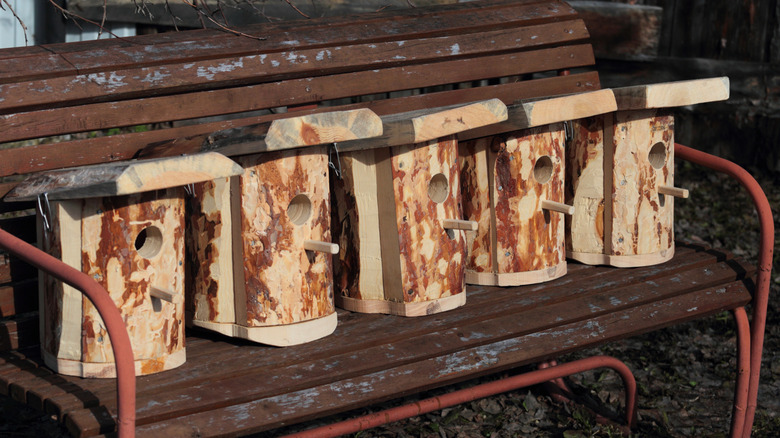
Many birdhouses are made of cedar because it's good at resisting rot, but other types of wood offer better protection from stress-inducing sounds. When it comes to blocking sounds from outside the house, dense hardwoods are preferable. Oak and maple are two of the best choices as their dense fibers keep lots of sound waves from entering the birds' nesting area. A product like Cedar Alpha's American Sky bluebird house is a solid choice to reduce noise for nesters. It's made from hickory, which is even denser than oak and maple, and the walls are almost half an inch thick, which should suffice if cold temperatures aren't an issue where you live. A bit bulkier is better if keeping the nest warm is a concern, but finding a pre-made hardwood birdhouse with walls much thicker than this can be difficult.
Building a thick-walled hardwood nesting box is another option. You could DIY a log cabin for birds with chunky little pieces of hickory or construct a safe and simple wooden birdhouse with slabs of oak, maple, or reclaimed teak. No matter what type of wood you're using, be sure to make an entrance hole that's the right size for the species you're targeting. If you mount the nesting box on a post raccoons could climb, add a baffle such as the Songbird Essentials Predator Defeater. Also put the birdhouse an adequate distance from spots other birds gather and your own home. It's best to place a birdhouse at least 15 feet from bird baths and feeders and about 100 feet from buildings that humans frequent.