

Solid Or Transparent: How To Choose The Best Wood Stain For Your Backyard Deck
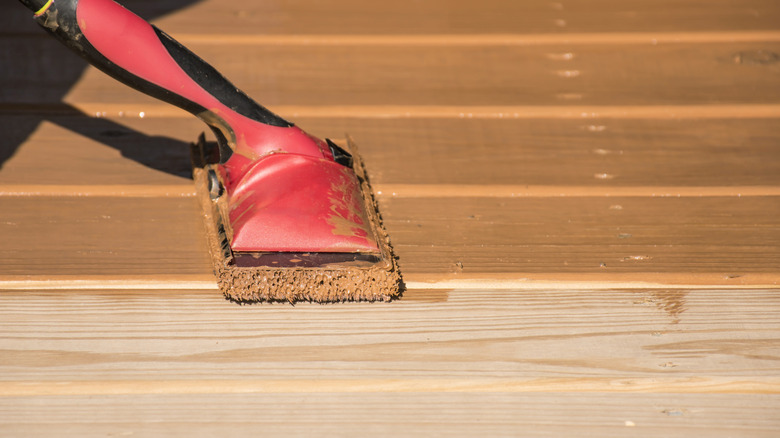
Whether you're building a new deck or improving an old one, you have to decide on how you're going to protect the wood with a stain or seal. After all, you know what happens if you don't seal your deck: You risk damaging the deck's structural integrity, shortening its lifespan. The first step in this process is deciding if you want to go with a solid or transparent option. At a quick glance, one choice stands out for durability.
Solid color stains cover and conceal more of the wood — behaving more like paint — and they are great for older decks, or ones you want to last a long time. This is because it better protects from UV damage from the sun. Solid stains are available in a variety of colors, and they hide a lot of wear and imperfections. It is also thin enough that it allows the wood is able to breathe (better than thick traditional paint), which is great for dealing with rain. Instead of trapping water and rotting, liquid doesn't penetrate the wood's pores, keeping wood strong for longer. While a solid stain does cover up some of the natural variation in the wood, it's thin enough that you can still see some of the grain and design, even if it's not as much as you would see using a more transparent option. And the colors allow you to match your deck to the rest of your house, decor, or overall vibe.
With sun and moisture being the two main enemies of any wooden structure, a solid stain no doubt offers the best protection. If you were only looking at low-maintenance durability, a solid stain is the obvious choice. But it may not be your preference.
Choosing the stain that works best for your lifestyle
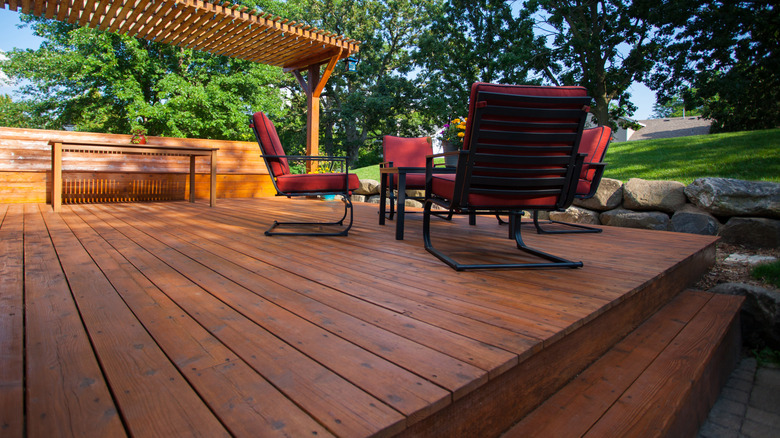
How long your structure lasts also depends on the care. There are a lot of common deck staining mistakes that people make that weaken the wood, so fixing these issues can help extend the life, even if you're choosing a transparent stain. Transparent stain shows off the rich beauty of the wood's natural grain and color, which is particularly nice for new decks and expensive woods. However it doesn't provide UV protection, and needs to be reapplied more frequently. On the plus side, each new application will blend better than with a solid color stain which may fade over time.
There is actually a range between transparent and solid, including semi-transparent and semi-solid. Both options provide more protection and color options than a straight transparent stain, while giving you some of the protections of a solid one. It's worth noting, the more coverage you have in a stain, the less frequently you need to reapply. Semi-transparent options, for example, need to be reapplied every one to three years. Meanwhile, solid stains can go closer to five years without reapplication. Considering many people do not stain their wood deck enough, having more time before reapplications can be helpful.
There are a few other things to note as well. Over time, even if you go with a fully transparent stain, the wood starts to darken and the grain will vanish over time, though you can slow it down by sanding. So if you really enjoy transparent stains, you can start with that for the first few years. Then, as it starts to darken, you can look at other forms of stain to provide more protection. One thing is certain, and it's that wood seals of any kind are better than none.