

The Best Method For Sharpening A Brush Cutter Blade
We may receive a commission on purchases made from links.
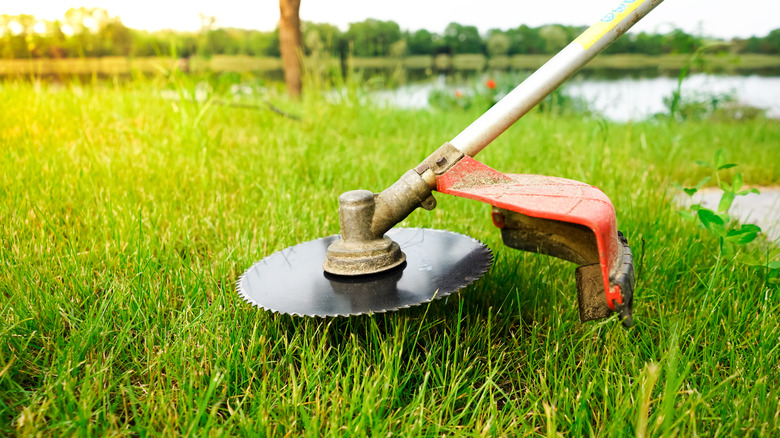
Most lawn care DIYers have a string trimmer or brush cutter, or both. One of the main differences between string trimmers and brush cutters is that brush cutters use metal blades to cut through grass, brush, and other foliage. Like any metal cutting edge, brush cutter blades eventually get dull and need sharpening. Just as there are signs you need to sharpen your lawn mower blades, you will notice a difference in performance when your brush cutter blades go dull. The best method for sharpening a brush cutter blade is safe, simple, and relatively quick to complete.
If you already know ways to sharpen lawn mower blades, you will have no problem sharpening a brush cutter blade. However, even if this is your first attempt at sharpening the blades on a lawn implement, it is a fairly simple process that is easy to learn. There are relatively few tools needed to sharpen blades and you likely have everything you need in your garage or workshop. The primary tools are a bench vise like the Yost LV-4 homeowner's vise, a file, wire brush, lubricant, and shop cloths. You will also need a wrench or socket for removing the blade.
How to safely sharpen your brush cutter blade
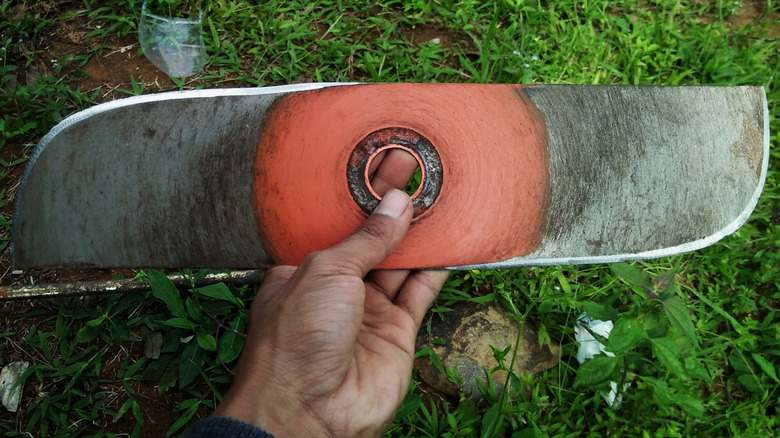
The first step in safely sharpening your brush cutter blade is to kill the power to the device. On electric models, this involves removing the battery or unplugging it from a power source. For gas models, disconnect the spark plug wire. With that done, remove the blade and place it securely in the vise. Clean the blade, apply lubricating oil, and look for any major damage. If the blade is badly bent, cracked, or nicked, it is best to replace it.
Next, locate the cutting edge on your blade. There are a wide variety of brush cutter blades — two, three, or four blade models, along with circular disc blades with multiple cutting edges. However, what they all have in common is these cutting edges will eventually dull and need to be sharpened. Whichever blade design your brush cutter has, the key is finding the edge and honing it with the file following the same bevel or angle as it already has. Be sure to only move the file in one direction along the cutting edge, not in a back-and-forth motion. It is also important to sharpen each edge the same amount so the blade remains balanced.
Once all of the cutting edges are filed to where they are shiny and sharp, look over the entire blade checking for any burrs that may have been left from the sharpening process. File down any burrs you find, clean and oil the blade once more, and put the blade back on your brush cutter.