

Environmental Benefits Of Using Your Pond Water In Your Garden
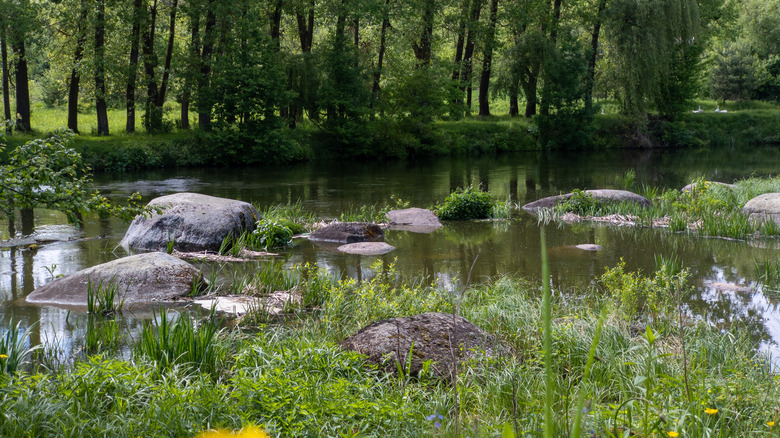
As the summer months pass, droughts become more common. Your soil may become dry and hard, and soon your plants will wither. If you have an outdoor faucet or spigot, you can hook up a long hose and remedy the problem on a regular basis. There's no need to change this approach if it works for you, but you should consider using other water sources, like a nearby pond for instance. Unlike treated city water, pond water contains natural nutrients that can enrich your soil and feed your crops. It will also conserve water and reduce the need for chemically treated water. But there's a few things you need to keep in mind before you water your garden from a natural source.
One of the most important elements of keeping a healthy yard and garden is symbiosis. If you want to ensure that pond irrigation promotes balance in your backyard ecosystem, there are a few tips to keep in mind. The main thing to consider is that you don't want to pump polluted water into your garden. One of the first things you can do is purchase a pH tester. You want to make sure the water's pH is between 6 and 7. If your pond captures industrial or agricultural runoff, the water can contaminate your garden soil. You can plant sunflowers to remove pollutants from your soil. Heavy metals like cadmium, chromium, and arsenic are especially harmful. Keep in mind, agricultural runoff can also spread pathogens like E. coli and salmonella.
How to pump pond water into your garden
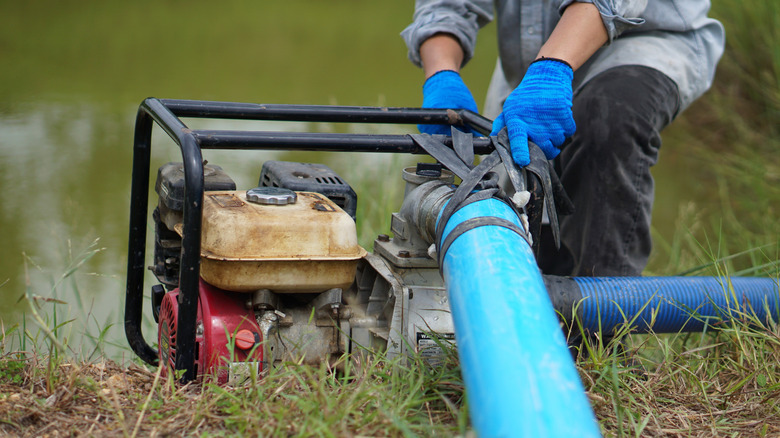
You could haul pond water with a watering can, but that's inefficient and a lot of work. It's usually best to pump the water, especially if your garden isn't right next to your pond. You'll need to use a submersible pump. Most electric submersible pumps can connect into a standard outdoor outlet. There are also gas-powered submersible pumps, if you don't have an outlet near your water source. The electric pumps can run on a timer, or they can just run constantly, in which case, you'll need a valve to turn the flow of water off and on. One of the most common mistakes people make when watering their garden is underwatering, so make sure you get on a good schedule.
It's crucial to install a filter at the pump's intake to prevent it from being clogged by whatever happens to get stirred up at the bottom of the pond. The filter not only protects the pump — it also helps keep debris out of your garden water. Clean your filter monthly and replace it yearly to keep everything running smoothly. This filter will keep impurities out of your garden while allowing nourishing chemicals like nitrogen and phosphorus to pass through. Keep in mind that these chemicals raise the pH of your garden, so you may need to use a little less fertilizer to prevent your plants from burning up. Once you have this system set up, you can also use it to water your lawn, but make sure you do it at the right time of day.