

The Must-Try Watering Tip That'll Keep Your Blue Hydrangeas Vibrant
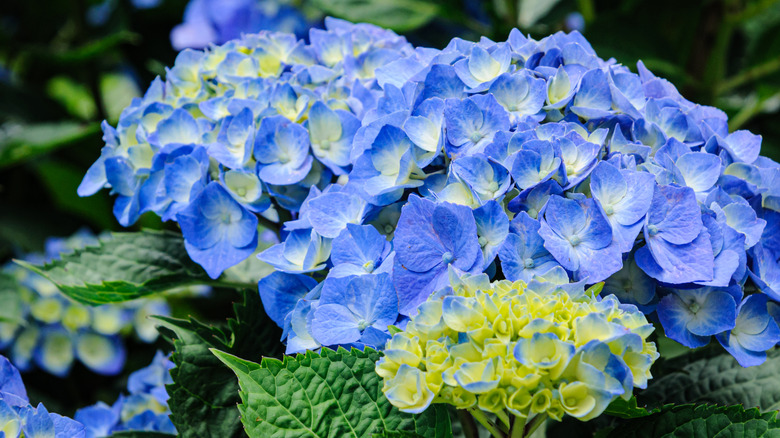
Blue is one of the most sought-after colors in the garden. It's cool, calming, and just rare enough to feel special. In fact, fewer than 10% of flowers fall into the blue or blue-ish category, which makes those sky-toned blooms even more prized. However, plants don't naturally produce a true-blue pigment. What we see as blue is often the result of a botanical chemistry trick involving red pigments and how light reflects off petals. One of the most beloved of these blue blooms? Hydrangeas. With their big, bold, ball-shaped flowers, blue hydrangeas are flower royalty, especially when they're planted in this optimal spot in your garden. That's why it's so disappointing when their petals unexpectedly turn pink, throwing off the carefully curated vibe of your garden.
But don't worry, the blue you fell in love with is still in there; it just needs a little help to shine again. There are a few ways to boost your chances of keeping those blooms blue — like adding coffee grounds to the soil. But one simple, often overlooked trick starts with something as basic as the water you're using. In fact, your tap water could be the sneaky culprit behind your hydrangea heartbreak. Fortunately, there's an easy fix: tap into Mother Nature's own supply.
Rain water could be the secret science behind hydrangea blues
You might not think the water you use could sway your hydrangea's wardrobe choices, but when it comes to flower color, it absolutely can. That's because hydrangea color on the bigleaf varieties (Hydrangea macrophylla) is closely tied to your soil's pH level. Soil pH measures how acidic or alkaline your soil is, using a scale from 0 to 14. Seven is considered neutral; anything below that is acidic, and anything above is alkaline. It might sound like a science class throwback, but soil pH plays a big role in plant health by influencing how well roots absorb nutrients. For blue hydrangeas, acidic soil (pH around 5.2 to 5.5) is the goal. When soil leans more alkaline, the blooms often turn pink, which might be beautiful, but may not be what you bargained for if you're chasing a bold blue garden.
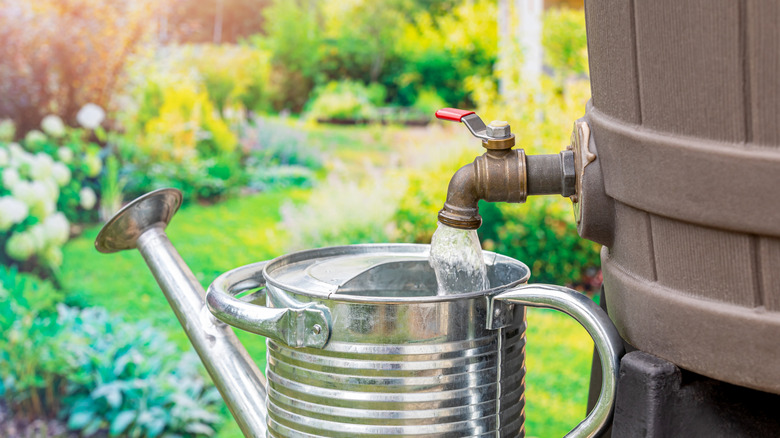
So, where does water come in? Most municipal tap water tends to lean slightly alkaline, which can nudge your soil in the wrong direction over time. That's where rainwater comes to the rescue. Unlike treated tap water, rainwater is naturally soft and slightly acidic with a pH of between 5 and 5.5, helping to maintain or even lower your soil's pH. This shift encourages those rich blue hues to develop and stick around. Collecting rainwater is as easy as placing a rain barrel under your gutter downspout. Just make sure it's covered to keep mosquitoes out and clean it occasionally to avoid algae buildup. If you're serious about keeping your hydrangeas blue, switching to rainwater could be one of the simplest and most natural solutions in your garden toolkit. To help retain moisture and fill the space under your hydrangeas, consider adding a ground cover. It's a simple way to keep the soil cool and the roots happy — your flowers will thank you for it!