

A Gorgeous Bird Magnet Shrub That You'll Regret Planting In Your Yard
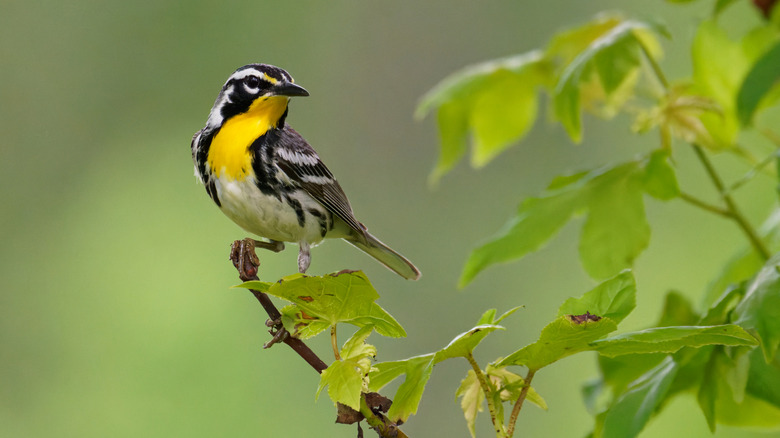
A simple method to attract more songbirds to your yard is to plant more things that they enjoy, like shrubs with delicious berries. Firethorn (Pyracantha spp.) is a genus of broadleaf evergreen shrubs that grow round fruits that birds love. One of the most popular species is scarlet firethorn (Pyracantha coccinea), native to Europe and Asia, with red berry-like fruits. In the autumn and winter, it can be a treat to see its combination of dark green leaves with orange-red fruit dotted along its branches. The bad news is that firethorn comes with a little baggage including thorny branches, potentially dangerous fruits, and a slightly invasive habit.
In the U.S., scarlet firethorn is hardy in zones 6 through 9, and grows well in full sun or partial shade. Commonly used in landscapes thanks to its low maintenance needs, this shrub can handle occasionally dry weather well. Harsh winter conditions, however, do not suit this non-native species. But anyone considering adding firethorn to their outdoor spaces needs to consider all aspects of it, beyond routine care and maintenance.
Problems associated with growing firethorn
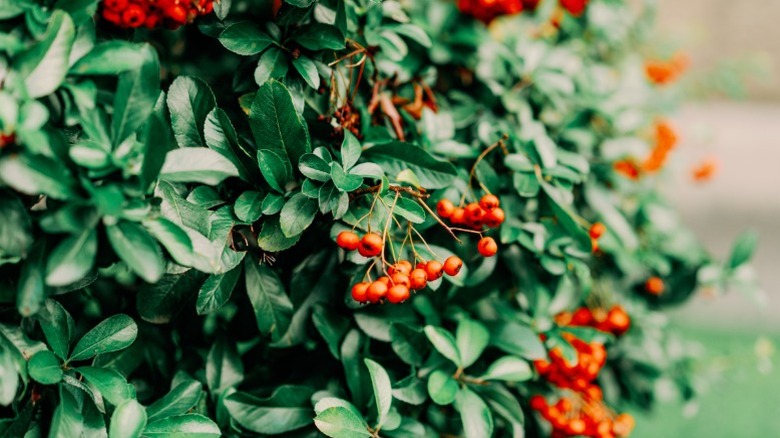
Unfortunately for those seeking a large shrub with attractive features throughout the different seasons, firethorn hides an annoying aspect. While some gardeners like to use the thorns of this shrub to create a better barrier or hedge, they can be dangerous and annoying. You might be better off with other simple tricks and ideas that'll add more privacy to your backyard, as opposed to half-inch-long thorns. In May, the white blooms have what is considered an unpleasant smell for anyone hoping to stick their nose in and get a whiff.
Along with sharp thorns, this species can also be unsafe to keep around pets and children. The berries are a known skin and stomach irritant. Eating too many of the red fruit of the firethorn shrub can lead to a stomach ache, blistered tongue, and vomiting. People do make jelly out of the berries though, and it was more popular before and during World War II, when more traditional fruits were expensive or hard to come by.
Firethorn is more than simply annoying, it may be more aggressive than you think. There are several areas in the United States where scarlet firethorn, in particular, is considered invasive, including parts of California, Georgia, and Virginia. In Florida, a 2022 assessment by the University of Florida Institute of Food and Agricultural Sciences declared firethorn to be a high invasion risk. And if you grow to regret planting firethorn due to its thorny branches and noxious parts, it also can be difficult to remove as it easily seeds and sprouts from roots. If you pull scarlet firethorn out by hand, it's recommended you include a cut stump herbicide as part of your process.
Options to use instead of firethorn
Instead of bringing these problems to your yard by planting firethorn, consider alternatives like American beautyberry (Callicarpa americana). This shrub also features brightly-colored berries that attract wildlife, although the berries of the American beautyberry are a stunning shade of purple rather than red. A native bush, American beautyberry is a noninvasive option to use in place of firethorn for a border area, and is hardy from zones 6 through 10. Plus, you can bring all the cardinals to your yard with this gorgeous berry bush, without the issues associated with firethorn.
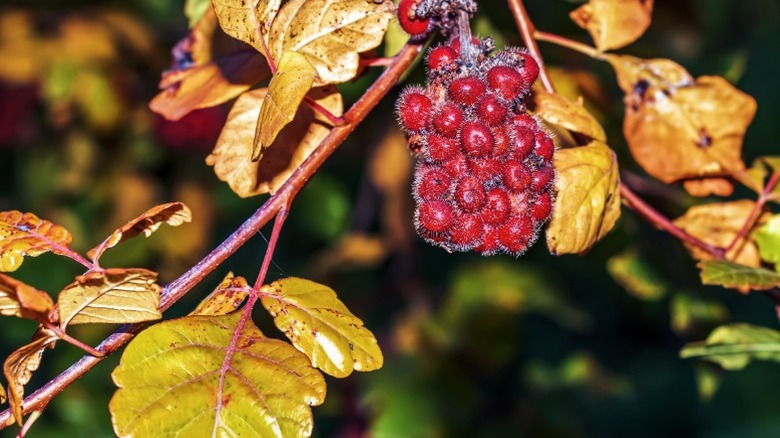
However, if the autumn color of firethorn is the main draw for your landscaping, try fragrant sumac (Rhus aromatica). This dense, low-growing native shrub has green leaves in spring that turn from orange to red to purple in the fall. This progressive color change creates a brilliant show in your garden each year, similar to firethorn but without the prickly thorns. Fragrant sumac is hardy from zones 3 through 9 and produces fuzzy, red edible fruits that also attract wildlife.