

A Unique Berried Ground Cover That'll Effectively Suppress Weeds In Your Yard
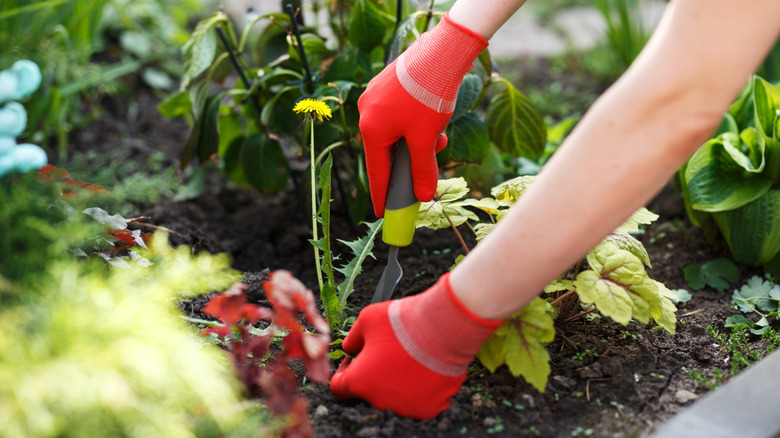
Weeding is an important, somewhat unpopular component of maintaining a healthy, nice-looking outdoor space. Wherever you have plants you can have weeds. They also show up along fence lines, walkways, and in your gravel, messing up the look of your garden or yard. Weeds cause a variety of problems for your plants such as stealing the good nutrients from the soil, attracting harmful bugs, crowding out the plants you want, and if they are tall, stealing the sunlight. You can kill them using Martha Stewart's DIY, 3-ingredient weed killer but if you want to suppress the weeds in your yard long-term and add a great ground cover that pollinators and other wildlife love, plant kinnikinnick (Arctostaphylos uva-ursi). This plant is also called bearberry, a name received due to the fact that bears love the groups of bright red berries this plant produces. Kinnikinnick is easy to care for and covers about 4 to 6 feet per plant, spreading slowly via surface rhizomes. Essentially, if you plant this ground cover densely enough, there won't be room for weeds to pop up and thrive.
Kinnikinnick is well-suited to the more northern, cooler states. If you determine your plant hardiness zone is between 2 and 6, this is a great ground cover choice for your garden. This unique plant can even handle frost with little to no damage. While kinnikinnick is heat tolerant temperatures, too much heat can cause stress making it a poor choice for hot, southern climates. During the fall, the normally deep green foliage turns reddish or purple with bright red berries. These berries provide food for birds, mammals, and other wildlife all winter long due to the fact that they are very slow to rot.
Planting kinnikinnick for best results
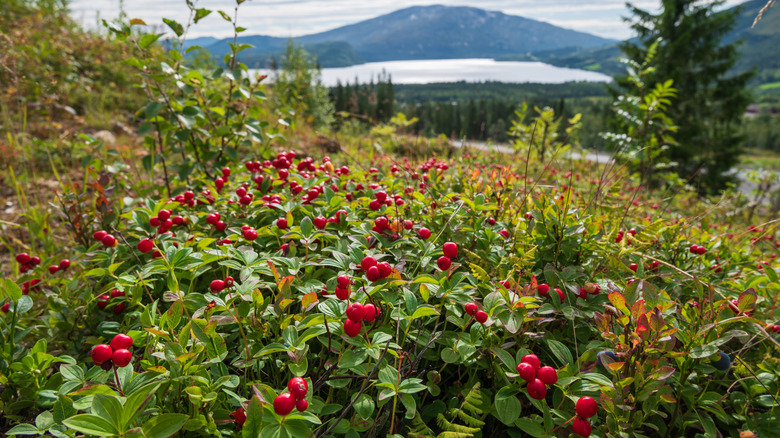
Kinnikinnick thrives in sandy soil without many nutrients, making it a great choice for areas that don't usually work well for other plants and ground covers. Space the plants 3 to 5 feet apart to ensure a dense ground cover which will help control your weed problem. It is the perfect ground cover around trees, underneath bushes, and on hills, and makes the perfect addition to rock gardens. Plant kinnikinnik in full sun for best results, although it can handle partially shaded areas. At least five hours of full sun is best. Due to its salt resistance, if you live close to the ocean, it can be a great ground covering in coastal areas. As an added bonus, planting kinnikinnik will fill your yard with pretty white and pink flowers.
You want to keep the soil moist but not overwatered while your plants are getting established. This comes out to watering every week while the plants are growing, and minimally after that when it's hot. Watering can be challenging to get right. Taking care to avoid these major mistakes when watering your garden will protect your plants' leaves from turning yellow or wilting, which can indicate overwatering and root rot. In the spring and summer, you can expect to water your bearberry more often. Reduce the amount of water you provide in the fall and winter as the plant enters its dormant stage (that's also a good time to harvest rooted stem cuttings for propagation).