

The Popular Paint Color You May Want To Avoid When Updating Your Porch
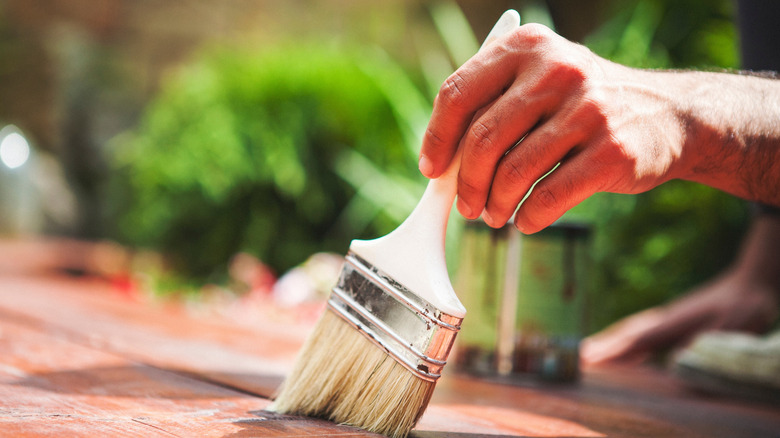
Your porch is one of the first impressions of your home people see as they pass or approach it, so it can have a big impact on curb appeal. When it comes time to repaint your porch, it's important to consider how the colors you're choosing among are likely to fare in real life, not just on an inspiration board or in your mind. White is one of those hues that can be fabulous in theory but frustrating in reality. Yes, it goes with almost everything and makes a space feel bright and airy. That's not the full picture, however. Porches tend to experience significant amounts of foot traffic, exposing them to lots of dirt, dust, and pollen. Unfortunately, white puts these blemishes in the spotlight. Even if you scrub a white porch thoroughly and consistently, it's hard to make it look totally clean. Should you achieve this rare feat, it's likely to be short lived, the next time a kid comes tromping home, or a rainstorm hits.
Highlighting gunk and grime on porches isn't white's only downfall. This color has a way of making scuffs, cracks, and other wear and tear more visible. Moving heavy furniture and appliances into your house can easily dent a porch, sharp dog nails leave scratches, and flurries of footsteps can wear away the paint. A porch that's a darker color might camouflage some of these issues, but not a white one. It's a canvas for broadcasting imperfections, one that the whole neighborhood can see. If you're trying to sell your house, this may deter some would-be buyers. Though you may still find this space inviting, some find the color choice sterile, and a white porch can even scare birds away.
Easier-to-maintain porch colors to consider
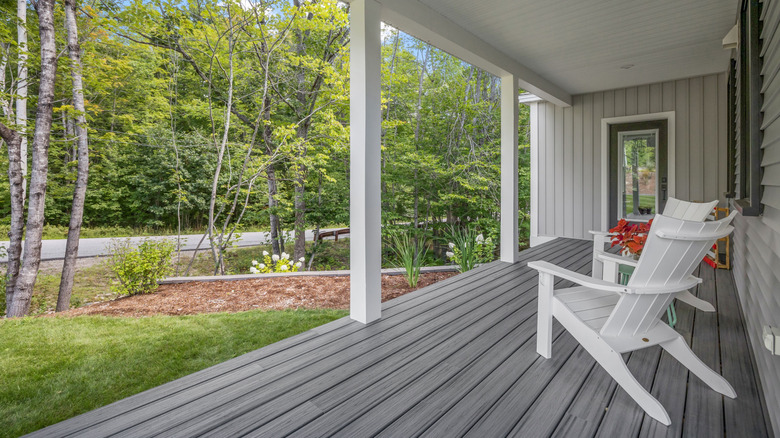
There are several ways to give your porch a refresh without creating more work for yourself. Choosing a paint that disguises dirt and dings is one option. You can also draw the eye away from painted surfaces. Need to replace or repair a portion of your entryway? Consider using tiles on your porch to make a flashy first impression. Porcelain, granite, and slate tiles tend to be durable and easy to clean.
In general, pale paint colors — think pastel blues and minty greens — have similar drawbacks as white when used on porches. For the most camouflage effect, select a hue that's neither light nor dark. Browns, grays, muted greens, and other earth tones tend to be good at minimizing the appearance of dirt and minor damage. Many earth tones are also neutrals, so they pair nicely with a wide range of colors. Choosing a neutral is especially helpful if you're planning to buy new porch furniture or want to replace your siding but haven't chosen a color yet. If you love a natural look, staining a porch or deck brown could also work. A medium tone is best since going too dark can trap heat and make the space feel smaller or more confined than it is. Also consider the colors of your home's siding and trim when choosing a porch color. A hue that complements your other exterior paints is ideal.
If you're looking for another outdoor update to add value to your home, consider painting or refinishing your deck when you upgrade your porch. Choosing the same paint or stain for both can save you money. This is especially true if you can score a discount for buying in bulk.