

The Type Of Wasps That'll Actually Benefit Your Lawn And Garden
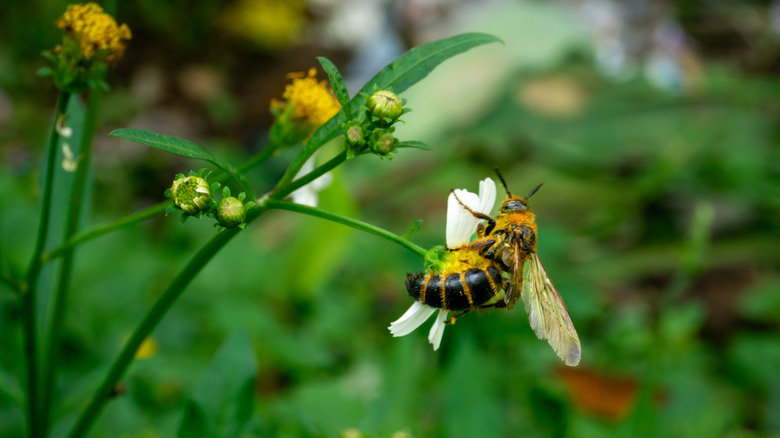
Wasps (and sometimes bees) can cause worry and even panic in some people that are afraid of them. This is especially true for those allergic to stings. Some wasps can be really nasty, and are unwelcome in your yard or garden. For these mean wasps, try a baby powder hack that will keep these wasps away from your yard without using chemicals.
However, it may surprise you to learn that not all wasps are bad. Scoliid wasps are actually beneficial to your lawn and garden and are not aggressive to humans unless they are attacked. Plus, they can do amazing things for your yard if you have problems with grubs, one of the types of worms you never want to see in your garden. There are many different types of scoliid wasps, but almost all of them are pest hunters that can bring your yard back from the dead if you have been attacked by these destructive beetles and their larvae — the grubs.
Scoliid wasps have a variety of color variations with their bodies mostly being dark in color or black. Some might even have a striking blue tint to them. Markings include yellow stripes or other patterns that may be in red, white, orange, or yellow. The back part of their abdomens is typically covered in fine, red hairs. These color markings make it easier to tell if they are the good wasps or the more aggressive ones. You will notice that these wasps are more curved than other types of bees. In fact, their name is from the genus Scolia, which means "bent."
Ways scoliid wasps benefit your garden
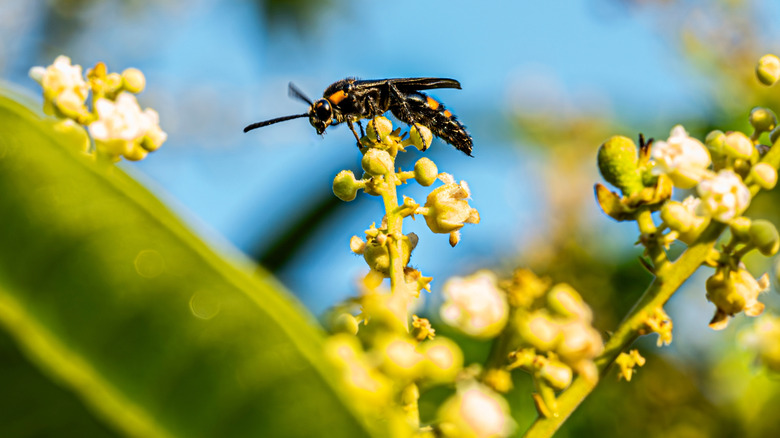
One of the most significant ways that scoliid wasps benefit your lawn is by going after and eliminating grub worms which can wreak havoc on your yard. The adult wasps actually don't eat the grubs at all; they get their food from the nectar in flowers. When they find a grub in the ground they will sting it, paralyze it, and lay an egg on it. Once the eggs hatch, the babies are the ones that eat and destroy the grub. The female continues this process looking for more grubs to lay eggs on.
Scoliid wasps are solitary bees and don't form colonies. They don't attack humans and don't sting unless you step on one barefoot while walking in the grass. You will notice these wasps hovering over the lawn especially in the heat of the day. This is when they are searching for grubs. August seems to be their most active month, so you may notice that there are a lot of them flying around during that time. However, they may be present during any of the warmer seasons.
If you want to help scoliid wasps out, plant goldenrod, milkweed, aster, Queen Anne's lace, and other flowers that are easy for the short-tongued wasps to drink from. You can also minimize grub worms in your yard with these lawn mowing tips which will help the grub population from getting way out of hand.