

A Common Mowing Mistake To Avoid In Cooler Weather That Could Harm Your Lawn

Anyone who maintains a lawn knows it takes effort to keep that green expanse looking pristine and feeling inviting for your toes. From determining the perfect length to cut your grass to choosing the best time of day to water, proper lawn care is full of tips and tricks to get it right. One of these tricks is mulching, or leaving the clippings from your mower right where they scatter. Leaving grass clippings as you mow is a low-maintenance way to keep your lawn nourished. But mulching isn't the best choice at all times of year. In fact, you may be secretly ruining your lawn by leaving clippings on it after cold weather hits.
Using the mulching attachment while you mow is a good choice in spring and summer to spread out chopped-up grass clippings that will keep moisture in the lawn during warm weather, preventing those annoying brown patches. As clippings break down they provide nutrients to the soil and promotes healthy growth. In the fall, mulching up leaves and spreading them across your lawn in a thin layer is a good practice to help insulate your grass, but as winter sets in, the cold weather will make your grass go dormant and it won't be able to process the nutrients you are leaving in place with mulch or fertilizer. Covering bare patches of your lawn with mulch in winter months will help prevent soil erosion, but widespread application of thick mulch during cold, wet weather can smother healthy grass.
Caring for your lawn before and during winter
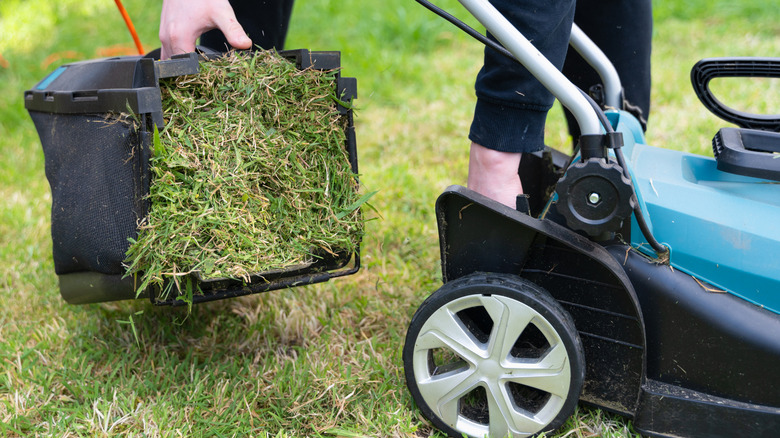
A better way to prepare your lawn for winter is to mow it regularly up until the temperatures drop, leaving it to 2-3 inches, and aerating it to reduce soil compaction. Instead of leaving your grass clippings, bag them up as the colder months approach, and add them to your compost. Raking up all the leaves and debris from fall storms is also a good practice, as leaving this material on your grass can promote snow mold. You can also mulch leaves into small pieces to redistribute to other areas of your garden for the winter months as a good source of nutrients for your soil. A light layer of grass clippings, however, can help keep roots happy by regulating soil temperature.
Throughout the winter, you can mow your grass if the temperatures are mild and dry. Avoid mowing wet grass, which can lead to soil compaction and can also damage your mower. And mowing right before a frost is a bad idea, as chopped grass blades are more vulnerable to damage from a freeze. When spring finally comes around again, feel free to start leaving those grass clippings behind for your healthy green space to enjoy.