

Why You Should Be Careful When Leaving A Bird Feeder Out During Summer
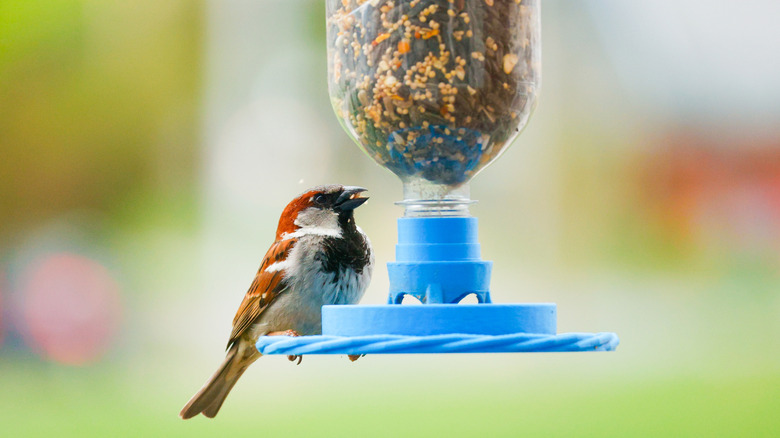
Summer is the perfect season for sitting outside in warm weather and getting a close-up view of the wide variety of feathered visitors that enjoy your bird feeders. But if you live in bear country, the food you put out to attract songbirds to your yard may bring in visitors you're not prepared to host. When they're not hibernating, black bears (Ursus americanus) love an easy meal, and bird feeders are a major culprit behind a growing trend of human-bear conflicts.
Black bears live throughout the United States, with the largest populations in the West Coast, Mountain West, and Northeast. They prefer forested areas in mountains and foothills, but they're highly adaptable, and as neighborhoods have spread out into bear country, human-bear conflicts have risen. Beyond just making a mess of your feeders, bears can learn to regard your home and yard as a reliable source of food, which they can smell from miles away. And while they may first be attracted by the delicious smell of fatty suet balls or sweet hummingbird nectar, they will get curious about what else your home has to offer, leading to more invasive problems like getting into your trash or even your house.
Summer feeding can attract bears and cause other problems for birds
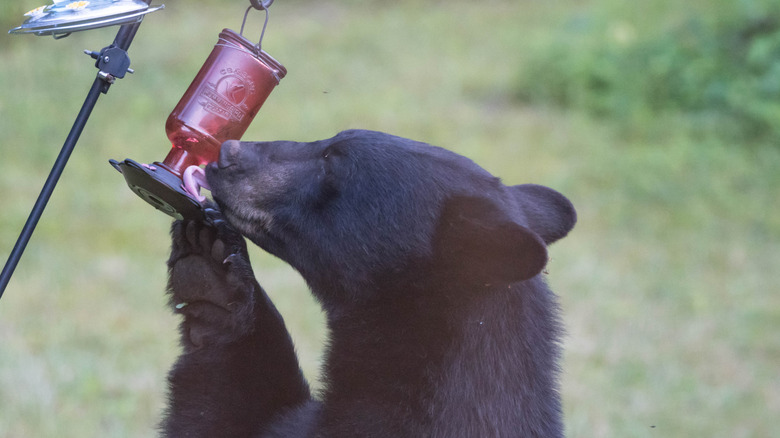
In the Lake Tahoe area of Northern California, black bears habituated to human food sources have been growing more aggressive in recent years, resulting in several home and garage invasions. Cubs who learn to visit feeders with their mothers will keep this behavior going for generations of bears. Hoping to stave off human-bear conflicts, state wildlife agencies like Colorado Parks and Wildlife recommend removing all bird feeders from April to November each year.
Of course, if you live in an area with no local black bear populations or known conflicts, leaving feeders out through the summer may be fine, although you'll still be attracting smaller visitors like raccoons and squirrels along with your feathered visitors. Summer feeders need to be carefully maintained to ensure food doesn't grow mold in the moist summer heat, becoming a health hazard for birds. Keeping your feeder mess-free by using seed blocks or suet will also prevent seed spillage onto the ground, which can easily spoil and breed disease. For hummingbird feeders, changing out the nectar twice a week during summer months is crucial to maintaining a healthy feeder.
If you do see any signs of bear activity, bring your feeders inside and contact your local wildlife agency for additional tips to protect your home and yard from bear visits. You can still have birds flock to your yard in the summer without feeders. Put up bird houses, provide water sources, and plant a variety of native plants and shrubs that your local birds will enjoy, without the worry of bringing in bears.