

Beans And Onions Will Not Thrive Together In The Garden - Here's Why
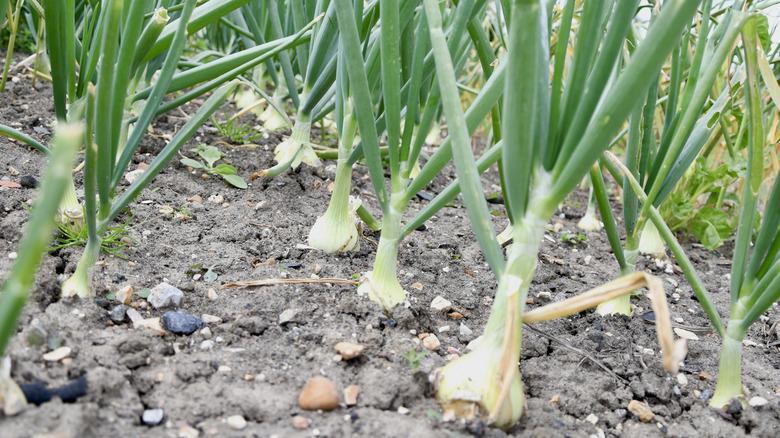
Companion planting is a popular gardening method that encourages healthy growth, repels pests, and attracts pollinators to the garden. There are many plants and vegetables that should not be planted next to each other. All plants, whether a flower, vegetable, or fruit, have companion plants that help them thrive and those that can cause a variety of problems, like stunted growth and poor yields, and negative impacts on the flavor of the vegetables. Knowing which plants to put next to each other can produce a garden that offers great harvests and beautiful healthy plants. An example of two incompatible plants that should not be planted together are beans and onions.
All of the allium (onion) family including garlic, onions, leeks, and scallions will stunt the growth of the beans due to a gas called allicin that alliums secrete that kills all the good urease bacteria that lives on the beans' roots. The allicin keeps the bean plants from adding important nitrogen to the soil and can cause a poor yield. On the flip side, increased nitrogen in the soil from the beans, can have negative impacts on onions causing problems that include being unable to store well, causing a high rate of disease and producing plants that are vulnerable to freezing injuries.
The right companion plants for beans and onions
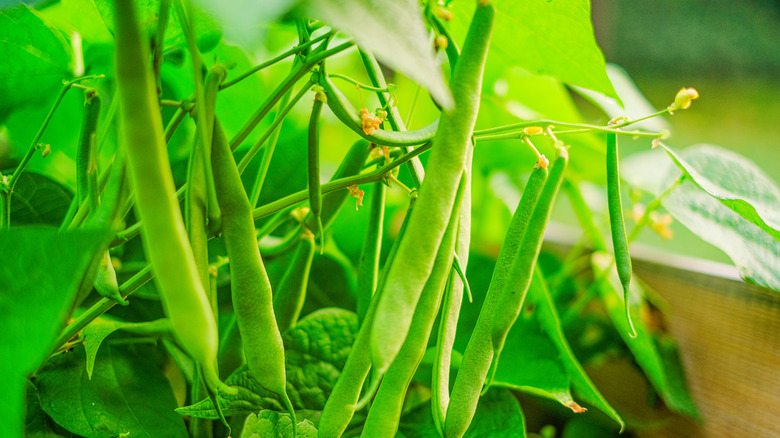
When planting beans and onions, it is best to put at least two to three rows between these two crops if you can't plant them in separate raised beds or on opposite sides of your garden. Two to three rows should be enough space to keep the problems each plant can cause at bay, so they don't harm each other. The same rule applies to peas and onions, which also don't do well together. Don't worry, there is a variety of companion plants for both beans and onions that do great together. Beans and other legumes increase the amount of nitrogen in the soil, so you want to choose companion plants that thrive on that nitrogen. The best choices to plant alongside beans include corn, which works great for supporting the bean vines, carrots, strawberries, cabbage, and broccoli but this is not an all-inclusive list, there are others as well. All of these choices are perfect to be companion plants for beans and provide benefits to each other that result in a great crop for each.
Due to their stronger scent, onions are great at repelling insects such as aphids, cabbage worms, and carrot flies. These repellent properties are often used by farmers and gardeners to protect tomatoes, strawberries, bell peppers, and lettuce as well as many other vegetables. Other popular companion plants for onions include carrots, beets, rosemary, basil, thyme, hot peppers, and celery. Companion planting is a very valuable aid used by almost anyone that has a garden from backyard gardeners to full-time farmers and it works beautifully when done correctly.