

The Genius Reason Gardeners Should Never Throw Out A Sprouted Onion
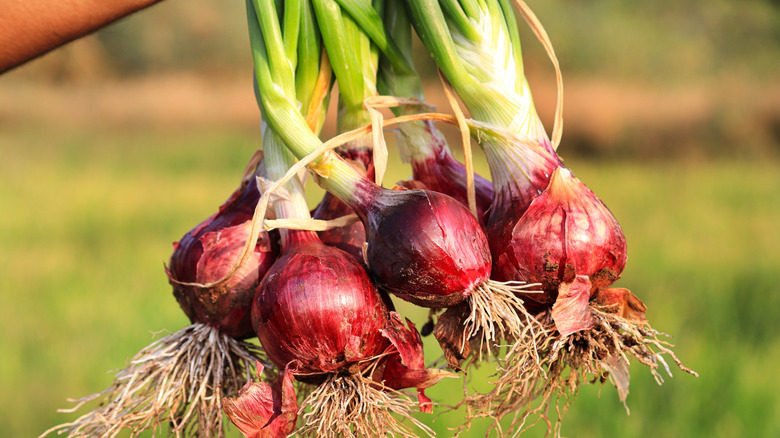
Remember those onions you bought a while ago and nearly forgot about thanks to the old adage "out of sight, out of mind?" Oops, they've sprouted, and some of them seem past their prime. Rather than chucking those alliums in the trash or the compost pile, use 'em in a dish or plant them! If the onion itself feels firm and fresh and smells fine, it's still edible, but it'll probably taste better cooked along with other things in a favorite recipe rather than eaten raw. Onions use their own sugar reserves for energy to create sprouts, so a sprouted onion may taste more bitter if eaten raw compared to it's non-sprouted counterparts. Don't eat the sprouted onion if part of it looks rotten or moldy.
Onions (Allium cepa) sprout because botanically they're bulbs, just like some of your favorite flowers. With the right humidity and temperature, or even exposure to light, an onion senses that it's time to grow even if it's not in soil, much like those potatoes that are also sitting in the pantry. Even if the onion is well past its prime, if it has sprouts, it's ready to grow — with a little assistance. Being able to grow your own food from what you already have on hand is a rewarding experience, in addition to the numerous health benefits gained from gardening.
How to use a sprouted onion to grow more onions
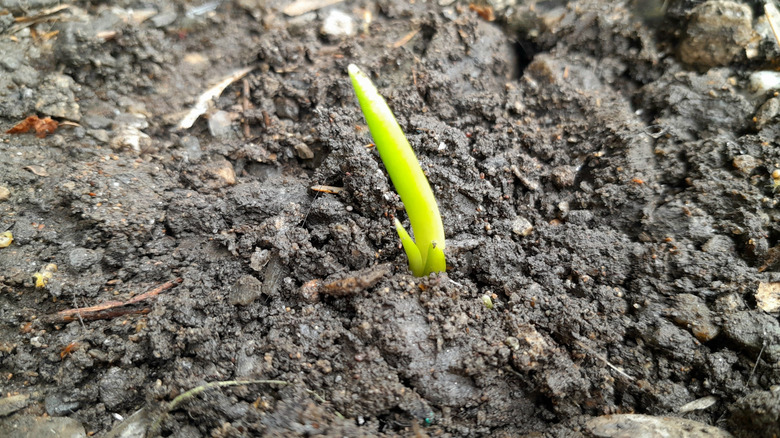
To get your sprouted onion ready for planting, first peel it apart, layer by layer, without damaging the sprouts. Eventually, you'll get to the center of the onion, which holds the sprouts together. On average, look for three sprouts here, which means three new onions to plant. Gently separate them by slicing them apart with a serrated kitchen knife. Each section should have the green sprouts at one end and old exposed roots on the other.
At this point, you could place the sprouts in water for a while if you're not quite ready to plant them, but it's not necessary. If you do wish to keep them in water, fill a small jar with enough water to cover the root area on each onion sprout. Replace the water every few days or so. In a week or two, you'll see new roots at the bottom.
When you're ready to get growing, plant the onion sprouts in full sun in holes about an inch deep or where only the green part is above ground. If planting them in containers, use an organic potting mix if you plan to eat the onions once they've grown. Space the sprouts at least a couple inches apart so the bulbs have room to grow. This convenient version of a vegetable container garden is one gardening option for growing your onions and other tasty treats. A Dollar Tree bucket hack for growing onions is another way. The onions are ready to harvest when the green tops dry out and turn brown.