

What To Consider Before Putting Cheese In Your Bird Feeder
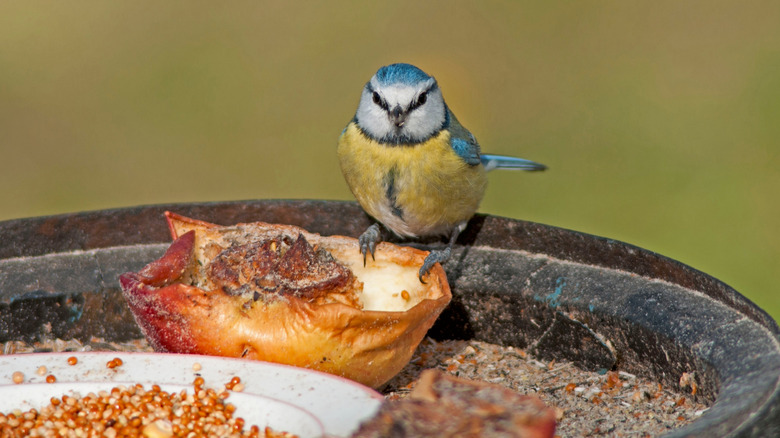
Laying out a daily buffet for your backyard songbirds is a fun ritual, and you can get quite creative with the charcuterie you provide for feathered friends. Fresh berries, homemade suet balls, dried fruit, and peanut butter – these are all popular bird-feeding alternatives beyond the standard seed mixtures. You might even put out multiple bird feeders with a variety of ingredients appealing to different species. But one ingredient that should be left off the plate, or at least given only in moderation, is dairy. This doesn't mean all cheese must be avoided, but it shouldn't be added to your bird feeders in large amounts because it can make birds sick.
Birds don't have the enzyme needed to digest lactose (milk sugar), which is found in many dairy products. Consuming too much dairy can therefore give birds upset tummies and can even turn toxic by blocking the digestive tract. This is particularly true of milk and soft cheeses like fresh mozzarella and burrata. Although lower in lactose, soft cheeses like brie and camembert aren't good for birds because they can stick to their beaks and feathers and make it difficult to feed and fly. Dairy products are also highly susceptible to mold, which is a common health issue for backyard feeding and why you need to practice regular bird feeder cleaning. And never feed your birds cheese with flavors or herbs added because these may contain onion or garlic, which are toxic to birds.
Hard cheeses may be safe for birds in moderation
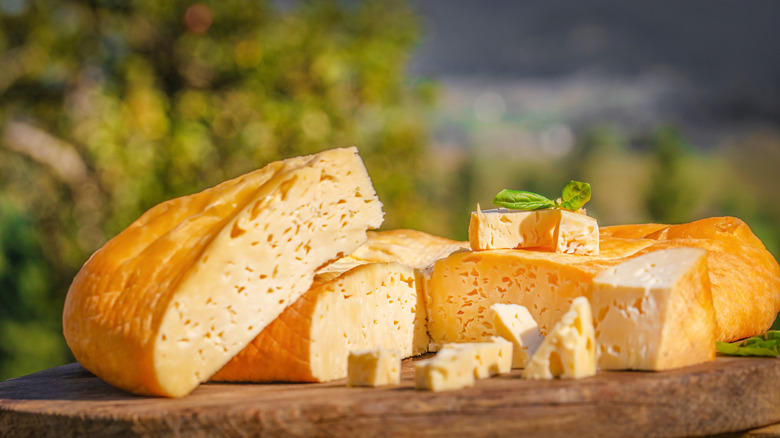
Many bird feeding enthusiasts put out grated cheese to attract more songbirds to the yard, and some cheese may be okay for birds, who certainly like to gobble it up. The fermentation process and aging used to make hard cheese converts lactose into lactic acid, which is easier to digest. Hard cheeses like cheddar, Swiss, and mozzarella have almost no lactose, so they're much safer for birds. These cheeses also have calcium and vitamins that can be beneficial for birds.
Despite this, hard cheese should only be provided in small, grated amounts, even if your visitors seem to love it. Remember that cheese and other dairy products aren't foods that songbirds would normally find in the forest or garden. Your safest and healthiest bird feeding options will always be the foods that mimic what they rely on in the wild, like bugs, berries, and seeds.