

A Shade-Loving Plant That'll Have Hummingbirds Flocking To Your Yard
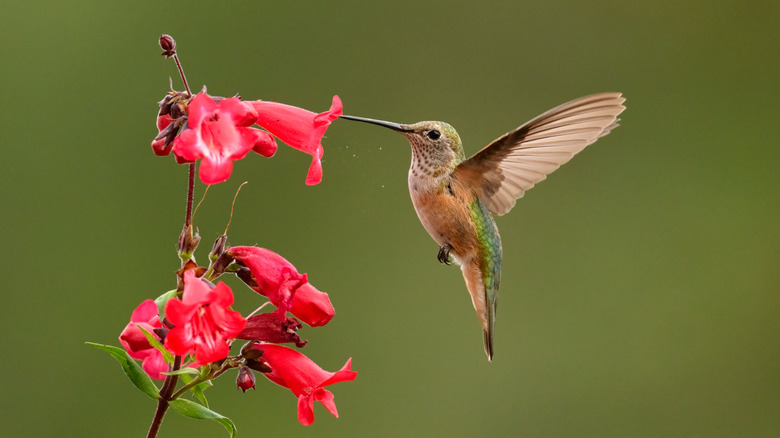
Gardeners tend to grow hostas (Hosta spp.) for their beautiful foliage. Many cultivars sport leaves that are oversized, variegated, or interesting colors such as chartreuse and blue-green. If your main goal is luring hummingbirds to your garden with stunning plants, focus on the flowers that these shade-loving perennials grow. They tend to be rich in nectar, which piques the interest of hummingbirds. Plus, many have blossoms shaped like tubes, bells, or trumpets, making nectar easy for long, skinny beaks to access. Tubular flowers are especially enticing for hummingbirds because bees can't reach the nectar very easily. This decreases the likelihood of their favorite beverage running out. Consider hostas with hummer-preferred flower colors to further boost their appeal.
Though hostas don't produce flowers in red, the color that tends to attract the most hummingbirds, purple is common. It may be hummingbirds' second-favorite hue, as it's easy to spot against a backdrop of green leaves. 'Frances Williams' hostas offer lavender blossoms that bring hummingbirds to shady corners of gardens and patios. Their broad, two-toned leaves draw human admirers, too. Other cultivars that drive hummingbirds wild include 'August Moon,' 'First Frost,' 'Halcyon,' and 'Regal Splendor.' All of these options make attractive purple or pinkish-purple flowers. Hosta flowers bloom on tall, graceful scapes. In addition to making the flowers stand out to hummingbirds, the statuesque stems allow these garden pixies to flit effortlessly from one plant to another, filling their bellies with lots of nectar in a short amount of time. Convincing the flowers to bloom for as long as possible helps local hummers stay happy and healthy.
Bolstering hosta blooms to boost hummingbird visits
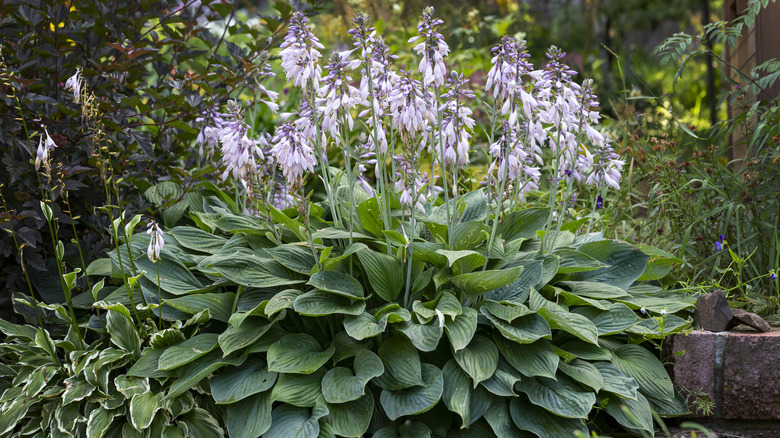
The more flowers your hostas make and the longer these flowers stick around, the more hummingbirds your yard is likely to draw. Hosta flowers emerge between June and August, and the flowers of some varieties can bloom for a month, giving hummingbirds many opportunities to fuel up before fall begins. To encourage flowering, choose varieties that thrive in your climate, study their soil and sunlight preferences, and divide the plants every few years.
Sometimes called plantain lilies, hostas excel in USDA hardiness zones 3 through 9. That said, some varieties handle heat, cold, and sunshine better than others. Generally speaking, the lighter the hue of the leaves, the more sun a particular variety can manage. Most won't tolerate a full day of direct sunlight, which can prevent flowering, though a bit of morning sunshine may promote it. Hostas also like well-draining soil with ample nutrient content. Consider amending their soil with 10-10-10 fertilizer in early spring. This is also the time to snip off any dead or dying foliage, which helps the plants devote their energy to growth and blossoming. Mulch your hostas, too, since this regulates the temperature of their roots. When these plants get too hot, they may stop flowering.
Many hostas are happy to grow in large pots that you can move to different parts of your yard. This lets you see if certain locations make the flowers more visible to hungry hummers. Hostas also make a lovely addition to perfect, hummingbird-friendly container gardens that stay in one place. Whether you grow them in pots or in the ground, water them regularly to maximize blooming.