

Creatures To Beware Of When Adventuring In The Sahara Desert
We may receive a commission on purchases made from links.
Odds are, if you venture to the Sahara Desert you already have a sense of adventure. You are also likely prepared for the scorching sun and unforgiving heat — or at least think you are. However, in addition to being aware of the symptoms of heatstroke, there are several creatures to watch out for when wandering the Sahara Desert. Featuring some of the deadliest snakes in the world, along with a host of venomous reptiles and arachnids, aggressive mammals, and even crocodiles, the Sahara presents plenty of perils beyond heat and hydration.
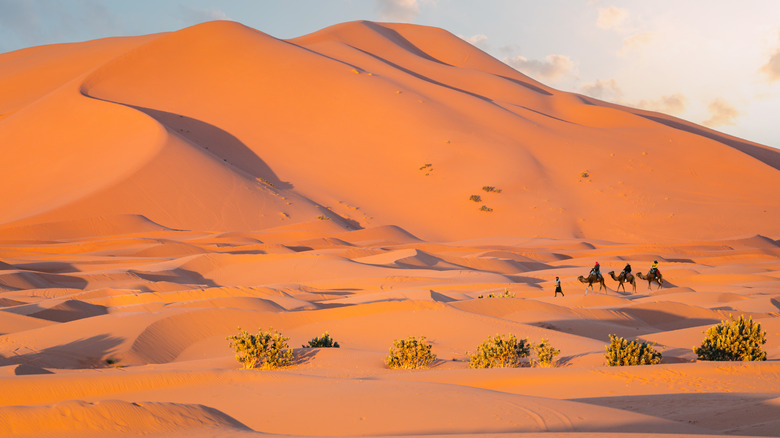
Although it is technically not the world's largest desert — that honor goes to the Antarctic Polar Desert — it is the most expansive hot desert on Earth. Covering over 3.5 million square miles, the Sahara encompasses most of the northern half of the African continent. The edges of the desert, while still exceedingly arid, receive a bit more rainfall and, as a result, feature a little more diversity in the way of wildlife. However, even in the center of the Sahara, an area that receives less than ¼ inch of rain per year, there are dangerous creatures to be found.
Encounters with dangerous creatures in the Sahara can be even more perilous because of the extreme conditions and the region's remoteness. While the sand dunes can offer thrilling adventures and the area is popular with various segments of tourists, those who do visit should carry a satellite communication device like the Garmin inReach Mini 2 so they can call for help without cell service if necessary. Additionally, the unfamiliarity of many of these creatures for most visitors adds to the danger. It is always best to err on the side of caution and never approach or try to handle any creatures you encounter.
Saharan horned vipers strike fear in desert adventurers
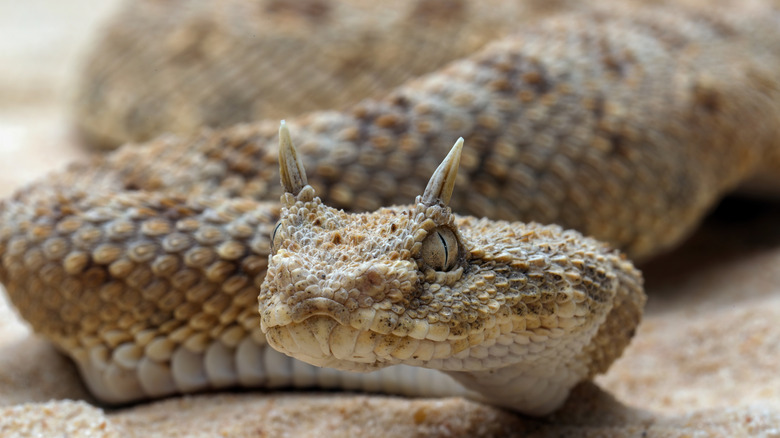
The Saharan horned viper, as the name implies, is easily identified by the pair of protrusions on their head which effectively look like horns. Sometimes referred to as the desert horned viper, this venomous snake is one of a half dozen or so species of horned vipers found in deserts throughout the world. Growing to a maximum length of around 2 feet, the Saharan horned viper isn't necessarily physically intimidating, nor does it have a particularly bad temper. However, when they inflict a bite, which can cause swelling and nausea, it is necessary to get medical attention as soon as possible.
Beyond their potent venom, there are few other issues which make Saharan horned vipers such a formidable threat for those adventuring in the Sahara desert. For one, they are incredibly common and found throughout the Sahara. Additionally, they love sand dunes and spend the daylight hours burrowed beneath the sand, where they are difficult to spot. Their coloration — which ranges from reddish to yellowish to tan, and is designed to provide camouflage in the sands — adds to this difficulty. So it is quite possible to accidentally stumble upon them, whether hiking or sand boarding. At night, Saharan horned vipers emerge to hunt for their prey. So, it is advisable to utilize a flashlight whenever you are moving about in the desert after dark to avoid accidentally stepping on one.
Saharan sand vipers are small but dangerous

Another unsafe serpent you are likely to encounter when adventuring in the Sahara is the Saharan sand viper. With the exception of the horn-like appendages, sand vipers are very similar to horned vipers in size, coloration, and habits. With a maximum length of less than 2 feet, most sand vipers are around a foot or so long. Their coloration varies from tan to reddish in order to match the surrounding sand, in which they like to bury themselves during the daylight hours.Besides being slightly shorter on average and not having horns, the feature that most distinguishes sand vipers from horned viper is eye location. The eyes of a sand viper are set noticeably forward on its head compared to other snakes.
In addition to seeking shelter beneath the sand, sand vipers have another common trait with horned vipers – they are known to have a relatively docile disposition unless surprised or threatened. However, unlike horned vipers, sand vipers often give an auditory alert before they inflict a defensive strike. They accomplish this by coiling their bodies in such as way that they able to rub their scales together, making what is usually described as a raspy, cracking noise. It goes without saying that should you hear such a sound, heed the warning and know a sand viper is nearby and feeling threatened. Anyone who is struck by a sand viper should seek medical help immediately.
Death stalker scorpions have a fearsome reputation
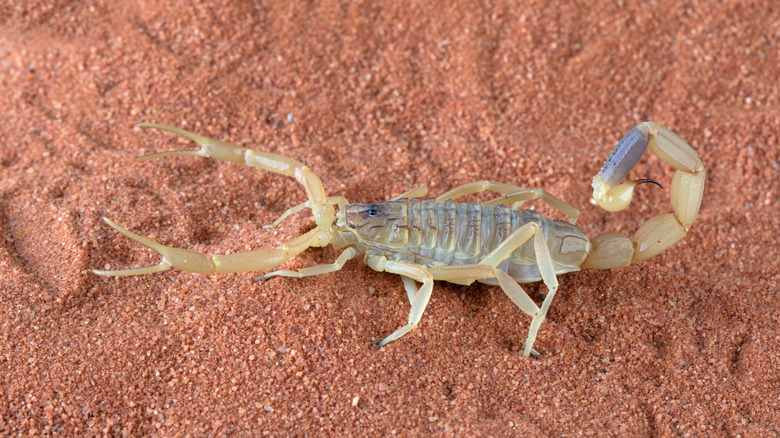
Although various species of scorpion are common in deserts across North America, one of the most dangerous types of scorpions, the death stalker, is unique to North Africa and the Middle East. While they are considered large for scorpions, they aren't particularly imposing, growing to a maximum size of 3 inches. However, as their moniker suggests, they have a very potent sting. While death isn't necessarily imminent following a sting, the combination of neuro- and cardiotoxins delivered by death stalkers can cause serious issues. A sting from a death stalker — which is considered the most venomous scorpion in the world — can cause paralysis. Medical attention is necessary and, if not treated, death is a definite possibility.
The behavior of death stalkers isn't that much different than that of other scorpions found in North America and elsewhere. They are most active at night, when they hunt for food in the form of various insects, worms, and spiders. During the day they tend to remain burrowed in any sort of debris or other hiding spots they can find. This is often where the danger comes in, as they can and will find their way into shoes, bedding, or clothing. In addition to shaking out these items before using them, you should also always have on boots or shoes when walking, and watch where you put your hands when picking up any items from the ground.
Desert monitor lizards can inflict serious harm
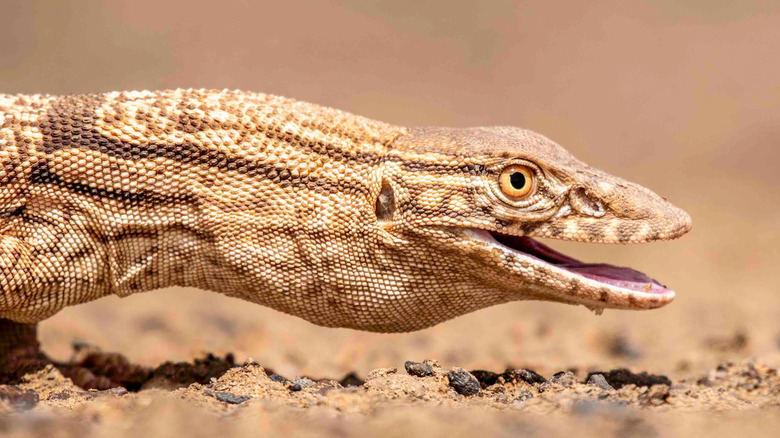
The desert monitor lizard, which is sometimes referred to as a gray monitor, is found in arid regions of both Africa and Asia. Like many other types of monitor lizards, the desert variety is quite large, growing up to 4 feet in length. They are most often encountered during the cooler daylight hours after sunrise and just before sunset. The balance of the day typically finds them burrowed in the ground.
Desert monitors are strong for their tremendous bite force. With rows of sharp teeth, they tend to clamp on and hold. Bites from these massive lizards are potential fatal for humans, although there is a debate as to why. What is known is when a person is bitten, they will often experience symptoms such as dizziness, shortness of breath, rapid heart rate, and muscle spasms. It is also known that they transfer some rather nasty bacteria into the wound when they bite. More recently, researchers have discovered that some species of monitor lizards also inject a venom in their victims. However, this has not been conclusively proven as of yet in regards to desert monitors. Nonetheless, a bite from one is very serious and needs to be attended to by medical staff.
Egyptian cobra have a highly toxic bite
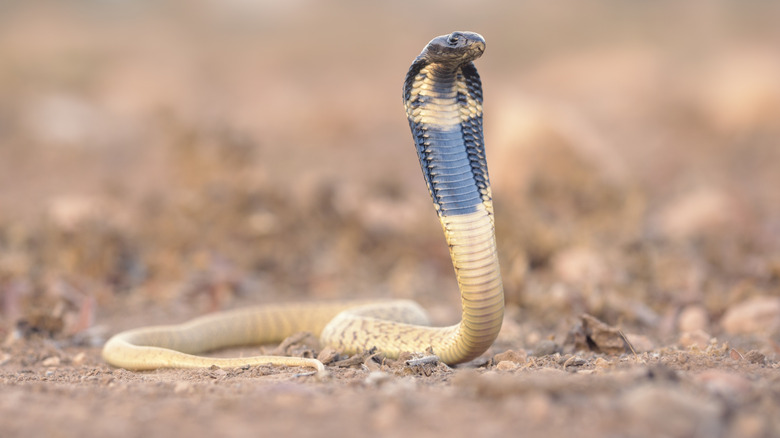
Although Egyptian cobras are classified as much more venomous than either horned or sand vipers, they are found primarily on the outer edges of the Sahara. However, some interior portions of the desert support a population as well. Averaging around 4.5 feet in size, Egyptian cobras are the second largest species of cobra native to the African continent. They are most recognizable by the flared hood around their head and neck. Their color can vary greatly from light brown to black, with young snakes being multicolored during certain stages.
As is the case with most snakes found in the desert, Egyptian cobras spend most of the day literally holed up, taking shelter holes in the ground and crevices in rocky areas. They do most of their hunting at night and during the cooler portions of the day. Egyptian cobras aren't particularly aggressive. However, when they feel threatened they will flare their hood and erect the upper portion of their body upright. When they are in this stance, they will not hesitate to strike. Anyone who is bitten is in serious danger due to the highly potent mix of neurotoxins and cytotoxins found in the cobra's venom. Immediate medical attention is necessary to prevent respiratory failure and death.