

Don't Throw Away Tissue Paper, Instead Toss It Into Your Garden Compost
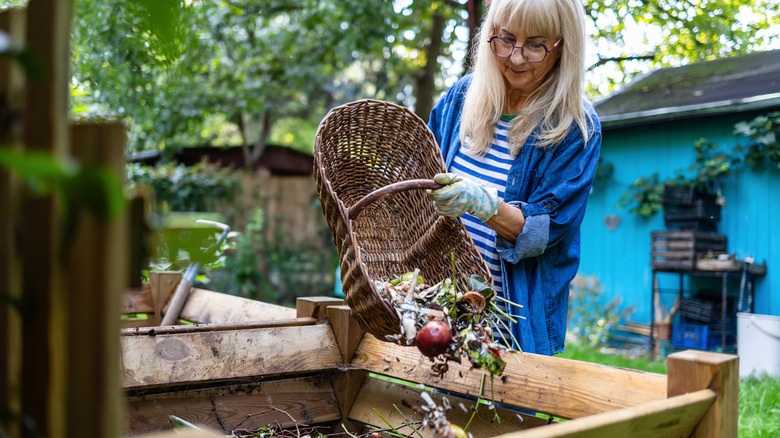
Whether you've run out of wrapping paper or you're unsure how to wrap an oddly shaped birthday present, a festive bag and tissue paper might just save the day. And if you're committed to reusing these materials, you can keep reams of paper out of landfills and reroute chunks of your gifting budget to your savings account. When your tissue paper is too ripped and wrinkled to use, consider tossing it in your compost bin. As the tissue paper breaks down, it becomes a gift for you and your garden — a soil amendment that improves drainage, feeds helpful microorganisms, and delivers nutrients to your vegetables and flowers.
Though tissue paper is capable of being recycled, a lot of recycling centers won't take it because its fibers are tiny and therefore expensive and difficult to process. Considering this, reuse and composting are the most eco-friendly options. In composting lingo, gift wrap and other types of paper are "brown" items. This means that they primarily contribute carbon to compost bins unlike nitrogen-rich "green" items. Tissue paper can help your entire compost pile by soaking up liquid and enhancing air circulation. Biodegradable gift wrap typically breaks down within six weeks thanks to aerobic bacteria and other beneficial microbes in your backyard compost trench or tumbler. It can take much longer to decompose in a landfill, where the process is fueled by anaerobic microbes. These microorganisms also emit methane, a harmful greenhouse gas.
Best practices for composting tissue paper
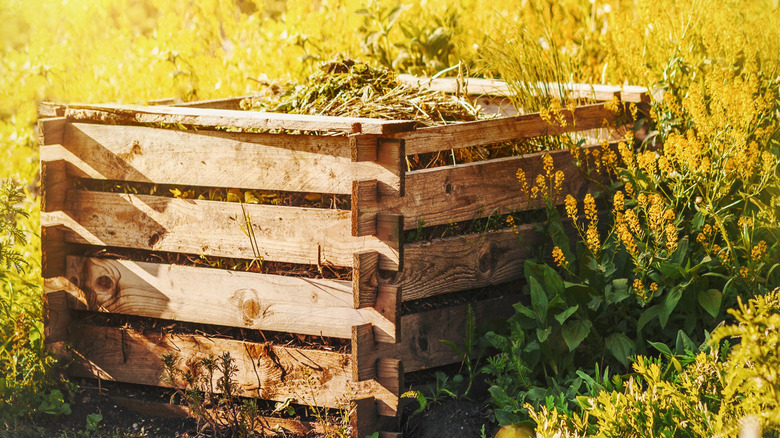
Many types of tissue paper are suitable for your compost pile, even facial tissues and toilet tissue, provided that they're unlikely to harbor disease-causing viruses or bacteria. There are a few varieties of tissue paper to avoid, however. Paper gussied up with glitter or a glossy coating is something you generally shouldn't compost. Glossy surfaces are rarely an issue with tissue paper, but you may find them on the gift bags that accompany the tissue. Bags, tissue, and greeting cards that contain foil, metallic ink, or laminated surfaces can also cause problems for your compost bin. Though it's smart to consider how dyes might affect your compost pile, they're not a problem with most modern gift wraps, which tends to use non-toxic colorings.
To help used tissue paper decompose as quickly as possible, shred it or tear it into small pieces. This tip applies to other compostable materials such as dried leaves too. You can also use tissue paper much as you'd use newspaper in your yard. For example, chop it up and add it to your garden's mulch and wrap sheets of it around the roots of saplings you're transporting and transplanting. Or you can use tissue paper just as you'd use newspaper to smother weeds beneath the mulch layer of your garden. If you want to turn your composting setup into a vermicomposting setup, you could shred your gift tissue to make cozy bedding for your new worms. When repurposing tissue paper in this way, chose sheets that are free of fragrances and other additives.