

DIY An Owl Decoy With A Repurposed Milk Jug To Keep Squirrels Out Of Your Garden
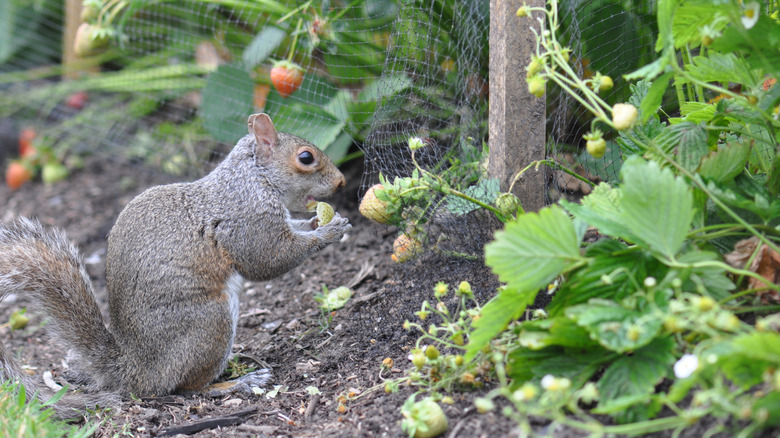
Lots of creatures can make trouble in your garden, from hosta-chewing slugs to deer that strip the bark from young fruit trees. Rodents are especially destructive, so it's important to deter them if they're ravaging the homes of your beloved plants. If you determine that squirrels are damaging your tomatoes during snack attacks or uprooting your dahlias in their quest to bury acorns, there are several eco-friendly strategies to try. One is using a predator decoy to scare them away from selected areas of your yard. Many gardeners use owl decoys such as the OFFO plastic owl bird-scare device to ward off both squirrels and birds that peck holes in fruits and vegetables. Buying this type of product is certainly an option, but making one is more fun if you enjoy turning household objects into garden decor. Plus, it's an excellent way to reuse milk jugs before recycling them.
To make an owl decoy inspired by a snowy owl, you'll need two plastic milk jugs, at least one of which is gallon-sized. Make sure both jugs are clean and keep their caps nearby. Also locate a pair of lids from other single-use food containers. Circular lids from salsa jars and cream cheese tubs fit the bill. Choose two that are the same size and style. Finally, round up two plastic forks, a hot glue gun, a bottle of craft adhesive such as Elmer's liquid school glue, several shades of acrylic paint that can withstand sunshine and rain, a few small paintbrushes, a tool for cutting the jugs, and weather-resistant string for hanging the finished product. Find some newspaper to cover your crafting surface too.
Turning a milk jug into an owl decoy
There are many owl species you can replicate with a milk jug. A snowy owl is bound to charm humans while scaring away squirrels. If your gallon-size jug is translucent, paint its exterior white with a blend of glue and white paint. The glue helps the paint adhere to the jug. Skip this step if you're using an opaque white jug. Once the white coating has dried, use black paint to add feathers. Small, horizontal lines that curve upward at the ends work well. Don't put feathers on the jug's handle or the depressed area on each side of it. This is where the eyes and beak go.
To create your owl's eyes, grab the larger lids you've gathered. First, cover their interior surfaces with yellow or white paint. Next, paint their outer edges black. Make the edges of the jug caps black too. Paint their interiors yellow or white, then place a black dot in the middle of each. Hot glue the unpainted portions of these caps to the centers the bigger lids' interiors. Use your glue gun to attach one eye to the left of the painted jug's handle and the other to the right. Then, cut three triangles out of flat portions of your spare jug. Fashion a long, skinny isosceles triangle for your owl's beak and two large, matching triangles for its wings. Paint the beak black and the wings white, then add feathers to the wings. Hot glue the beak to the painted jug's handle and the wings to the sides. Finally, affix plastic forks to the jug's base to give your owl feet.
How to deter squirrels with your owl decoy
When it comes to deterring squirrels with a decoy, strategic placement and the element of surprise are key. Put your owl fairly close to the plants you're trying to protect. Otherwise, you might convince squirrels to scamper toward your garden as they try to escape the faux predator. Also position the decoy at a height and angle that makes it visible to these bushy-tailed bothers. When possible, hang it from a beam or tree branch so it moves when the wind blows. This makes it more likely to startle squirrels. Plus, movement can convince squirrels that the decoy is alive and therefore a threat. If hanging the owl isn't feasible, incorporate features that move, reflect light, or both to frighten rodents away. For example, you could craft a crown of head feathers that rustle when breezes pass through or line the wings with aluminum foil. Giving your owl's eyes a shiny appearance can also enhance its realism as well as its fear factor.
From time to time, transfer your owl decoy to a different location near your garden. This gives squirrels the heebie-jeebies since they think they're being followed. If the decoy stays in the same area indefinitely, squirrels may become accustomed to its presence and stop fearing it. You can also use your owl decoy to keep squirrels away from bird feeders and discourage small birds from nesting in inconvenient spots in your yard. When the decoy starts looking worse for the wear, rinse it off and recycle its components.