

How To Prevent Small Flying Insects From Drowning In Your Birdbath
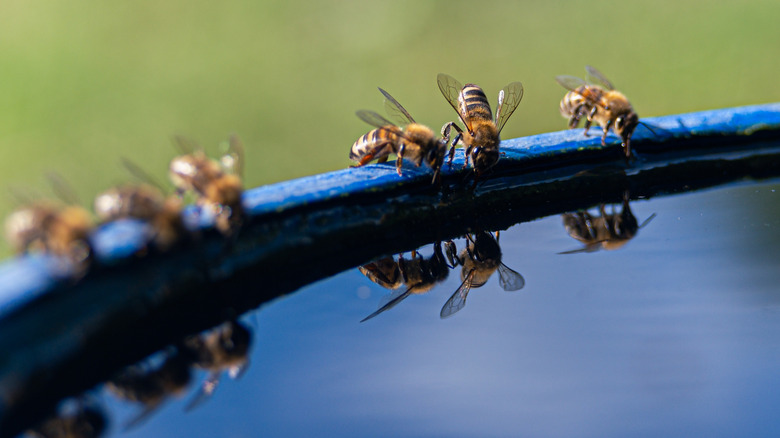
If you think that the birdbath in your yard is exclusively for the birds, think again. Any creature that's able to access the birdbath basin might stop for a drink, including some small ones that are often overlooked: flying insects. Bees, ladybugs, butterflies, and dragonflies get thirsty too. Many of them are even beneficial to the environment, either as pollinators or as natural pest control. Ladybugs, for instance, eat aphids and other tiny insects, plus the eggs of agricultural pests such as corn borers and potato beetles.
It's worth helping these helper insects by keeping fresh water in your birdbath basin, but the downside is that this small pool can be too deep for them and they may drown. They could inadvertently land in the deepest part of a birdbath basin without realizing it, or a gust of wind could drag them in. They may even slip in, if the rim is a little slimy with algae. Thankfully, it's easy and inexpensive to modify your existing birdbath to be more insect-friendly, too. Generally, all you need are a few stones or sticks. As a bonus, many birds also appreciate the extra footing stones in a birdbath provides.
How to make a birdbath friendly for insects
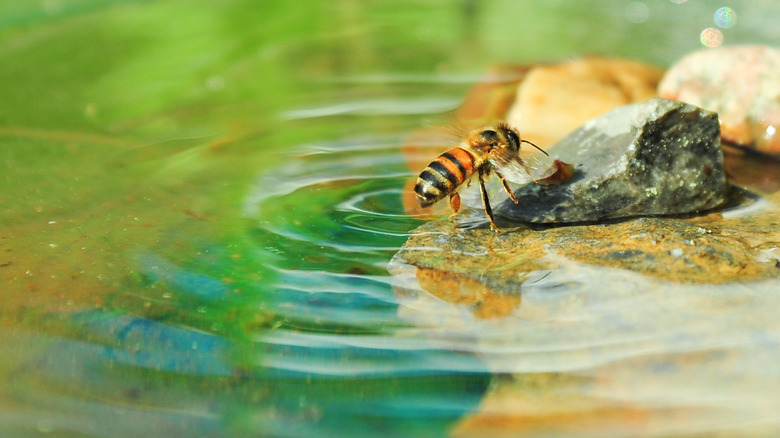
To make your current birdbath safer for flying insects, add a few rocks poking up out of the water so insects can drink from there. Stones aligned on the sides of the bath and down into the water act as ramps for both insects and birds that want to access the water safely. A birdbath's size and style determines which wildlife might use it. Shallow basins with gentle slopes are the most user-friendly to small and medium-sized birds, as well as to insects. Both insects and birds appreciate a few stones sticking out of the water to use as perches. Keep things simple so you can change the water easily to banish pesky mosquitoes from the birdbath.
You could also make a simple shallow bath designed specifically for insects, though birds may come check out the new water source as well. Offer a shallow tray of water in an area where you typically see insects, such as near a brush pile, in the flower bed, or even among a grouping of potted plants. Place a few pebbles or flat stones or a sturdy stick that rise above the water level; this way, an insect can easily dip down for a drink, or climb out of the water if needed. For a safe area specifically for butterflies, offer a puddling dish, which could even be the basin of your birdbath. Place a little landscape sand and garden soil in it, then wet the area to make it a bit muddy. Butterflies draw minerals from the liquid and it's as useful to them as a birdbath is to birds. Offer small bits of overripe watermelon to attract even more butterflies to the garden.