

The Common Yard Maintenance Project That'll Help Deter Squirrels
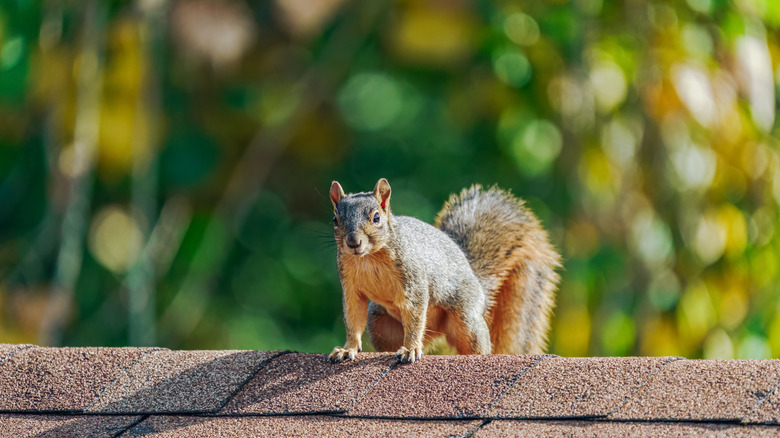
Once squirrels find your yard, they are likely to become regular visitors. They may first arrive in search of the seeds in your feeder or the bulbs in your garden, but they might not stop there, damaging your property in the process. Squirrels have a tendency to get into roofs and attics: They will often crawl under the eaves and chew their way in. Once they're inside, they could build nests and do significant damage.Rodents are known to chew insulation, or worse, electrical work, which poses a major fire risk. The best way to stop this from happening is to trim branches 6 to 8 feet away from your house, making access to your roof more difficult.
The process of selectively removing branches is called pruning. It's good for the tree because it gets rid of dead growth that can spread rot, insect infestations, and infection. Just remember never to prune flowering fruit trees during the fall. To properly prune a tree, you'll need a lopper, a handsaw, pruning shears, and a pole saw. You should also wear gloves and safety glasses while working.
How to prune the trees in your yard
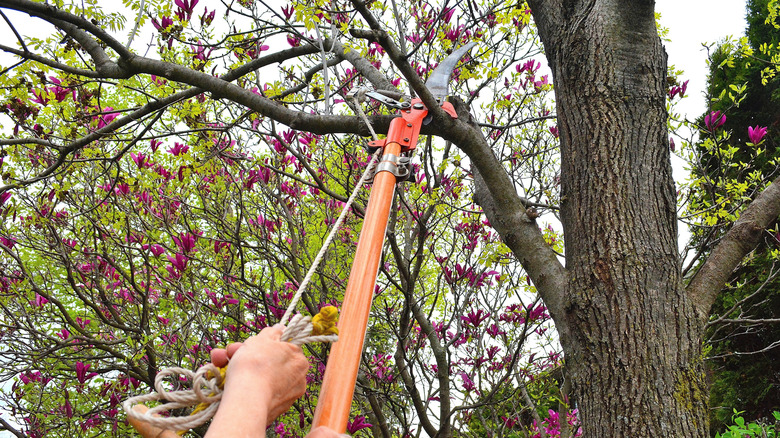
The tool you should use depends on the width of the branch and its distance from the ground. If you can easily reach a branch and it's about the width of a finger, then your pruning shears are the perfect tool. If the branch is slightly thicker and barely within reach, then the loppers are your best bet (they provide a few more feet of reach). A handsaw is your best choice for branches within reach but too thick for the loppers. The pole saw comes in handy when branches are 10 to 15 feet off the ground. You can extend these types of saws for greater reach, but make sure that you stay clear when the branch falls. If you decide to go higher using a ladder and pole saw, remember to stand below the third highest rung, and make certain all four feet are stable, for safety.
For large branches it's usually a wise decision to cut the branch a couple feet from the trunk of the tree to protect accidental damage. Once you've removed most of the branch and removed a substantial amount of weight, then you can cut what's left to the branch collar. The goal is to remove those branches that squirrels can use to easily access roofs, eaves, nesting spot, and any other tempting targets. So take a good look at all possible sightlines and think like a squirrel!
You can also protect your property from squirrels by cutting off food sources or banishing squirrels from your garden humanely with a kitchen spice. Once you've protected your house from squirrels, it may also be necessary to keep them from bothering your feathered guests: A fun toy will protect your bird feeder from squirrels.