

One Of The Best Bird Feeder Cleaning Tools Can Be Found In Your Bathroom
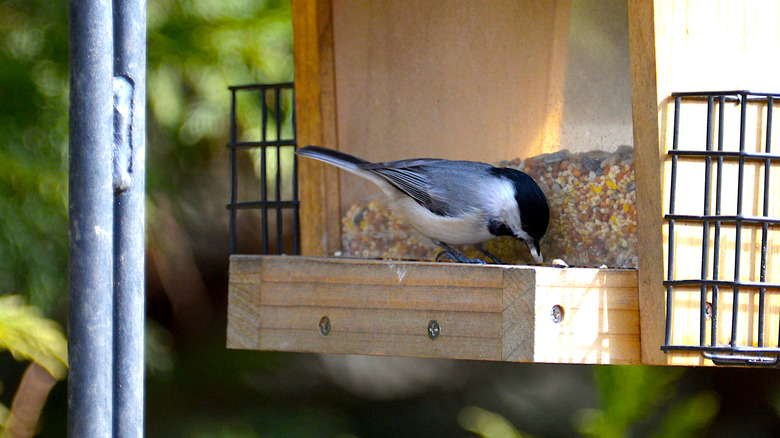
Adding a bird feeder is an easy way to attract more songbirds to your garden, and adding more than one feeder with more than one seed blend could attract even more bird species. With every additional feeder comes additional responsibilities, however. Besides refilling the feeders, each one needs a thorough cleaning every two weeks or so. Birds leave droppings in the feeding area of tray and hopper-style feeders, and with many types of seed-based feeders, old seed bits could become wet and moldy. Any one of these issues could make birds ill, so cleaning the feeders is just as important as refilling them, if not more so.
While bird feeders vary greatly in shape, size, and design, a good scrubbing benefits them all when certain areas have caked-on debris. A tool that comes in handy for this is a regular toothbrush. An old but clean toothbrush can be repurposed to scrub feeding ports, crevices, and corners of bird feeders since it's a lot smaller than a typical scrub brush. Keeping a value pack of dollar-store toothbrushes in the garage is another way to have these handy cleaning tools available any time you're ready for the next bird-feeder cleaning session.
How to clean bird feeders with a toothbrush
It's easiest to clean a bird feeder if you prepare the supplies first. Set up a table outside with one tub for washing, one for sanitizing. Fill the first tub with warm water and dish soap, as if washing dishes; this serves as the main cleaning area. Fill the second tub with 1 part bleach to 9 parts water; this tub is the disinfecting area. If you plan to clean a wood feeder and don't want to use bleach on it, 3 parts vinegar to 7 parts water will suffice.
Wear sturdy rubber gloves for the rest of the cleaning session since bird feeders are full of germs. Take the feeder apart if it's designed to come apart. Use the toothbrush to knock off as much debris as possible on any parts of the feeder. A long, somewhat wide bottle brush comes in handy for long tube-based feeders. Once the feeder is relatively free from debris, soak it in the soapy water for about 10 minutes. Scrub it thoroughly using the toothbrush, or use the bottle brush for areas the toothbrush can't reach. Rinse the feeder off with the hose, then put the feeder in the bleach-water bath for another 10 minutes. The bleach solution effectively kills germs better than soapy water alone. Rinse the feeder again with the hose, then set it out to dry thoroughly before reassembling it and adding more bird seed. Moisture could contribute to mold on the seeds otherwise.
Keeping hummingbird feeders clean can attract more hummingbirds too. They need to be cleaned a bit more often, such as a couple times a week in hot weather. Soak the hummingbird feeder parts in soapy water for a couple hours. Once the water has had time to loosen caked-on residue, use a fresh toothbrush to scrub the ports, perches, and any area that's visibly dirty. Rinse the hummingbird feeder, then let it dry completely.