

How To Get Rid Of Invasive Ornamental Grass Species In Your Yard
We may receive a commission on purchases made from links.
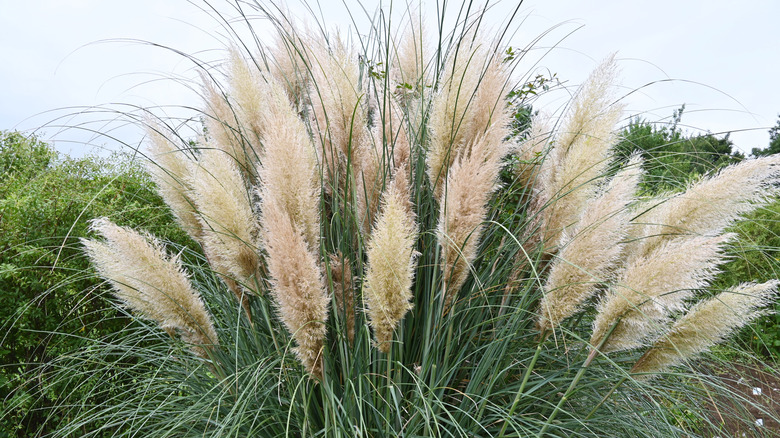
Whether you have cultivated a rock garden full of native flowers or a pristine patch of green lawn, one thing you don't want to see sprouting throughout your yard is quick-spreading, hard-to-kill ornamental grass. The University of Georgia's Center for Invasive Species and Ecosystem Health lists 290 invasive grasses in North America, many of which were planted purposely in gardens for their beauty and hardiness in the past, with many still available in nurseries today. Often these grasses, like Pampas grass (Cortaderia selloana) and Japanese silvergrass (Miscanthus sinensis) grow into tall, showy thick clumps, spreading easily and aggressively, crowding out other plants you may prefer in your garden. Some species, like cheatgrass (Bromus tectorum), pose fire hazards as their tall stalks dry out through the summer. So in addition to thinking twice about planting potentially invasive ornamental grasses in your garden, you'll need to employ an arsenal of techniques including hand pulling, cutting, smothering, and maybe even fire or herbicides to get rid of them.
Hand-pulling ornamental grasses just as soon as you recognize them is a tried-and-true method of control, and works best for smaller spaces or an isolated patch. But you will need more than just your hands in order to remove these stubborn grasses. Their roots run deep, and since many happily establish in hard, rocky soil or among rock gardens, they can be challenging to pull out completely. Among the garden tools even beginners absolutely need, consider a digging tool like the Bully Tools steel tamping and digging bar to break through hard soil and get all the way down to the roots. Do not put dug-up ornamentals into your compost: You risk them spreading all over again. Just like weeds, they are a thing you should never put in your compost bin.
How to ensure ornamental grasses never return
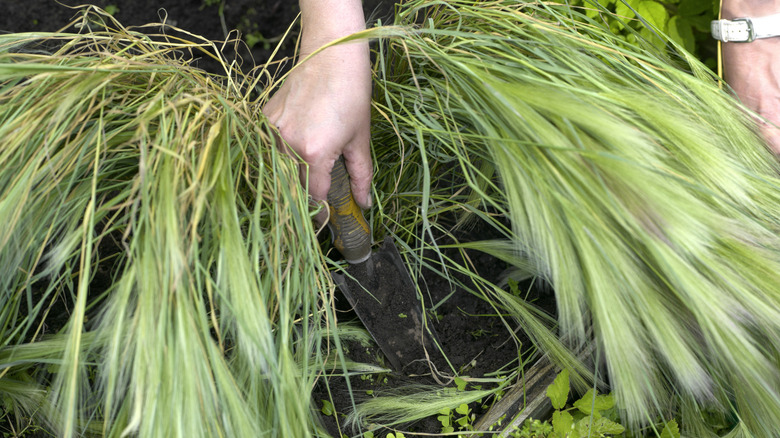
While cutting larger patches back before they flower is a method of ongoing control, it won't eliminate them from your yard. Covering ornamental grasses with plastic, a method of solarization, will heat up the grasses and eventually kill them. You can also smother patches of short-cut grass with cardboard and a layer of mulch. If you aren't under a local fire hazard advisory and there's plenty of moisture around, burning ornamental grass clumps (after you've cut them down to a short height) with a backyard weed torch is effective, but check with your local fire department first before any backyard burning.
As a last resort, you may need to apply an herbicide like glyphosate to rid yourself of stubborn patches of ornamental grass. Because this herbicide is toxic to most plants and may be harmful to wildlife, use sparingly in a targeted fashion, closely following label instructions. A less toxic alternative is horticultural vinegar, which has at least 20% acetic acid, applied directly to the plant.
If you love the look of ornamental grass but don't want to risk the work of controlling its spread through your yard, consider native species like big bluestem (Andropogon gerardii) or switch grass (Panicum virgatum).