

Keep The Bees In Your Yard Happy With A Simple Lawn Mowing Tip
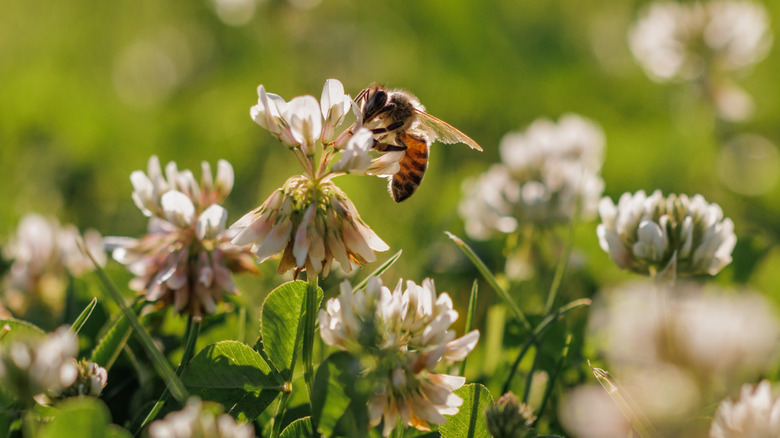
Adding pollinator-friendly plants to your garden is one way to support bees, butterflies, and other pollinators passing through, but they need a little more help than that, especially early in the season when many flowers aren't yet in bloom. Bee populations are on the decline, largely due to habitat loss and pesticides, yet they're incredibly important to the ecosystem. They naturally rely on wildflowers — including those that many consider lawn weeds, such as dandelions and clover — as key sources of both pollen and nectar. Allowing a bit more time between lawn-mowing sessions lets these bee-friendly plants grow a little longer, which could significantly help bee populations stay healthy.
The United States Department of Agriculture notes that during a USDA Forest Service research program conducted over the course of two summer seasons, the diversity of bee species was much greater in residential lawns mowed every two weeks compared to lawns mowed every week. Researchers were surprised to count more than 90 bee species on lawns in Springfield, Massachusetts, during the study. A two-week gap between mowings supported the most bees, as the lawns had plenty of flowers within them and the grass was short enough for the shorter flowers, such as clover, to be accessible to the bees.
How to help bees in your yard
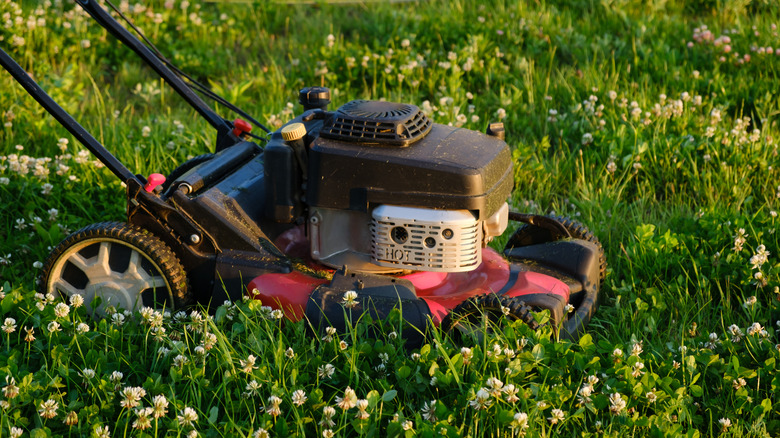
To help the bees in your area, mow the lawn less frequently. This also saves you a little effort and cuts back on the use of electricity or gas if you use either type of mower. Mowing every two weeks while the grass grows allows time for other pollinator-friendly blooms such as white clover, creeping thyme and wild violets to grow, too. Beekeepers often grow white clover as a food source for their bees since its pollen has a high protein content and the nectar is high and sugar. This same plant adds nitrogen to soil, which means it's helping the lawn grasses around it. Clover is sometimes even used as an alternative to grass for a no-mow garden. To keep clover in your lawn, it's best to avoid weed-killing herbicides designed for lawns, or at very least, you should read the product information before buying it to ensure the chemicals don't target flowering plants.
During dry weather or when the grass growth is nearly dormant, it's possible to cut back on mowing to every three weeks or so. You'll know because the grass may look a little more brown and won't grow as quickly as it does during rainy weather. Setting the mower blade a little on the high side, such as 3 to 4 inches, also gives lawn flowers a chance to completely bloom. A higher blade also helps the lawn itself, as the grass offers more shade for the soil, preventing fast water evaporation. Regularly mowing too short could also secretly ruin your lawn, making it harder for grasses to recover.