

What To Do If A Bird Nests Somewhere It Shouldn't In Your Yard
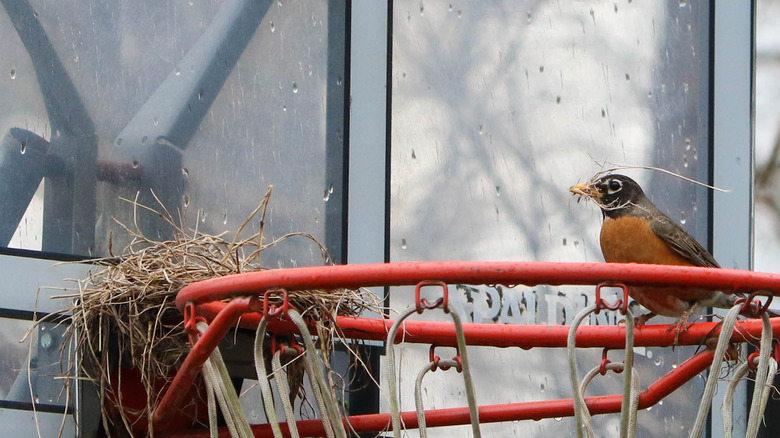
If you've succeeded at making your yard more attractive to songbirds, you're probably going to have more nests in your yard. Even if you fill your backyard with cute DIY birdhouses, some feathered friends may nest in spots that create problems for you or dangers for them. When this happens, a nest relocation may be necessary. When and how to do it depends on local and federal laws, the risk level of the nest's location, and whether eggs are present. Before touching a nest, contact your state's Department of Natural Resources, which can advise you. Many states prohibit you from touching an in-use nest that belongs to native birds, so knowing if a bird mom or eggs are inside is helpful when talking with state wildlife experts. In addition, the Migratory Bird Treaty Act of 1918 prohibits handling or moving nests of migratory birds anywhere in the U.S. So the first course of action is, don't disturb an active nest.
Though wildlife regulations vary from one community to the next, it's typically okay to move a nest if there's no evidence that birds are currently living in it. Figuring out if the nest is in use requires a bit of effort. You'll often see lots of bird activity while the nest is under construction, then a lull when eggs are being laid or incubated. If there are no eggs or adult birds in sight when you inspect a nest, don't remove it right away. Instead, check it a few more times over the next month or so. No changes? Consider taking the nest down. Hints of activity? Let it be unless the birds are in great danger of being harmed. Even if you find baby birds on their own, their parents are usually nearby, so don't try to feed or rehouse them.
When and how to move a poorly placed nest
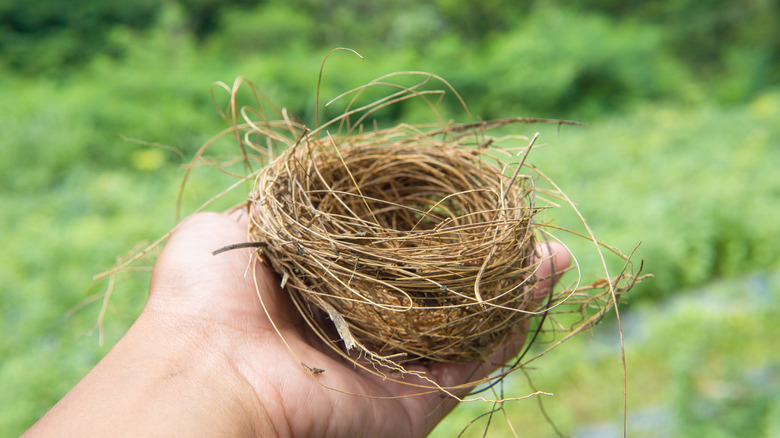
In general, consider transferring a bird nest to another location if it's likely to get torn apart by another animal, squished by a vehicle, or bumped by a sharp or heavy object — say, a lawn mower blade or garage door. You might also consider moving it if pesticide applications could hurt its residents (or even better, avoid using pesticides near active nests). Once you've decided to relocate a nest and know that you're allowed to do so, find a nearby spot for it that's out of harm's way. For example, if the nest is too close to a driveway where you park your car, you could move it to a shrub planted a few feet away. If possible, place the nest far from your house — ideally 100 feet or more — to keep invasive sparrows out of it (or a birdhouse), since both sparrows and bluejays will happily occupy abandoned nests.
After selecting a new site for the nest, do a little prep work so you can move it fast. Clear away any objects obstructing the path to the location you've chosen. Also put on gloves to shield yourself from bugs or pathogens that may be living in the nest. Then whisk the nest to its new spot as gently as you can and exit the area promptly. Resist the urge to inspect the nest soon after the move since its owners are likely to avoid it when you're around. Also disinfect the area that used to hold the nest and line it with aluminum foil or another shiny material that deters a range of bird species from building in the danger zone again.