

Why You Should Consider Using Red Mulch For Your Tomato Plants
We may receive a commission on purchases made from links.
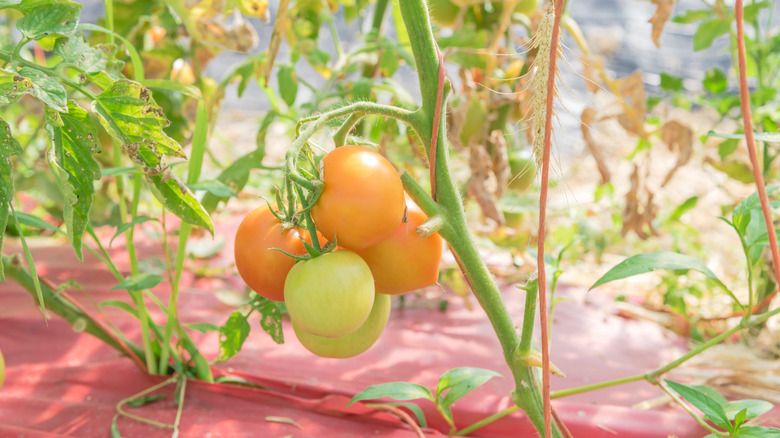
The best mulch for your garden depends on what you're growing, especially if you have edible crops in the mix. Vegetables often thrive with pine needles and other organic mulches that enrich soil with nutrients as they slowly decompose. Meanwhile, black plastic mulch attracts gardeners for its simplicity and weed control. Tomato plants prefer something else: Red plastic, which retains moisture, prevents weeds, and much more. According to Kansas State University Research and Extension, plants mulched with red plastic yield up to 20 percent more tomatoes than those mulched with black plastic. The more challenging the growing conditions, the more this material is likely to make a difference.
Science has an explanation: Different colors of plastic mulch reflect different wavelengths from sunlight. Certain wavelengths enhance the yield, flavor, scent, or nutrient levels of certain crops. Red plastic reflects far-red wavelengths onto tomato plants, stimulating color-sensing proteins called phytochromes. When far-red light spikes, tomato vines assume there are neighboring plants vying for the sunlight they seek. In response, they grow bigger shoots. Some gardeners report that plants mulched with red plastic grow larger tomatoes, too. The wavelengths reflected by red plastic also tell tomato plants to focus their growth above the soil's surface, reportedly boosting fruit production, according to researchers from Clemson University and the United States Department of Agriculture. As a bonus, when above-ground growth increases, below-ground growth slows. This means less food for root-knot nematodes — subterranean pests that halt plants' growth by impairing their ability to absorb water.
How to mulch your tomatoes with red plastic sheeting
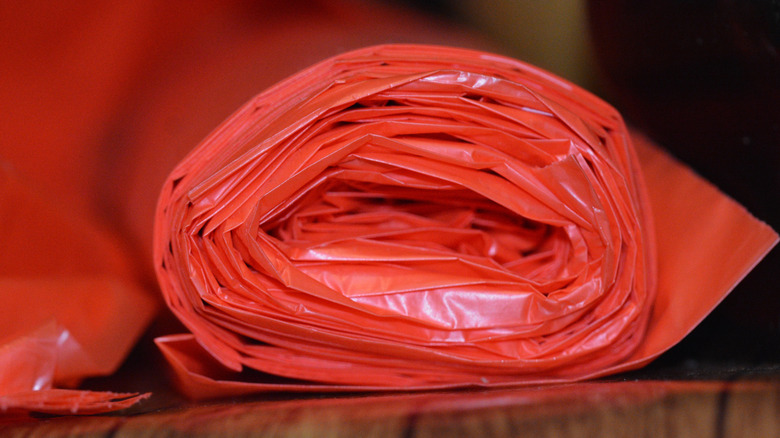
Red plastic sheeting, or selective reflective mulch (SRM), for tomato mulching tend to come in large rolls. Look for varieties that have been developed and tested by experts, as not every crimson shade reflects the right amount of far-red light. Grower's Solution red plastic garden film is one option to consider. Before placing red plastic sheeting in your garden, make a hydration plan for your tomatoes. This can help you avoid major watering mistakes as well as mulching mishaps that can ruin your garden. Many gardeners place drip hoses underneath the plastic. This prevents water from pooling on top of the sheeting, which can attract mold and mosquitoes.
When you place red sheeting in your garden, make sure you use enough of it and position it correctly. There should be a few feet of this reflective material on both sides of each row of tomato plants. If you're growing just a handful of tomato plants, surround each one with a large skirt to ward off weeds and deliver an abundance of far-red wavelengths. In general you'll see the best results with compact determinate tomato plants, as they don't end up blocking the sunlight from reaching the plastic beneath them.
After cutting holes in the plastic for your tomato plants to grow through, monitor their edges for weedy intruders. Find ways to prevent additional holes from forming as weeds like to pop through those. Red plastic garden sheeting is usually quite thin, so be gentle with it. If you're able to avoid rips, your plastic mulch may last several years. Tomato plants can outgrow SRM, becoming too large and blocking direct sunlight (thus losing reflective benefits). At that point, replace it with another type of mulch.