

How To Determine If A Squirrel Or Chipmunk Is Causing Your Lawn Damage
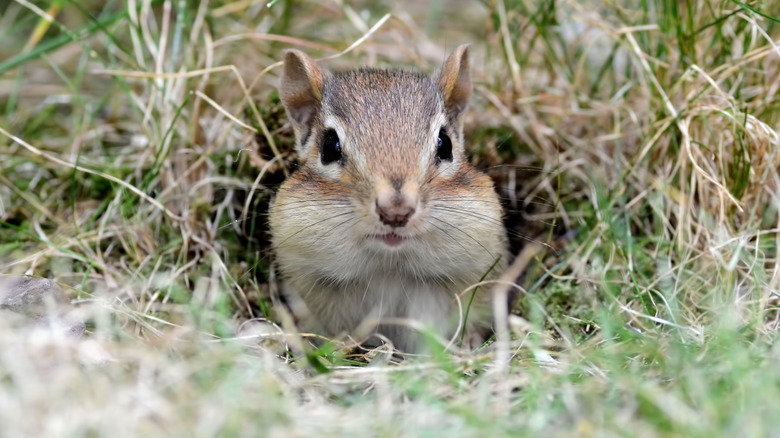
You've taken the steps to prevent lawn rust, you've got your watering routine down to a T, and you've even developed bird-safe mowing habits — and yet your dream lawn is still showing signs of damage from torn-up grass to holes. Unfortunately, even with the time and effort you've shown your yard, nature still prevails, and when it comes to any neighboring rodents, your lawn is the perfect place to dig holes. If you're noticing damage from squirrels or chipmunks, the first step in solving this aesthetic nightmare is to identify the culprit. Thankfully, looking at the holes they leave can tell you a lot about what kind of animal you're dealing with.
Since both squirrels and chipmunks leave holes in their wake, guessing who's who can seem difficult. However, while it's true that both of these little rodents dig, they do so for different reasons. Squirrels often dig just to store food, while chipmunks instead construct expansive tunnels to live in. Because the purpose behind each animal's digging habits is different, the appearance often varies, so size and depth can be a tell-tale indicator of what animal you're working with. Then, once you know if it's a squirrel or chipmunk causing lawn damage, you can implement a humane solution that keeps both your yard and the critters who call it home safe.
Signs of lawn damage from squirrels vs. chipmunks
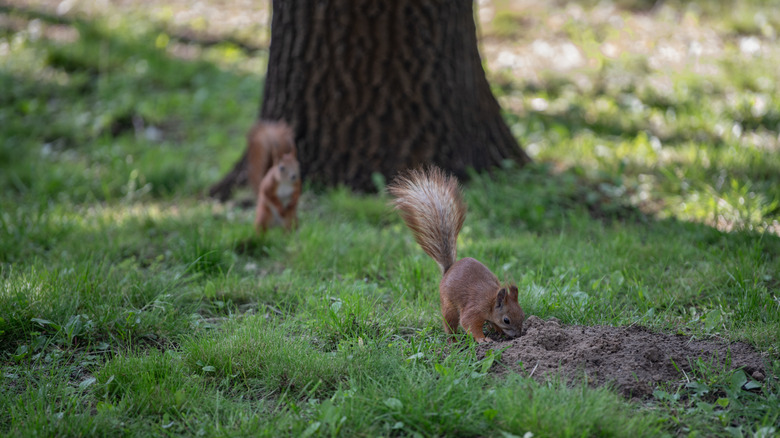
Squirrels are clever foragers that prefer to search for their favorite foods, like nuts and seeds. As a result, tree squirrels will often venture to the ground in pursuit of a quick meal. However, they won't eat all the food available at once. Instead, they'll eat their fill and then bury some of their finds for later — a savvy survival tactic that can lead to unpleasant holes in your yard. Because these holes from squirrels are for storage rather than nesting, they're small and shallow, which is how you can identify them compared to the holes left behind by chipmunks.
Chipmunks use holes to store food too, but their digging goes beyond saving a meal for later. Instead, chipmunks build burrows under the ground, with different tunnels, chambers, and even multiple entrances. Some of these chambers are used to store food for a later date, but others are used for nesting. Though smaller in size, the entrance is often neatly dug compared to that of squirrels' holes.
While there's no way to completely eradicate the digging habits of rodents in your yard, you can implement a few solutions to help deter them. For squirrels, since they dig holes to store food they've foraged, a consistent yard routine to pick up any fallen seeds, nuts, or berries can take away the objective of their digging. You can also try using scents squirrels don't like in your yard, either by purchasing artificial scents or adding plants like mint. You can employ similar tactics to keep chipmunks at bay, as well as remove areas like leaf or log piles that chipmunks can burrow under for shelter.