

The Heat-Loving Flower You Can Grow From Seed And Forget To Water
We may receive a commission on purchases made from links.
Becoming a skilled gardener takes time. Starting with fuss-free, beginner-friendly plants is smart if your schedule is packed or you hope to ease into plant-rearing. You may also want to experiment with annuals before committing to perennials that won't leave your garden for years. One colorful annual to consider is globe amaranth (Gomphrena globosa). It thrives in hot weather, blooms for months, and is very forgiving if you forget to water it. If you sow heavily, growing this plant from seed is fairly easy.
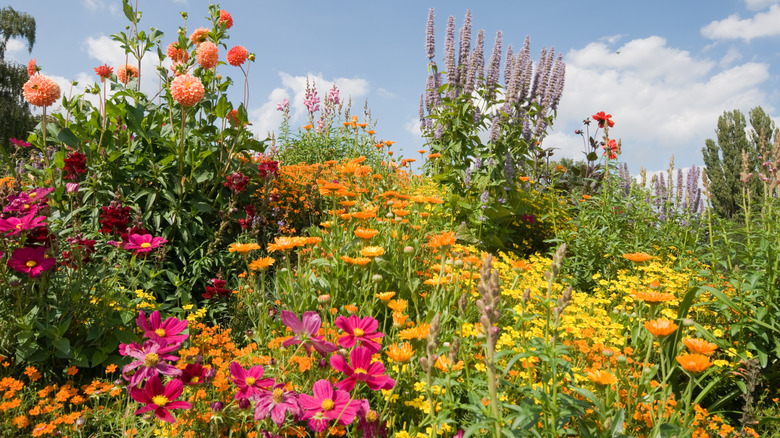
The globe amaranth is well-suited for USDA hardiness zones 2 through 11, an area that covers most of the United States. Its little spherical flowerheads appear in the early summer and keep coming until frost arrives in the fall. You can find kinds of globe amaranth with blossoms that are a range of vibrant hues, including pink, orange, yellow, and purple. These flowers are excellent at attracting butterflies, and some varieties of globe amaranth, such as the hot pink "Fireworks" cultivar, are hummingbird magnets as well.
Fireworks typically reaches a height of 4 feet, which is twice as tall as other types of globe amaranth. Its statuesque form makes it ideal for the back of a flower bed. Most varieties of globe amaranth are a good fit for borders, drought-resistant rock gardens, and plantings designed to lure pollinators. The flowers last a long time after being snipped from the plants, so they're a favorite among floral arrangers. These blossoms are even ideal for dried arrangements since their color doesn't fade very fast. In other words, the globe amaranth is a nice addition to a cutting garden that you can use for filling vases and making bouquets.
How to grow globe amaranth from seed
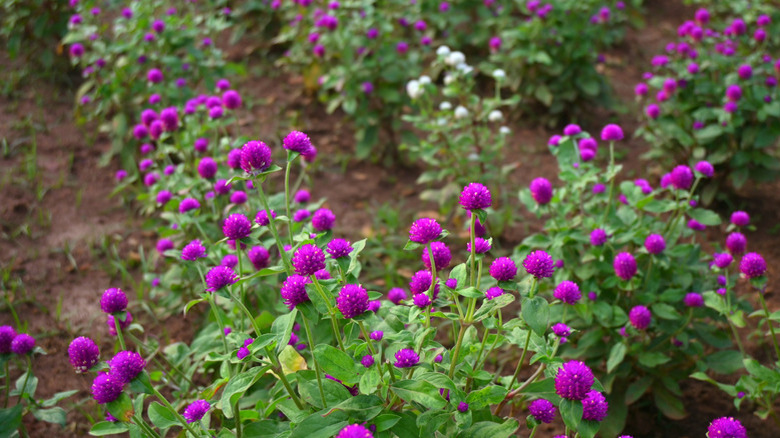
Though you can buy globe amaranth seedlings from a greenhouse or garden center, sowing seeds directly into the ground is the most straightforward way to grow these plants. It's also the most cost effective since a packet of seeds usually costs less than a set of seedlings. The keys to success are seed density and warmth. Only a portion of your seeds will germinate, so sow a larger amount of seeds than you intend to grow into mature plants.
Be sure to direct sow your seeds at the right time too. Don't rush to plant your seeds at the first sign of spring. Waiting until the soil is at least 70 degrees Fahrenheit will encourage the seeds to sprout. These plants tend to grow slowly until summer's heat arrives, so be patient and focus on giving them a healthy place to grow. Make sure the soil drains water well, and mix in some compost if it doesn't. Soak the seeds for one to two days before placing them in the ground to help them germinate faster. Also moisten their growing area and dust them with lightweight soil to give them a good start.
Plant your globe amaranth seeds in a part of your yard that gets more than six hours of daily direct sunlight. This will promote optimal flowering. However, they will accept just a few hours of sun if that's all you can offer. Do your best to keep their soil damp throughout the growing season, but don't fret if it dries. Since these plants tend to be drought tolerant, they should take this challenge in stride.