

What To Do If Your Tomato Plant's Leaves Look A Little Yellow
We may receive a commission on purchases made from links.
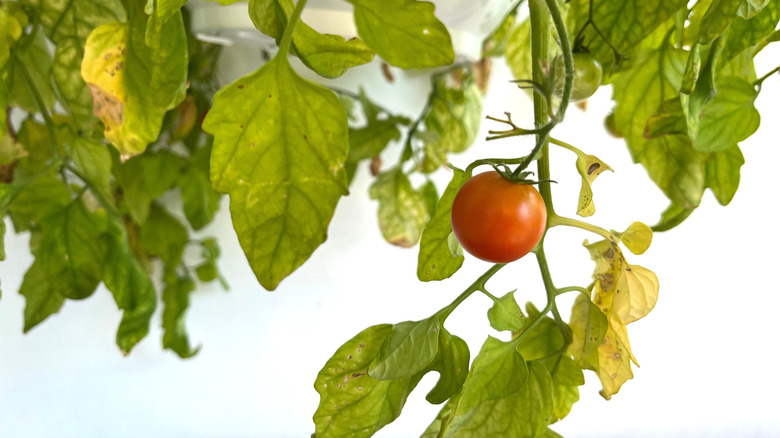
Tomato plants don't pull any punches. If they're unhappy, they tend to display their displeasure. Their stems may sag or turn purple. Their leaves may develop strange-looking spots. An entire seedling may fade to yellow. Interpreting these signs is both an art and a science. When you see yellowing leaves on a tomato plant, the problem usually involves nutrients or moisture. Low nitrogen levels and overwatering are two possibilities to consider. Fortunately, tomato plants can recover from these problems if you address them promptly. The remedy to use depends on the problem you uncover.
Nitrogen deficiency is one of the most common sources of yellowing leaves on tomato plants. Tomatoes are heavy feeders, extracting substantial amounts of nutrients from their soil. Nitrogen is especially important when tomato plants are young, as it fuels stem development. If nitrogen is lacking, tomatoes suffer from growth delays and leaf coloring that ranges from yellow to light green. Soil testing is the best way to tell if your garden lacks nitrogen. It can also indicate if other nutrients are in short supply. Request this service from a cooperative extension office or order a product such as the MySoil test kit, which measures levels of 13 different nutrients. Also, keep an eye out for iron and magnesium deficiencies, which show up as yellowing leaves with green veins.
If nitrogen isn't the issue, garden-watering mistakes are probably making your tomatoes' leaves turn yellow. Too much water can lead to yellow foliage that curls or droops. The yellowing often starts on the lower leaves of the plants. In contrast, thirsty tomato plants may have yellowing leaves that are dry and crumbly.
Helping your tomatoes grow healthy green leaves
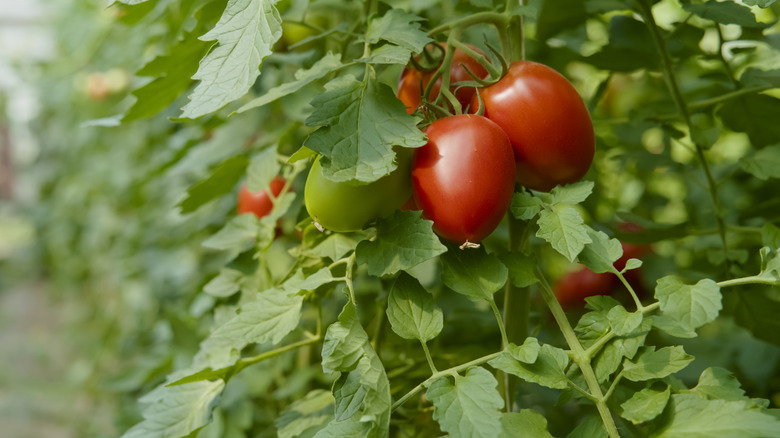
Once you've determined the probable cause of your tomato plants' yellowing leaves, tailor a solution to their needs. If nitrogen deficiency is the issue, fertilizer or a natural nutrient booster such as compost can help. Though you should avoid high-nitrogen fertilizers for tomato plants with healthy green foliage, you can choose a product that's rich in this nutrient for plants with yellow leaves. A liquid NPK fertilizer may revitalize your garden — and its tomatoes — within a few days, but it's important that you don't provide too much nitrogen. This can shrink your tomato crop.
If the yellowing is minor, mixing compost into your tomatoes' soil may be sufficient. Compost slowly releases a variety of nutrients most plants need, helping them stay healthy throughout the growing season. Another solution is to soak a cup or two of compost in a gallon of water for a week, then strain off the liquid, dilute it, and feed it to your tomatoes. This process extracts nutrients from the compost and lets you deliver them directly to the plants that need them most.
If you suspect that too much or too little hydration is behind the yellowing, try tweaking your watering regimen. In-ground tomato plants need an inch of water per week, and they tend to like a few deep watering sessions during this time period. Also check for drainage issues since pooling water can make tomatoes susceptible to Fusarium root rot. This disease often manifests as yellowing leaves on tomato plants. If excess water is hanging around for days, adding compost to your garden's soil can fix the problem.