

A Common RV Mistake That Can Create Dangerous Driving Situations
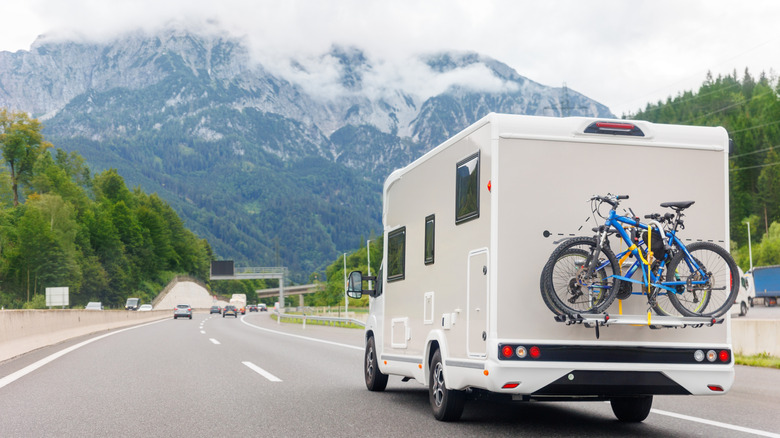
We may receive a commission on purchases made from links.
A road trip, especially in an RV, can be a lot of fun, but it's not all sunshine and roses. The unfortunate truth is that no matter how many tips and tricks for a stress-free road trip you use, things still can go wrong. Improperly closing up an RV can cause a whole slew of issues, especially if you don't fully lock up the awning before heading towards your next adventure. Even if you roll it up, if it's not locked in place, it can unfurl in the middle of a drive. There are several dangers related to having your awnings out while driving, the least harmful of which is the increased cost of gas and the difficulty in controlling your RV due to more drag.
And this is only the best-case scenario. In all likelihood, an extended awning will lead to much more dangerous situations. RVs are already wide and can take up almost an entire road lane. An awning can easily extend over to another driver's space. While it might not affect most vehicles, semis, tall trucks, and other RVs will possibly be in danger from this extended piece. Additionally, most awnings can't handle much in the way of wind, which is why you aren't supposed to leave them out at night.
Most retractable awnings are only able to handle constant wind speeds of up to a maximum of 25 miles per hour. On a highway or interstate, you're likely going much faster. This means there is a very high chance that your awning will break off or rip. It can pull off the side of your RV with it and get both thrown into traffic or on vehicles behind you, which could cause serious injury or even death.
RV awnings sometimes come out on their own during a drive
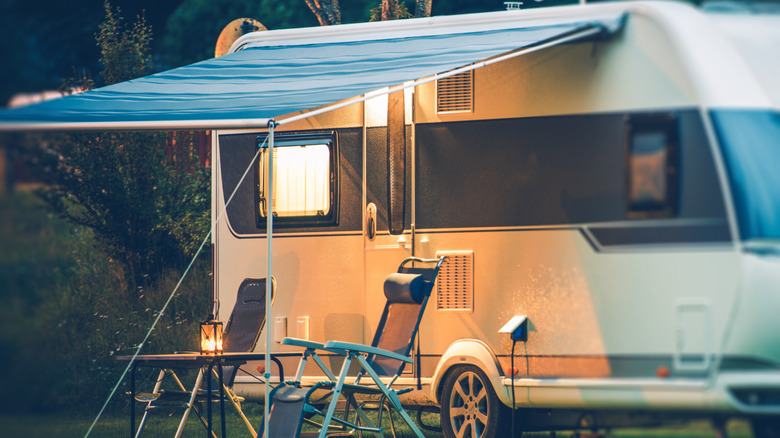
Of course, most people understand to secure the awnings before getting back on the road. However, sometimes things happen, and you can forget to follow your checklist before heading out. You may think an awning is an obvious thing to miss, but you can easily overlook items that are always there. It's similar to how sometimes people with a lot on their minds can leave the gas nozzle in their vehicle and drive away without noticing.
However, it's often due to equipment failures that awnings will start coming down while on the road. Even if you do everything right, there's a possibility that your awnings could come unfurled while you're traveling. Unfortunately, they're not always in an area easy to see with a quick glance out of the mirror. You could drive down the road for miles without realizing what danger your camper was causing. RVs aren't as easy to take care of as you might imagine, and broken or confusing mechanics is one of the overlooked dangers of RV living you should know before taking off on the road.
This is not a common issue by far, but it is a potential danger to be aware of when owning a motor home. The best way to prevent this kind of situation is to take steps to stop it from ever happening. Double-check your awnings every time you head onto the road, even if you haven't used your RV in a while, to make sure it is fully locked in place. Additionally, get into the habit of looking at your awnings occasionally while driving to make sure they're safe and locked down.
Ways to secure your RV awnings
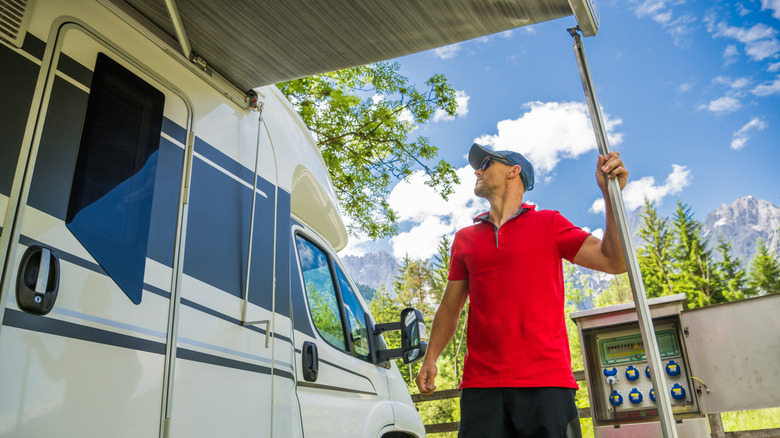
If you're worried that your awning will extend, even with precautions, you can invest in travel locks. These tools are designed to hold the awnings in place, especially electric ones where the motor might not work quite as expected every time. They aren't a required purchase by any means, but they can give you peace of mind, and they're far cheaper than completely replacing a broken awning or any vehicles they damaged. This Domestic SVC Travel Lock Kit is reasonably priced and works well to keep the awnings where they should be while traveling.
For RVs with manual awnings, which are more often seen in older models or aftermarket add-ons, there is usually a lock included in the design already to stop the awning from unfolding. In these cases, it shouldn't unlock unless this mechanism isn't secured properly or is broken. It's a good idea to find a manual for your RV model if you don't already have one so you can ensure you're using everything as intended.
However, if you're starting to notice that the awnings are moving around more than normal or they're beginning to slip on the road, even when you take precautions to prevent it, it may be worth taking your RV to a mechanic. There are several parts that can break or lose tension, which will cause the awning to move, especially when the wind is right. Though it may be an expensive fix, it's much better to fix it now than before it starts causing damage to your vehicle and the drivers around you. Thankfully, now that you know about the dangers, you can be prepared and start focusing on other things, like the incredible US road trips that deserve a spot on your bucket list.