

The Fast-Growing Herb That'll Take Over Your Garden If You Don't Take These Steps
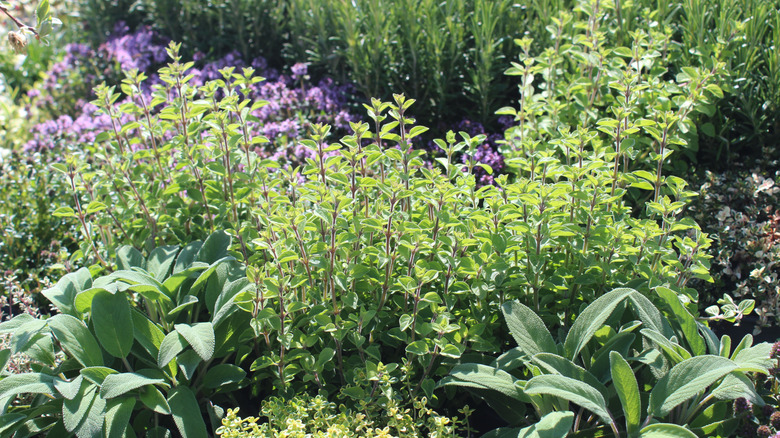
Part of the fun of growing an herb garden is choosing plants that tantalize your taste buds. Fresh herbs are absolutely delicious compared to their dried counterparts, and growing herbs yourself means you'll have them on hand when you need them. Many herbs — including rosemary, mint, dill, and basil — naturally repel pests from the garden, so it's worth planting them even if you don't regularly use them for culinary purposes. Some herbs — such as chives, mint, and rosemary — are even perfect for beginners to grow since they're relatively low-maintenance.
Horseradish (Armoracia rusticana) is one of those herbs that's incredibly easy to raise in certain areas, but this benefit is also one of its drawbacks. It grows too easily, and it won't be long before it takes over garden beds, as weeds might. Horseradish is so prolific that if even a small piece of it remains in the ground, it'll come back up again, even after tilling the soil. If you're planning to grow horseradish, one simple precaution will help keep the plant exactly where you want it, and nowhere else.
How to keep horseradish from taking over a garden
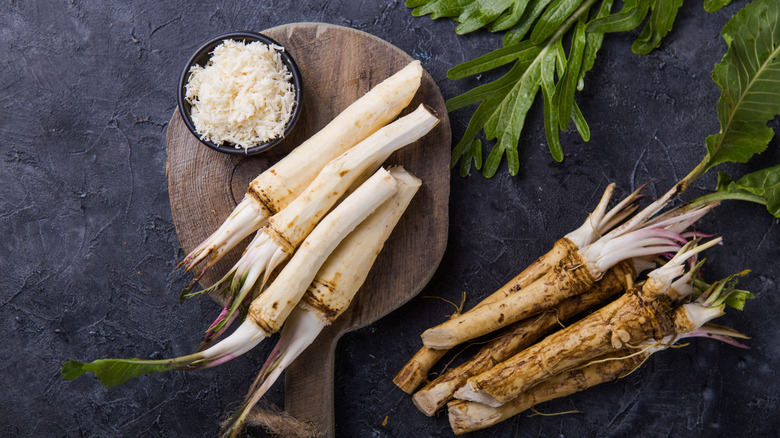
The best way to keep horseradish in its place is to plant it in raised beds or containers rather than directly in the ground. Horseradish and many other plants can thrive in raised-bed gardens since you have total control over what's in the soil. Growing horseradish this way, essentially in its own "walled" garden, helps prevent it from spreading elsewhere. Leaving a little bit behind each year will allow it to pop up again the following; it's one of those plants you can buy once and harvest again and again for years. If you decide you no longer want to grow it after a few years, make sure the entire plant is removed from the raised garden bed or container, or it'll keep coming back with whatever you've planted to take its place.
Horseradish thrives in full sun to partial shade. It grows well in USDA plant hardiness zones 3 through 9, and it doesn't mind cool weather. Cut a hunk of horseradish root, then let it heal over for several days before planting it. Plant the cutting on an angle in deep, rich, and loamy soil in early spring or late fall, when the weather is generally cold but the ground isn't frozen. If you're planting more than one piece of horseradish, space them a foot apart. Though horseradish tolerates drought, it could affect the texture of the root. Water horseradish about once a week.