

Make Plant Propagation Simple With The Help Of Empty Medicine Bottles
We may receive a commission on purchases made from links.
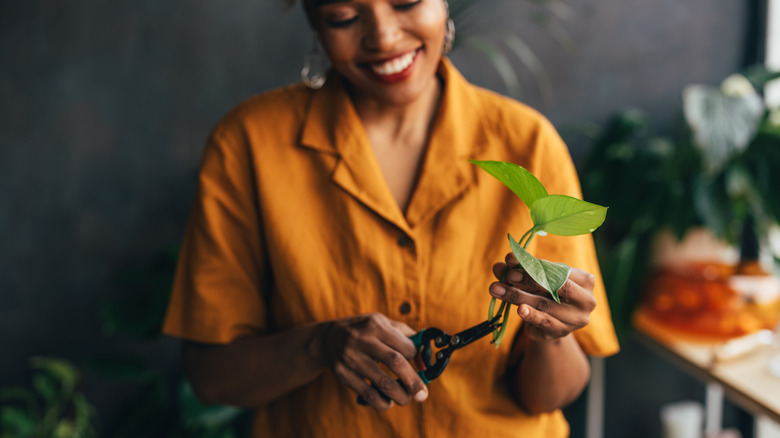
Whether they're from prescriptions, supplements, or over-the-counter medication, you've likely accumulated many empty pill bottles over the years. This, all in an effort to keep up with your health. It just so happens that gardening is also good for your health, so why not combine the two healthy endeavors and reuse the plastic bottles while you're at it? Repurpose your leftover pill bottles to propagate plants. Clean the bottles thoroughly, fill them up with water, and set your stem cutting on top.
These pill bottles are quite versatile. You can use them as handy storage containers to hold everyday items, such as coins, earbuds, cotton swabs, or craft supplies, like buttons, bobby pins, and portable sewing kits. You can even find use for them in a DIY survival fishing kit. However, the color of traditional prescription bottles lend themselves to good propagation and slow algae growth by letting in less light. This works well to start spider plants and other fuss-free plants that are great for gardening beginners. The bottles have small openings that reduce evaporation and hold cuttings up without the leaves dipping in the water. Nevertheless, monitor them closely to make sure they don't dry out.
If you don't have a lot of prescriptions and therefore not many bottles lying around your house for repurposing, you can buy reasonably priced multi-packs just about anywhere. Some of these come with labels you can use to identify the plant and add the date you propagate them.
Smart solutions for propagating plants in prescription bottles
Clean your bottles thoroughly as you don't want medical residue in your plants — even a little is too much. Use a dishwasher or hand-wash them with hot, soapy water, and dry them well. Don't forget to remove the labels, too. You certainly don't want private, sensitive information out in the open. For difficult labels, soak the bottle overnight or use a product like Goo Gone for the really tough ones. Plus, with the label off, you can more clearly keep an eye on the plant's health as it grows. Lids can be reused as collars for the cuttings. Slide the stem through a hole you poked through the center.
To start propagating with pill bottles, cut a plantlet from the stolon and rest it into the bottle with the leaves hanging outside. Use demineralized water if you can. As an alternative, you can leave tap water out for a day or so before placing the plantlet. Indirect sunlight is best until the plant has developed roots. This takes about two weeks, but change the water often.
If you still have too many pill bottles lying around but want to keep them from the landfill, recycle them. Not all local recycling programs accept pill bottles, but you can often find medical waste programs that do. As for disposing of unused or expired medications, you can drop them off at a drug take-back location or send them off in a prepaid envelope.