

Fertilize Your Garden With These Liquid Nutrient Boosters You Can Make At Home
We may receive a commission on purchases made from links.
Synthetic fertilizers can be tricky to use correctly because they're often quite potent. Even if you dilute them with plenty of water, they can burn your plants if they're applied too generously. Plus, you may need to feed fast-acting varieties to your plants every few weeks. This raises the risk of error while draining your gardening budget. Fortunately, you can make natural fertilizers at home without spending a dime. Like many organic nutrient boosters, these homemade garden additives are gentle enough that they're unlikely to burn your garden's residents, even if you dilute them imperfectly. They also nourish beneficial microbes in your soil while feeding your plants, something their synthetic counterparts don't do.
To make a wide range of natural liquid fertilizers, all you need are water, a container that can hold liquid, a lid or mesh covering for the container (to deter mosquitos), and plants that were recently harvested or uprooted. You can even make fertilizer from produce scraps or flowers you've deadheaded. For instance, use banana peels in your garden by soaking them in a pitcher of water for a week, straining off the solids, and diluting the remaining liquid with water. Adding 5 parts of water to every 1 part of this fertilizer tea works well. If you're not sure how much to dilute a DIY brew, go with a 10-to-1 water-to-fertilizer ratio.
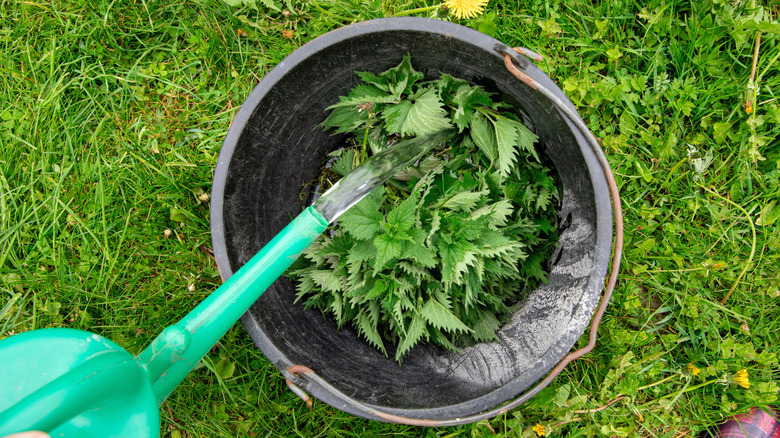
You can turn dandelions into a nutritious fertilizer tea with a similar process, but trade the pitcher for a bucket. These lawn weeds are rich in the potassium plants need to shuttle carbohydrates through their tissues. They contain calcium, too, which helps plants grow new sets of leaves.
Stinging nettle tea is packed with vital nutrients
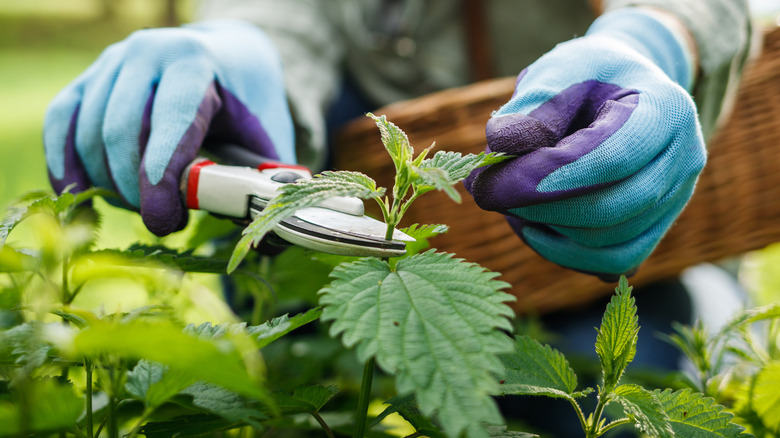
One of the best ingredients for fertilizer tea is stinging nettle (Urtica dioica). Though some people forage this plant for medicinal purposes, it's generally considered a weed. No matter where you travel in the world, there's a good chance that stinging nettle is growing somewhere nearby. This perennial often sets up shop in ditches and meadows. You may also find it in other areas with damp, rich soil.
When you touch a stinging nettle, the prickly hairs on its leaves and stems may make your hands burn for a few minutes. For this reason, it's wise to wear gloves when handling it. It's a small inconvenience considering the many perks this plant brings to your fertilizer tea. In addition to supplying nitrogen, phosphorous, potassium, calcium, magnesium, boron, and several other important nutrients, stinging nettle tea can ward off problem-causing bugs and fungi when spritzed on the plants in your garden.
Grass clipping tea couldn't be easier to prepare
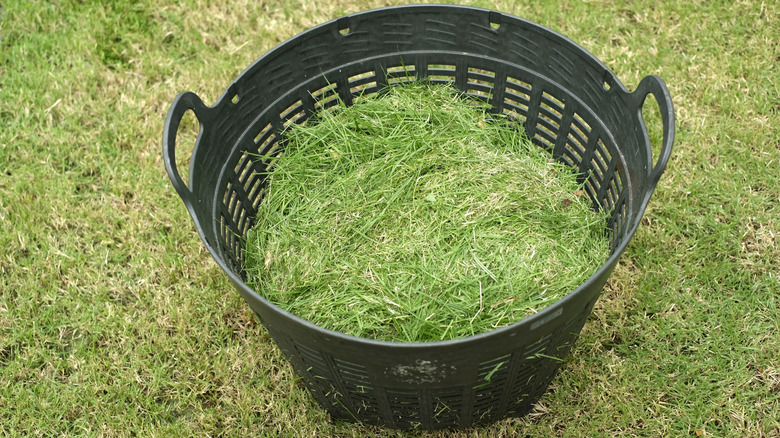
Grass clippings can benefit to your yard in a number of ways, from insulating your lawn to enriching your compost pile. A lightweight mulch made of snipped grass is useful for protecting seeds and seedlings from hazards such as wind gusts. Plus, grass clippings are an easy-to-find ingredient for homemade natural fertilizer.
When it comes to brewing fertilizer tea, fresh grass clippings are better than dried ones. That's because they're loaded with nitrogen that you can extract in a few simple steps. Just fill a bucket or trash can at least halfway with cut-up grass, cover the grass with water, and place a bug barrier over the opening. Leave the bucket alone for 3 days, except for stirring the contents once in a while. After the grass is done steeping, remove it with a strainer and toss it in your compost pile. Apply the leftover liquid to plants that need more nitrogen, a nutrient crucial for photosynthesis. A soil test can tell you which parts of your garden lack nitrogen. You can request one from a local extension office that serves gardeners or order a product such as the MySoil test kit.
Comfrey tea is a free vitamin supplement for your plants
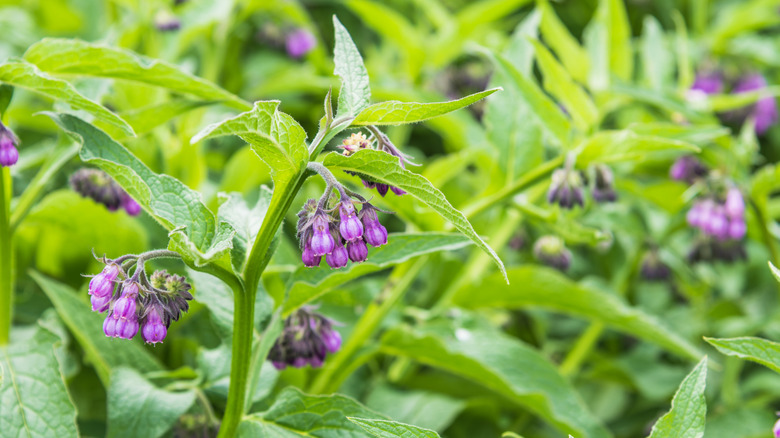
Comfrey (Symphytum officinale) is a superstar ingredient in DIY fertilizer teas. It's known for its deep roots, which can grab nutrients from layers of soil that other plants can't reach. These goodies get packed away in its leaves, so be sure to harvest plenty of those for the liquid fertilizer you plan to make.
Steeping comfrey in water unlocks a host of nutrients your garden will surely appreciate. It infuses fertilizer tea with lots of phosphorous, which is integral to the flowering process. This nutrient is especially important for tomatoes and other plants whose flowers transform into edible fruit. Comfrey also has ample nitrogen as well. This fuels the development of foliage early in a plant's life. This perennial's nutrient list also includes calcium, potassium, various minerals, and vitamins A, B, and C. Comfrey even contains the magnesium plants use when producing chlorophyll and transporting phosphorous to their tissues.
Chicory tea is rich in root-supporting potassium
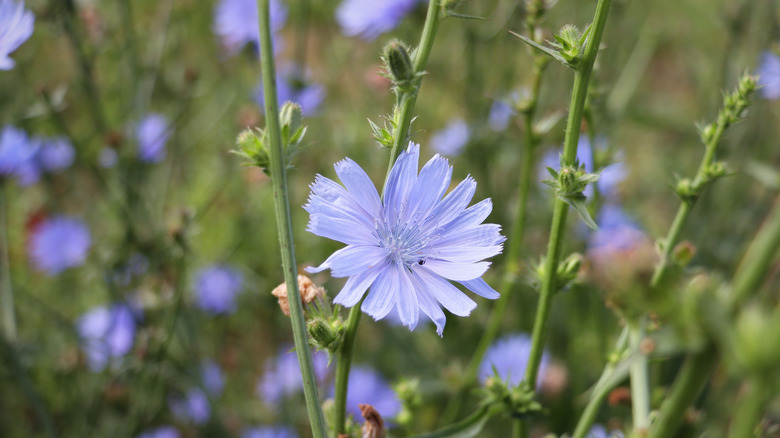
Sometimes called coffeeweed or blue sailors, chicory (Cichorium intybus) is a flowering perennial that often makes its home beside streets and railroad tracks. It sometimes sprouts from lawns, too. Chicory's blossoms are usually light blue, but the petals can also be pink or white. Bees and butterflies like its nectar, and other plants love the potassium, calcium, and vitamin A it brings to fertilizer tea. In addition to helping new leaves and root tips form, calcium plays a role in building sturdy cell walls, growing strong roots, and warding off withering after plants reach maturity.
Similar to other DIY fertilizer teas, a liquid made from steeped chicory delivers nutrients to your plants in a jiffy. You can apply it to your garden twice a month or whenever your plants start looking a bit hungry. Plants that need fertilizer may exhibit delayed growth, smaller-than-usual fruit, or discolored leaves.
Assorted weeds make surprisingly good liquid fertilizer
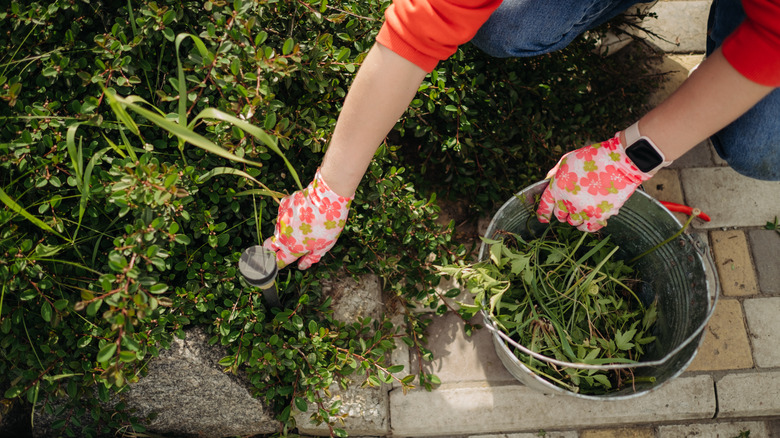
Weeds are a pain to pull, but they're not entirely useless. Though most weeds are among things that shouldn't go in your compost pile, they can be turned into fertilizer tea. Letting their seeds into your compost can make a mess of your garden, but they're easier to remove from a bucket of liquid. Weed tea's nutrient content will vary a bit depending on what's in the mix. At the very least, tea made from fresh, green weeds should have nitrogen and small amounts of other nutrients. You can brew this tea the same way as grass clipping tea. Just make sure to strain it well to prevent it from introducing seeds to your garden. When pulling weeds for this tea, do your best to avoid those that have gone to seed. This will make the straining process easier.
Consider incorporating common weeds that are bursting with vitamins and minerals. Chickweed (Cerastium spp.), purslane (Portulaca oleracea), and yarrow (Achillea spp.) all offer an abundance of nutrients that can enrich your fertilizer tea. Though steeping plants for about a week will yield a suitable fertilizer, lengthening the steeping period can extract more nutrients and yield a more concentrated final product. Just be sure to muddle the mixture with a stick every day or two to keep essential microorganisms alive. The more you mix it, the more of these tiny soil helpers you're likely to have when steeping concludes.