

Adventurers Will Love An Oklahoma State Park That Used To Be Covered By An Ocean
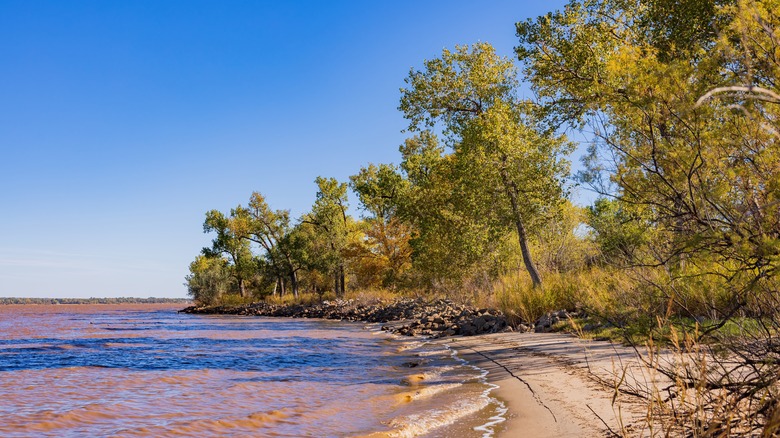
Eons ago, many parts of the United States were underwater. For instance, the land we now know as Oklahoma sat beneath an ocean. Salty reminders of its past remain today, and one of the best places to see them is Salt Plains State Park. Situated in Northwest Oklahoma, near the tiny town of Jet, this park revolves around a big, salty lake that's like a miniature version of that prehistoric ocean. It's also a terrific place to swim, fish, canoe, and kayak.
Unlike most inland bodies of water, Great Salt Plains Lake is briny thanks to salt deposits from the ancient ocean. It stretches across nearly 9,000 acres and has more than 40 miles of shoreline, including a beach with a campground next to it. The lake's shallow water makes kayaking especially safe, so it's an ideal place to learn how to paddle.
Great Salt Plains Lake is also a fishing destination. It's teeming with saugeye perch, trout, catfish, and several types of bass. You can cast a line from a handicap-accessible fishing dock or a canoe, as long as you've procured an Oklahoma fishing license. Make sure you know how to handle and release a fish properly since certain species come with rules. For example, each saugeye needs to be at least 14 inches long, and you can't keep more than six of them. After fishing, retire to one of the park's campsites. There are 95 for tent-based camping and 64 for RVs, plus shower stations nearby. Or, reserve a cabin equipped with a fridge, stove, and bed. The park has a half-dozen of them, as well as outdoor grills, picnic areas, and playgrounds.
Find selenite crystals at the wildlife refuge beside Salt Plains State Park
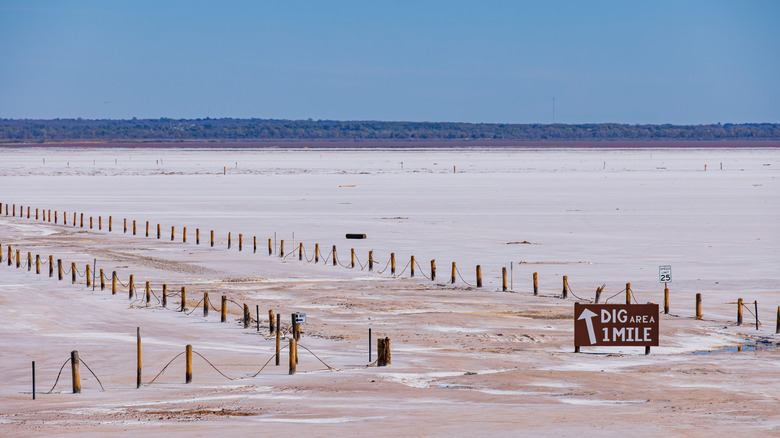
Located next to Salt Plains State Park, Salt Plains National Wildlife Refuge is an important habitat for more than 300 bird species, including whooping cranes. Animal lovers flock to the best birding spots – especially Cottonwood Point – to look for these endangered creatures, as well as sandhill cranes and bald eagles. This refuge's other claim to fame is unusually shaped selenite, which you can collect for free in a designated zone from early April through mid-October. These chocolate-colored crystals are a form of gypsum that collects just beneath the surface of the salt flats, an 11,200-acre stretch of salt-dusted soil. When the brackish groundwater vaporizes, it helps create the saline ground cover as well as the gem-like treasures deeper in the earth.
The salt plains are the one place on the planet you can dig for hourglass selenite crystals. To do so, you'll need to bring a gardening shovel and gloves. Be sure to pack sunscreen, water, and a change of clothes as well. You can take home up to 10 pounds of small crystals, plus a big cluster if you happen to find one. While you're at Salt Plains National Wildlife Refuge, stop by the visitors center on County Road 710 to learn more about the crystals, get tips for exploring the nature trails, and see if any special events are happening. You can also arrange a guided tour of the refuge or borrow a pair of binoculars by contacting the visitors center before your trip.