

The Stunning Fiery Blooming Tree That Bees Are Obsessed With
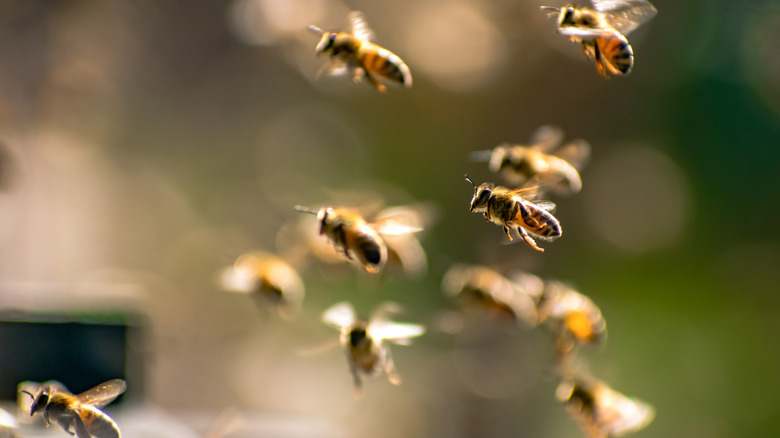
Flowers are a great way to add color to your garden while also attracting helpful pollinators like bees and hummingbirds. However, depending on your outdoor needs, you may not always want to fill your garden with flowers. After all, as pretty as they are, keeping an array of beautiful blooms in good shape can take time, effort, and plenty of elbow grease. Thankfully, when it comes to creating an inviting space that you and pollinators alike can enjoy, traditional pollinator-friendly flowers aren't the only option: You can also look toward trees like the red maple (Acer rubrum) that pair fiery bee-magnet blooms with easy care.
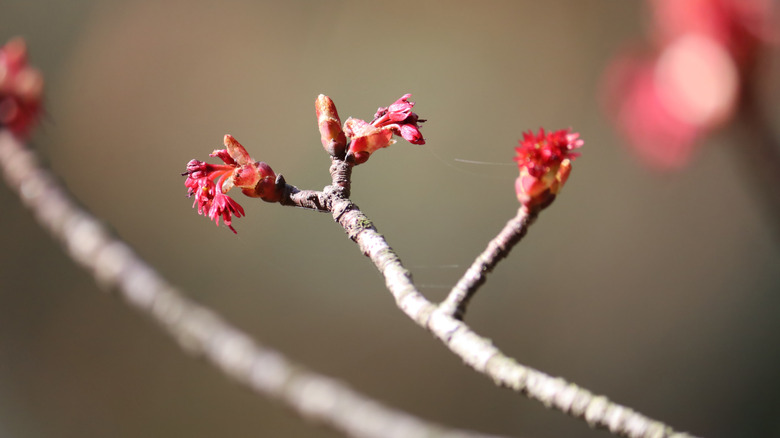
Red maples can grow up to 90 feet on average, with some larger specimens reaching all the way to 120 feet at maturity. During the spring, you'll notice your red maple colorfully explodes with delicate red flowers. Not only are these fiery blooms a sight to see each year, but pollinators love the nectar within, attracting bees, hummingbirds, and other helpful animals to your yard. Plus, because they're easily established in your yard, red maples are a great fuss-free plant for beginner gardeners who aren't sure where to start with trees.
How to grow red maple in your yard
Before you set out to plant your own red maple, you'll need to learn the conditions this tree requires to thrive. After all, you don't want to get your hopes up for a fiery showstopper just to find out these trees can't grow in your yard.
The first thing to consider is its USDA hardiness zones. For the red maple, this ranges from zones 3 to 10, though local climate can play a large role in the tree's success. You should also pay attention to the site you plan to plant your fiery red maple on, specifically soil and sun exposure. Red maple trees do best when they have full sun to partial shade, and they need a soil that is well-draining but moist, although they thrive in a wide variety of soil types. If you plan on growing this tree, it's important to pay attention to their watering needs, keeping the soil moist, especially while establishing the tree. Under-watering is a common garden mistake that beginners make too often, and it can lead to a condition known as scorch in red maples, which can cause leaf death.
Red maples also grow quickly, letting you start attracting more pollinators to your yard sooner. Just be prepared for the pruning that comes along with this rapid growth: Regular pruning is essential for creating a healthy, strong tree.
Are red maples invasive?
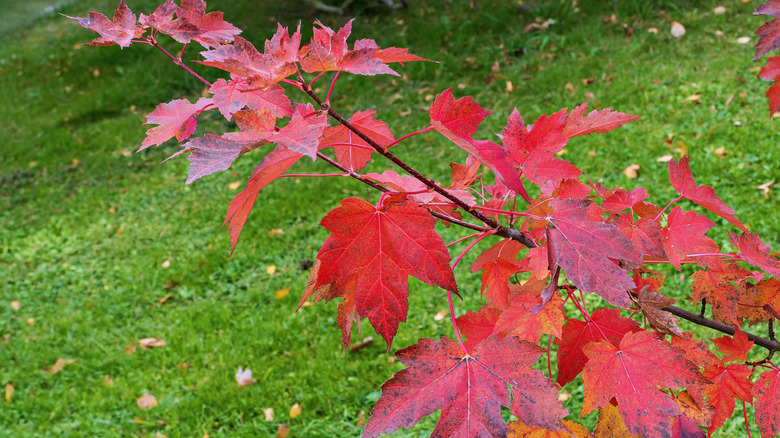
Before adding any type of plant to your yard, whether it's a tree or a small cluster of flowers, it's important to check and see if that plant is invasive in your area. Some plants, even when they're not native to your region, can be safe to plant because they don't have aggressive, invasive tendencies. However, if a plant is considered and classified invasive, it can wreak total havoc on your local ecosystem, outcompeting and weakening the native species.
Overall, the red maple is not considered to be an invasive species when grown in its native range. This includes much of eastern North America, from as far north as Newfoundland to Florida. However, this beautiful plant is known for growing well and adapting to a variety of conditions. It excels at producing seeds, and as a result, can pose a threat to slower-growing native species in areas where it's a visitor. If you're not sure if the red maple is the right choice for you, you can reach out to online resources or local experts to learn if this plant behaves as an invasive species in your region.
Because of their aggressive root systems, red maples may also pose a threat to nearby structures like sidewalks. This is true even where they are native. Thankfully, you can help reduce the likelihood of structural damage by planting them away from pipes, driveways, sidewalks, and your home's foundation.