

The Highly Popular Guttering Type You May Want To Reconsider Using
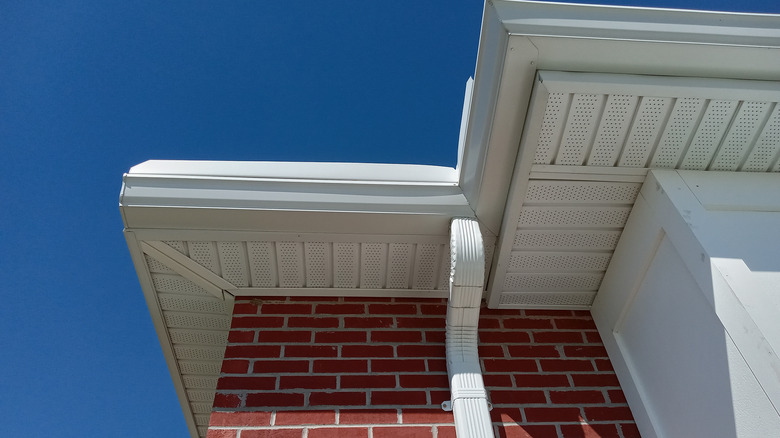
Whether you're a homeowner, renter, or just an observant pedestrian, you've likely seen your fair share of metal gutters lining the perimeter of homes and commercial buildings all over the country. A vast majority of downspouts and gutters in the United States are made from metal, mostly aluminum, meaning you likely haven't even questioned this fact in all your years of clearing jams and hammering out dents. Unfortunately, as it turns out, metal is far from the best option for downspouts, meaning many homeowners are being saddled with the frustrating responsibility of maintaining subpar materials for effectively no reason. While it seems unlikely that general trends will shift in this regard, you don't need to burden yourself with the same maintenance demands as your neighbors.
If you're tired of frequently cleaning your aluminum gutters — which are prone to rust, dents, and corrosion with time — you should consider choosing from a wide array of alternative materials. Luckily, we've got you covered, with a comprehensive breakdown of the many pitfalls to the standard aluminum structures, as well as a brief but helpful list of inexpensive, hassle-free alternatives.
The many negatives of metal gutters
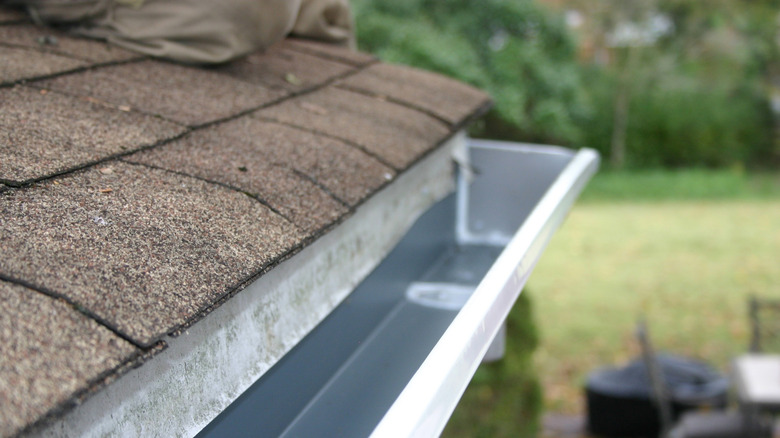
Aluminum gutters are awash with issues, which most homeowners have been primed to consider inevitable. For starters, they are easily dented by harsh weather, debris, and even attentive homeowners, who may feel compelled to lean straight ladders against them during basic maintenance. Though it may seem as though these dents are little more than a visual issue, they can also cause significant blockages within the gutters themselves, rendering them broken and ineffective. Dents can also lead to additional corrosion when left untreated, shortening the lifespan of your materials, and potentially receiving more damage when ice dams form on your roof that need to be safely removed. Furthermore, aluminum gutters are prone to rust with time, especially in areas with a high volume of rain, snow, or ice storms. Aluminum materials can also corrode from salt and moisture, rendering them most ineffective in homes along the coast. So, despite the fact they can be less expensive to install than other options, the cost of maintenance and repair can be high.
One of the worst things about standard aluminum gutters is the upkeep, which can often become a hazard for the average homeowner. By some estimates, more than 500,000 people, statistically, fall from ladders each year, with almost 150,000 people being sent to the emergency room each year as a result, and over 300 dying. Even if you feel that these numbers aren't staggering, it's worth noting that subpar gutter materials could exponentially increase the number of times per year you're forced to use a ladder, ratcheting up the safety risks with each repair.
Suitable alternatives to aluminum gutters
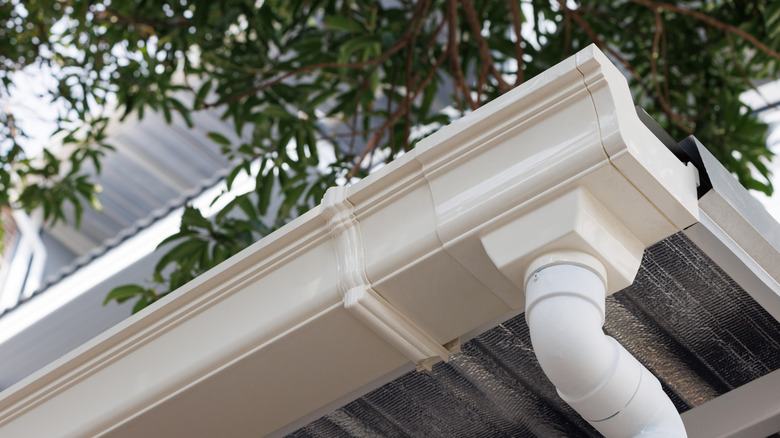
If you're ready to switch from aluminum gutters to something that won't dent, corrode, or require significant upkeep, there are a myriad of options for you. Though aluminum is far and away the most common choice, vinyl has begun making waves in many communities. Vinyl gutters are highly resistant to dents, and typically offer a lifespan of roughly 10-15 years, allowing you to spend significantly less time on repairs and upkeep. Though this is less than the projected lifespan of aluminum gutters, which are generally projected to last 25 years in total, many homeowners find that the reduced need to buff out rust and dents outweighs the cost of having to replace their materials once every decade.
Of course, vinyl is not perfect either. These gutters can warp or crack in extreme temperatures, making them a poor choice for those who live in exceptionally hot or freezing climates. Importantly, vinyl can't be soldered at its joints leading to trapped debris and expansion/contractions issues in extreme weather. You could spring for steel, which is marginally more expensive than aluminum, but stands up to dents and heavy rainfall much better. Steel is also significantly heavier, however, so installing these gutters is an outdoor renovation you shouldn't do by yourself. Copper gutters offer the most durability and longevity (as long as 100 years!), and boasts sleek curb appeal, though they are far and away the most expensive. Some DIYers have even gone so far as to 3D print segments of their gutters and downspouts, in order to avoid dealing with the rigid standards of metal materials.