

A Squirrel-Free Garden Is Possible With The Help Of A Common Kitchen Staple
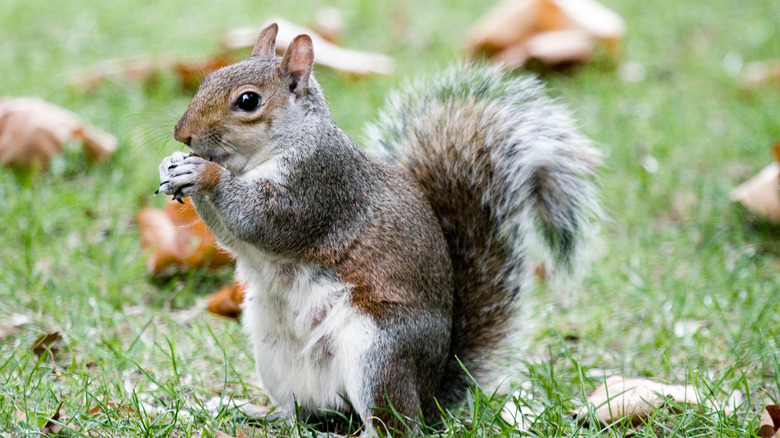
Though they may seem cute and harmless at a glance, squirrels can be quite a nuisance for the home gardener. The furry-tailed critters have been known to ransack all the seed from bird feeders, dig up plants and seedlings, and generally create havoc in and around the yard. If you find yourself tussling with a squirrel problem, you're likely in the market for a humane way to banish squirrels from your garden and back into the trees, preferably using all-natural materials. Luckily, there is a method many homeowners swear by, utilizing nothing but some elbow grease, a spray bottle, and a bit of apple cider vinegar.
As it turns out, squirrels are adept at sensing food, shelter, and predators using their keen sense of smell. This is how they're able to stash food underground for the winter and return for the harvest months later. This heightened sensitivity to smell is exactly what makes the apple cider vinegar hack work, as the powerful scent from the basic kitchen staple is considered to irritate their sensitive sniffers. Though there is no hard scientific data to suggest that this is a perfect solution, this trick could be worth a shot if you're growing fruits, nuts, and other food sources that might become a target for local squirrel populations. Some say that a bit of apple cider vinegar sprayed across the lawn is all you need to keep squirrels at bay, while others argue in favor of a wide array of other natural scents, plants, and oils.
How to apply apple cider vinegar to your garden
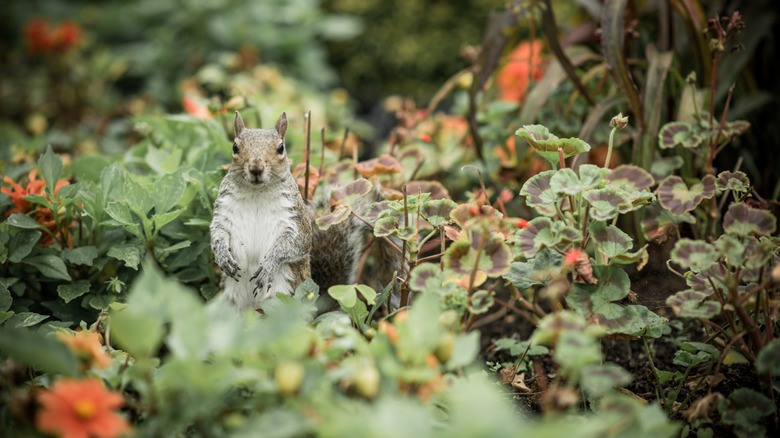
There are a number of ways to utilize the apple cider vinegar hack depending on what you're trying to accomplish. Obviously, you won't want to flood your lawn with bottles of the stuff, effectively turning your neighborhood into one big pickle jar. Instead, load the fermented dressing into a spray bottle and liberally apply around bushes, trees, and garden beds. If you're concerned about how acidic vinegar could impact your plants, you can soak cotton balls or rags with undiluted apple cider vinegar instead, placing them along the perimeter of your garden, ensuring the smell permeates the surrounding area. Either way, this should create a barrier that will keep squirrels as uncurious as possible.
While some home gardeners laud the apple cider vinegar trick, it should be noted that it's not a perfect science. It's always possible the smell will dissipate faster than intended, or you may just have exceedingly persistent squirrels. Some apple farmers even claim that squirrels are undeterred by the scent of a fermented apple, and that they frequently ransack orchards during the winter months for the last remaining bites of fallen, pickled fruit.
Generally, this trick is best employed in small, enclosed spaces such as tool sheds, flower beds, and the outside of flower pots. Even so, it's one of many options you can employ based on your specific needs. Similar techniques involve spreading mint oil, using inexpensive white vinegar, or planting things like daffodils, peppermint, geranium, and hyacinths. Much like apple cider vinegar, these plants provide a powerful, acrid aroma to the olfactory senses of a squirrel, leaving them with reduced interest in burying their food nearby. You can even use physical deterrents like plastic forks to keep small critters away from your garden.